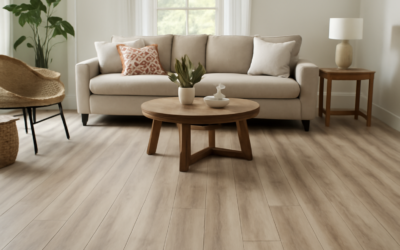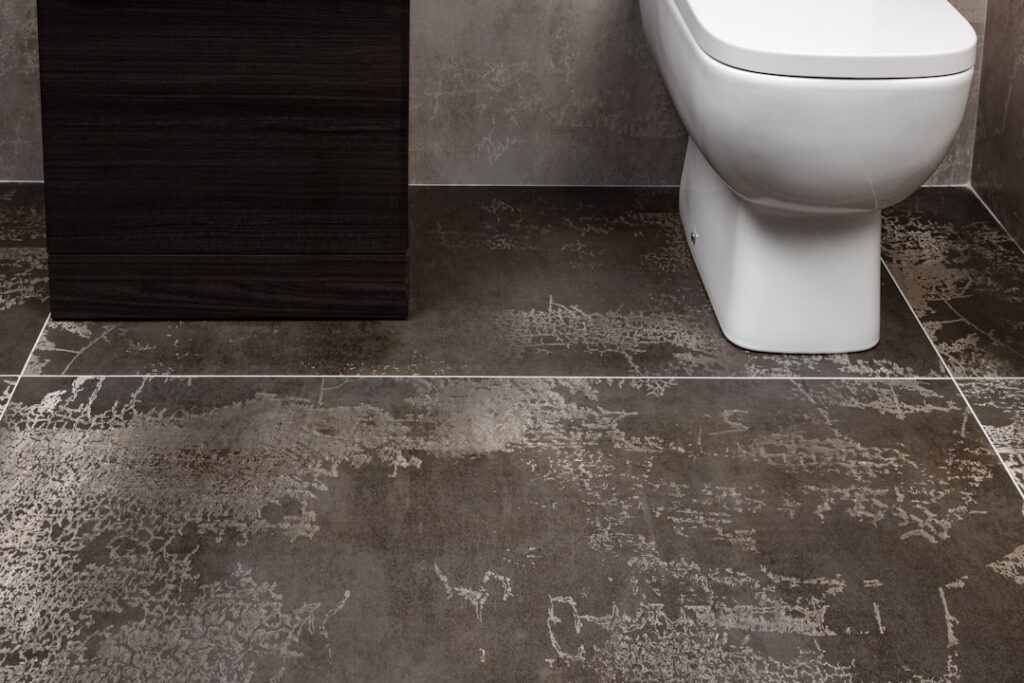
The single biggest shift in residential flooring over the last decade is that you can now put a convincing wood floor in a bathroom, a basement, or a mudroom and not lose sleep over it. Waterproof spc & lvt flooring made that possible — rigid stone-core vinyl planks that look like hardwood or stone but cannot be damaged by water. If you have been confused by the alphabet soup of LVT, LVP, SPC, and WPC, this guide cuts through it, explains how the waterproof construction works, and shows you where it belongs in your home and what it costs.
Decoding the Acronyms
The terminology trips up most shoppers, but it is simpler than it looks.
- LVT: Luxury Vinyl Tile — the broad category of high-quality vinyl, often in tile or stone looks.
- LVP: Luxury Vinyl Plank — the same family, in wood-look plank format.
- SPC: Stone-Plastic Composite — a rigid core of limestone powder and PVC that makes the plank stiff, stable, and fully waterproof.
- WPC: Wood-Plastic Composite — a slightly softer, warmer rigid core, also waterproof but less dense than SPC.
So “waterproof SPC and LVT” means rigid stone-core luxury vinyl in either plank or tile form. The core is what makes it waterproof; the surface is what makes it look like wood or stone.
Why SPC Is Genuinely Waterproof
The waterproofing comes from the material itself, not a coating. SPC’s stone-and-PVC core does not absorb water, swell, or rot the way the wood-fiber core in laminate does. Spill a glass of water and it sits on the surface; leave a wet mat on it and the plank is unaffected. This is the fundamental advantage over laminate, whose HDF core swells permanently when water reaches it. With SPC, the plank can be fully submerged and dry out unharmed — only the seams and subfloor need attention after a major flood.
SPC vs. Laminate vs. WPC
Each rigid core has a sweet spot. SPC is the densest and most dimensionally stable, so it resists expansion in sunrooms and over radiant heat, and it bridges minor subfloor flaws — but it feels harder and cooler underfoot. WPC is softer and warmer with a bit more give, nicer for bedrooms but less stable in hot, sunny rooms. Laminate, by contrast, is not waterproof at all (water-resistant at best) and should never go in a true wet area. For waterproof performance in kitchens, baths, and basements, SPC leads.
Wear Layer: The Spec That Sets Durability
Waterproof does not mean indestructible against scratches — that job belongs to the wear layer, the clear urethane top coat measured in mils. A 6-mil layer suits light-traffic bedrooms; 12-mil handles a busy household; 20-mil and up is rated for light commercial use and stands up to dogs, kids, and rolling chairs. For kitchens, entries, and pet homes, do not go below 12-mil, and choose 20-mil where wear will be heaviest. Pair the right wear layer with the SPC core and you get a floor that is both waterproof and scratch-resistant.
What It Costs
Waterproof SPC and LVT material generally runs $2.50 to $5.00 per square foot, with premium brands reaching $6 or $7. Professional installation of a floating click-lock floor adds $2 to $4 per square foot, and because the planks click together without glue or nails, this is one of the most DIY-friendly floors available — installing it yourself can roughly halve the total cost. Many planks ship with an attached pad, saving a separate underlayment purchase, though a 6-mil vapor barrier is still required over concrete.
Where to Install It
The waterproof core unlocks rooms where wood and laminate fail.
- Bathrooms: Full waterproof performance with a wood or stone look.
- Kitchens: Spills, leaks, and dropped pans are no threat.
- Basements: Over a vapor barrier, SPC handles slab moisture and humidity.
- Mudrooms and laundry: Wet boots and appliance leaks wipe right up.
- Whole-home open plans: One continuous waterproof floor from kitchen to living room.
Installation Basics
SPC floats over wood, concrete, or most existing hard surfaces. Acclimate the boxes flat in the room for 48 hours at 65 to 85 degrees F, lay a vapor barrier over concrete, and leave a 1/4- to 3/8-inch expansion gap around the perimeter and every fixed object. Even though the core is waterproof, wipe up standing water so it does not seep into the perimeter gaps and reach the subfloor.
Caring for Waterproof SPC and LVT
Maintenance is minimal, which is much of the appeal. Sweep or dust-mop regularly to keep grit from dulling the wear layer, and damp-mop with a pH-neutral vinyl cleaner. Skip steam mops, wax, and abrasive pads, all of which can damage the surface. Felt pads under furniture and a chair mat under rolling office chairs prevent the point-load scratches that are the main threat to even a thick wear layer. Walk-off mats at entries trap the sand that causes most wear. Because the floor is waterproof, spills are no emergency, but wiping up standing water near plank edges keeps it out of the perimeter gap and away from the subfloor.
Limitations to Know Before You Buy
Waterproof SPC and LVT is versatile, but it is not perfect for every situation. Because the core is rigid and dense, it feels harder and cooler underfoot than carpet or even WPC, so add area rugs in rooms where you stand a lot. In rooms with large windows and intense direct sun, choose a quality SPC with good thermal stability and follow the manufacturer’s guidance, since extreme heat can still stress lower-grade products. SPC also does not improve a poor subfloor structurally — it bridges minor flaws but will telegraph significant unevenness, so level the subfloor first. Finally, while the floor itself is waterproof, a major flood can still reach the subfloor through seams, so address leaks promptly.
Bottom Line
Waterproof SPC and LVT is the most versatile flooring on the market right now — genuinely waterproof, scratch-resistant when you pick the right wear layer, DIY-friendly, and convincing as wood or stone. For roughly $5 to $8 per square foot installed, or about half that on your own, it goes anywhere in the house including the wet rooms that rule out hardwood and laminate. Match the wear layer to the traffic, follow the floating-floor rules, and you have a floor that simply does not worry about water.
Prefer to explore on your own?
See how new flooring looks in your actual room in seconds — free, no signup.
Try the free Floor Studio →