If you have been shopping for durable, waterproof luxury vinyl plank, you have almost certainly run across the Everlife line, and MSI Everlife Cyrus Beachwood flooring is one of the collection’s most popular light-toned options. It pairs a rugged SPC rigid core with a soft, weathered greige oak visual that suits the airy, coastal-inspired interiors so many homeowners want right now. In this guide I will break down exactly what this floor is, how it is built, where it shines, and what to weigh before you commit.
I have installed and lived with plenty of rigid-core vinyl over the years, so rather than just repeating a spec sheet, I want to give you the practical read: how it handles real households, what the install is actually like, and who this particular plank is and is not for. Cyrus Beachwood is a solid, sensible choice, but understanding its construction helps you set the right expectations.
What Everlife, Cyrus, and Beachwood Actually Mean
The naming can confuse first-time shoppers, so let us untangle it. Everlife is MSI’s umbrella brand for its luxury and rigid-core vinyl flooring, spanning several collections at different price and performance tiers. Cyrus is one collection within Everlife, built on an SPC rigid core, and Beachwood is a specific color, or plank style, within the Cyrus collection. So when you say MSI Everlife Cyrus Beachwood flooring, you are naming the brand, the collection, and the color in that order.
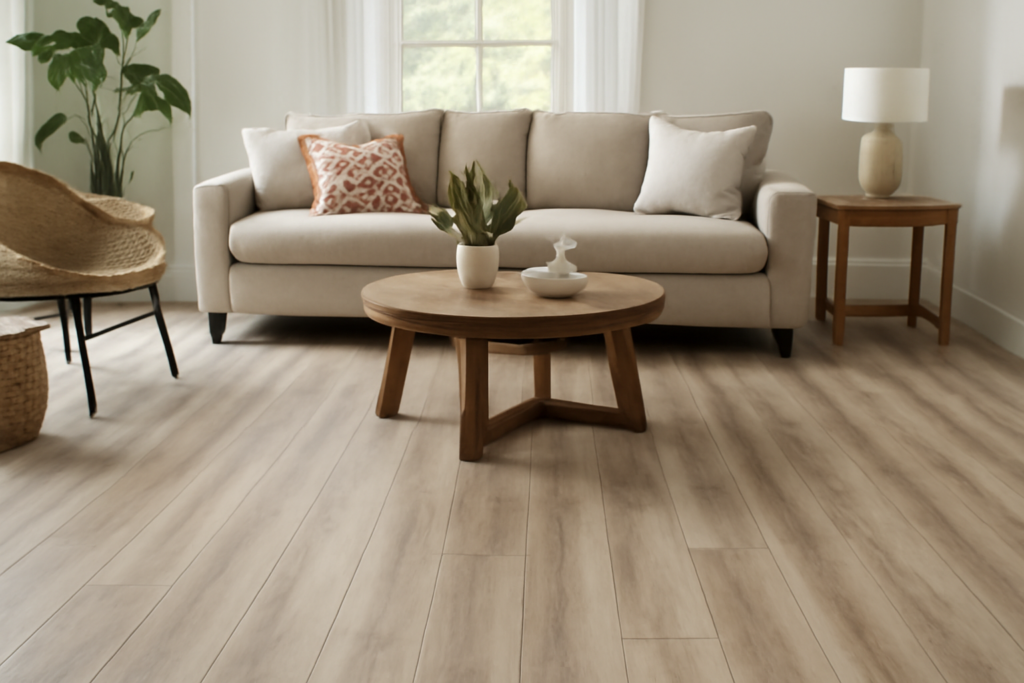
Beachwood itself is a light, weathered oak visual, landing in the greige family, that soft, sun-bleached blend of gray and beige. It reads bright and neutral, with subtle grain movement and a matte finish that avoids the plasticky sheen cheaper vinyl sometimes has. That coloring is a big part of the appeal, because light greige floors make rooms feel larger and hide dust better than very dark planks while staying easy to decorate around.
Understanding this hierarchy matters when you shop, because features and specs can differ between Everlife collections. Cyrus sits in the rigid-core, SPC portion of the family, which is what gives Beachwood its stability and waterproof performance. Confirm you are comparing the same collection when you cross-shop, since another Everlife line might use a different core or wear layer.
SPC Rigid Core Construction
The heart of this floor is its stone-plastic composite, or SPC, rigid core. SPC combines limestone powder with vinyl to create a core that is extremely dense and dimensionally stable, meaning it resists the expanding and contracting that plagues flexible vinyl in rooms with temperature swings. In practice, that stability is why rigid-core planks can go over many existing hard surfaces and stay flat and quiet underfoot.
That dense core also delivers the firm, solid feel people associate with quality flooring. Where a thin peel-and-stick vinyl can feel spongy and telegraph every imperfection in the subfloor, an SPC plank like Cyrus feels substantial and helps bridge minor subfloor irregularities. It is more forgiving of a less-than-perfect subfloor than most other flooring categories, though it is not a license to skip prep entirely.
Rigid-core construction is also what makes this floor genuinely family-friendly. The hard core resists denting from foot traffic and furniture better than flexible LVP, and the overall build stands up well to the daily abuse of kids, pets, and rolling chairs. It is one of the reasons SPC has become the default recommendation for busy households that still want the look of wood.
Wear Layer, Underlayment, and Finish
On top of the core sits the part you actually walk on and see: the printed design layer and a clear protective wear layer. The Everlife lines are known for robust wear layers, and a roughly twenty-mil wear layer is common in this tier, which is a genuinely commercial-grade thickness. That thick wear layer is your scratch and scuff insurance, and it is a major reason a floor like this holds up in high-traffic spaces for many years.
Many Cyrus planks come with an attached underlayment, typically an IXPE foam pad bonded to the underside of each board. That attached pad delivers real convenience and comfort: it cushions the step slightly, dampens sound so the floor is quieter underfoot, and smooths over minor subfloor texture, all without you buying and rolling out a separate underlayment. For most installations it means one less product to purchase and one less step in the process.
The surface finish on Beachwood is a low-sheen, embossed texture designed to mimic real oak grain, both visually and to the touch. That matte, textured finish does two useful things: it looks more authentic than a glossy print, and it provides a bit of slip resistance and hides everyday smudges. Combined with the thick wear layer, the finish is what lets this floor keep its good looks under real-world use.
Waterproof Performance
One of the strongest selling points of SPC flooring, and Cyrus Beachwood specifically, is that it is genuinely waterproof. Because the stone-plastic core does not absorb water and will not swell the way a wood-based core can, you can confidently install this floor in kitchens, bathrooms, laundry rooms, mudrooms, and basements where moisture is a constant threat. That opens up spaces where traditional hardwood or laminate would be a risky choice.
It is worth being precise about what waterproof means here. The plank material itself is impervious to water, so spills, pet accidents, and damp mopping will not damage the boards. That said, waterproof planks are not the same as a waterproof room; in a genuine flood, water can still travel through the seams and sit on the subfloor beneath, so standing water should always be cleaned up promptly. The floor protects itself, not everything under it.
For everyday life, though, this waterproof performance is a big quality-of-life upgrade. You can mop without anxiety, you do not panic when a glass tips over, and homes with pets or kids get a floor that shrugs off the messes that would stain or warp other surfaces. It is one of the most practical reasons SPC has taken over so much of the flooring market.
Plank Dimensions and the Look
Cyrus planks typically run in a wide, long format, with dimensions around seven inches wide by roughly forty-eight inches long being common for the collection. Wider, longer planks create fewer seams across a room, which reads as more modern and makes a space feel more open and expansive. The proportions of Beachwood help sell the illusion that you are looking at real sawn oak boards rather than vinyl.
The light greige coloring is versatile in a way that darker or more strongly colored floors are not. Beachwood works with white and gray palettes for a coastal or Scandinavian feel, but it is equally at home under warmer, natural wood furniture and earthy decor. Because it is neutral and relatively low-contrast, it does not fight with your walls, cabinets, or rugs, which makes it a safe choice if you like to change up decor over time.
From a practical standpoint, light floors like Beachwood also hide dust, pet hair, and minor scratches better than very dark planks, which show every crumb. The trade-off is that lighter floors can show darker debris and heavy soil a bit more, so the ideal choice depends on your household. For most people, though, the mid-light greige tone strikes a forgiving, easy-to-live-with balance.
Installation: Click-Lock Floating Floor
Cyrus is a floating floor with an angle-and-tap click-lock edge, which is exactly what makes it approachable for a confident DIYer. The planks mechanically lock together edge to edge without glue or nails, floating over the subfloor as a single connected surface. That means no messy adhesives and, for many rooms, a weekend project rather than a professional job, provided you respect the prep and layout fundamentals.
The most important step is subfloor preparation. The subfloor must be clean, dry, and flat within the manufacturer’s tolerance, because while the rigid core bridges minor imperfections, significant dips or humps will eventually stress the locking joints. You will also need to leave an expansion gap around the perimeter, covered by baseboard or quarter-round, so the floating field has room to move slightly with temperature changes. Skipping that gap is a classic cause of buckling.
Because many Cyrus planks include the attached pad, you generally will not add a separate underlayment on top of the subfloor, though a moisture barrier over concrete is still wise. Acclimate the boxes in the room per the instructions before you start, stagger your end joints for strength and a natural look, and use spacers to hold the expansion gap. Follow those steps and the install is genuinely within reach for a patient homeowner.
Certifications, Maintenance, and Who It Is For
Flooring in this category typically carries indoor-air-quality certifications such as GreenGuard-type low-VOC assurances, which matter if you care about what your floor is off-gassing into your home. These certifications indicate the product has been tested for low chemical emissions, a reasonable expectation for a reputable rigid-core line, though you should always confirm the specific certifications with current documentation before you buy, since programs and listings change over time.
Maintenance is refreshingly simple, which is part of the SPC value proposition. Routine care is just sweeping or vacuuming to keep grit from dulling the wear layer, plus occasional damp mopping with a cleaner appropriate for luxury vinyl. Avoid harsh abrasives, wax, and steam mops, which can harm the finish, and use felt pads under furniture legs to prevent scratches. That is genuinely the whole regimen for keeping this floor looking good for years.
So who should choose MSI Everlife Cyrus Beachwood flooring? It is an excellent fit for busy households that want a waterproof, low-maintenance, wood-look floor with a light, on-trend greige tone and the durability to survive kids and pets. It suits DIYers thanks to the click-lock system, and it works in moisture-prone rooms where hardwood cannot go. If you want a genuine hardwood underfoot feel or a very specific stain of real wood, natural hardwood is still the answer, but for practical, good-looking, worry-free flooring, Cyrus Beachwood earns its popularity. As always, verify current pricing, specs, and warranty details with a supplier before ordering, since those figures shift over time.
Prefer to explore on your own?
See how new flooring looks in your actual room in seconds — free, no signup.
Try the free Floor Studio →