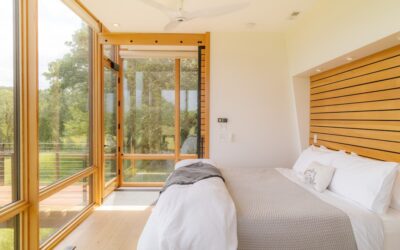
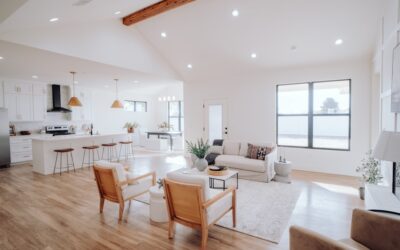
Step into any ranch house outside Bozeman or any Texas Hill Country lodge and the floors tell you immediately you’re not in suburbia. Wide hand-hewn planks with original saw marks, leather-stained concrete that looks like aged saddle, slate flagstone showing every century of foot traffic. Western flooring isn’t a single product category but a design vocabulary that pulls from reclaimed lumber, weathered stone, and rugged industrial finishes. Getting the look right means understanding which materials carry the authenticity and which read as fake costume.
Reclaimed Wide-Plank Wood
The cornerstone of western flooring is reclaimed wide-plank wood, typically 6 to 14 inches wide in random lengths up to 12 feet. Sources include 100-plus year old barns, snow fences, factories, and railroad trestles from across the Mountain West. Pricing runs $12 to $30 per sq ft material from suppliers like Pioneer Millworks, TerraMai, and Carlisle Wide Plank.
The premium pays for the patina that new wood cannot replicate. Original nail holes, weathered patina, occasional checks and splits, and the gray-brown surface tones from decades of sun exposure all contribute. Reclaimed barnwood typically comes in mixed species (oak, chestnut, pine, maple) that read as authentic ranch-era construction.
New Wide-Plank Pine
Eastern white pine and Southern yellow pine in 8 to 12 inch widths approximate the western look at lower cost. New wide plank pine runs $4 to $9 per sq ft material from mills like Maine Heritage Timber, Pioneer Mills, and Carolina Pine Floors. The wood typically ships unfinished and gets stained dark to mimic aged appearance.
Pine reads softer than oak both visually and structurally. Janka hardness of 380 (Eastern white pine) to 870 (Southern yellow pine) means the floor dents easily, which actually contributes to the lived-in western aesthetic. The dents and dings accumulate as character rather than damage.
Hand-Scraped Hardwoods
- Bruce Frontier Collection: Hand-scraped oak in 5-inch width. $4 to $6 per sq ft.
- Mannington Antiques Collection: Heavily textured engineered oak. $6 to $9 per sq ft.
- Mohawk Hand-Crafted line: Rustic engineered planks. $5 to $8 per sq ft.
- Shaw Hardwood Reclaimed Visuals: New engineered wood with reclaimed appearance. $4 to $7 per sq ft.
Factory hand-scraping creates an authentic-looking texture at production prices. The depth of scraping varies dramatically between brands. Premium hand-scraped products show varied saw marks, distress patterns, and edge wear that mimic 80-year-old floors. Budget hand-scraping reads as cosmetic surface texture with less convincing character.
Stained Concrete and Polished Concrete
Acid-stained concrete delivers a western leather-like surface at competitive pricing. Reactive stains penetrate the concrete to create permanent, variegated color that looks like aged saddle. Pricing runs $4 to $9 per sq ft installed for residential applications. Colors like Cola, Coffee Brown, English Red, and Black Mission work well for ranch aesthetics.
For a more refined look, polished concrete with integral color or water-based stain accepts custom warm tones. Polishing to a 400 to 800 grit level produces a satin finish that suits western interiors better than the high-gloss 1500-3000 grit polish typical of commercial polished concrete. Pricing runs $5 to $10 per sq ft installed.
Slate and Flagstone
Natural slate in earth tones like Vermont Black, Multi-Color, or Rustic Gold delivers western authenticity that porcelain imitations cannot match. Pricing runs $6 to $14 per sq ft material plus $7 to $12 per sq ft installation. The cleft (natural split) surface reads as ancient and develops more character with foot traffic.
Flagstone in irregular shapes installed with wide mortar joints suits western interiors better than uniform rectangles. Arizona flagstone in buff and reddish tones, Idaho quartzite, and Pennsylvania bluestone all bring regional western character. The irregular pattern hides settling and small movement better than precise tile layouts.
Brick and Saltillo Tile
Reclaimed thin-cut brick from old streets and buildings makes a striking floor in foyers, kitchens, and sunrooms. Pricing runs $4 to $10 per sq ft material plus $6 to $11 per sq ft installation in mortar-set patterns. The bricks install thin-set over concrete or properly stiffened wood subfloors.
Saltillo terracotta tile from Mexico, in traditional 12 by 12 inch squares or larger rustic shapes, anchors Southwestern western interiors. Pricing runs $3 to $7 per sq ft material. Saltillo requires sealing every 1 to 3 years with penetrating sealers like Aqua Mix or Stonelux to prevent staining from spills.
Finishes That Complete the Look
Western floors avoid the high-gloss finishes that dominate modern hardwood. Use waterborne polyurethane in satin or matte sheen like Bona Traffic HD Matte for low luster. Hardwax oils like Rubio Monocoat Pure or Osmo Polyx 3032 produce a hand-rubbed appearance that suits authenticated reclaimed wood better than film finishes.
For dyed or stained looks, use oil-based stains like Duraseal Coffee Brown, English Chestnut, or Antique Brown. These produce richer color than water-based stains and develop deeper amber tones over time. Avoid the cool gray and white stains common in coastal modern interiors, which fight the western aesthetic.
Color Palette and Pairings
Western floors look best with warm wall colors. Adobe cream, sage green, terracotta, and weathered barn red all complement the floor without competing. Avoid cool grays, navy blues, and bright whites that read modern rather than ranch.
Furniture in distressed leather, oiled bronze, brushed nickel, and reclaimed wood completes the look. Carpets in tribal patterns from Pendleton or Navajo-inspired weaves anchor seating areas. The floor sets the foundation; everything else builds on the wood and stone warmth.
Installation Considerations for Wide Planks
Wide plank installation has specific requirements beyond standard 3-1/4 to 5 inch oak floors. Planks 8 inches wide and larger should glue and nail (cleat-nailed and adhesive-applied) for solid wood, or glue-down for engineered. Floating installation is generally not recommended for wide plank wider than 7 inches because the planks move too much.
Acclimate wide plank wood for a minimum of 14 days at 35 to 55 percent relative humidity and 60 to 80 degrees F. The longer the plank, the more critical the acclimation. Skip the acclimation and seasonal gaps will reach 1/8 inch or more between boards within the first year.
Cost Range for Real Projects
A 500 sq ft western floor in reclaimed wide-plank wood with professional installation runs $12,000 to $25,000 total. Hand-scraped engineered wood runs $5,500 to $9,500 for the same space. Acid-stained concrete (existing slab) runs $2,500 to $5,000. Slate or flagstone runs $7,500 to $14,000. Reclaimed brick runs $6,500 to $11,500.
Western flooring rewards homeowners who lean into authenticity rather than veneer. Reclaimed materials, hand-finished surfaces, and natural stone deliver the look that imitations can never quite match. Pair the floor with appropriate wall colors and furnishings, and the result transforms ordinary square footage into a space that feels like it belongs in the West.
Prefer to explore on your own?
See how new flooring looks in your actual room in seconds — free, no signup.
Try the free Floor Studio →