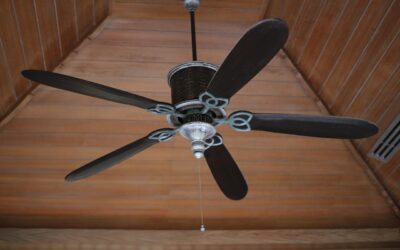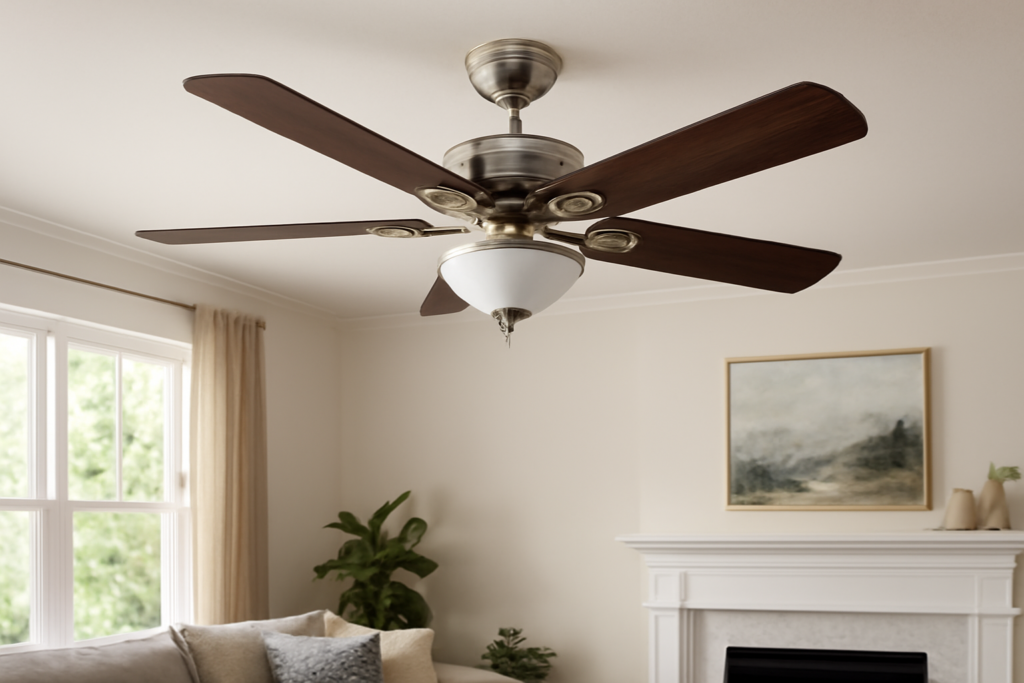
A ceiling fan can cut your cooling bill and make a room feel four degrees cooler, but only if you match the fan to the space. A Westinghouse ceiling fan is a common pick because the brand blends affordable pricing with a wide catalog, decades of manufacturing history, and easy availability of replacement parts. Whether you are outfitting a bedroom, a great room, or a covered porch, knowing how to size and choose one saves you from a fan that wobbles, hums, or barely moves air.
Why Homeowners Choose Westinghouse
Westinghouse has been a household name in lighting and appliances for over a century, and its fans lean on that reputation for reliable value. You get solid performance at a mid-market price, typically $60 to $250, without the premium of boutique designer brands.
Just as important, parts and remotes are widely stocked, so a fan that needs a new pull chain, capacitor, or light kit years down the road is easy to service rather than replace.
Sizing the Fan to Your Room
Blade span, measured tip to tip, is the number that matters most, and matching it to room size determines how well the fan moves air.
- Up to 75 sq ft (bathroom, breakfast nook): 29 to 36-inch span.
- 76 to 144 sq ft (bedroom, office): 42 to 48-inch span.
- 144 to 225 sq ft (living room, dining room): 52-inch span.
- Over 225 sq ft (great room): 56 inches or larger, or two fans.
An undersized fan in a big room runs at max speed and still fails to cool, while an oversized fan in a small room overwhelms it. When in doubt, size up slightly.
Ceiling Height and Mounting
Blades should sit 8 to 9 feet above the floor for the best airflow and safety, with at least 7 feet of clearance minimum. How you mount the fan depends on your ceiling.
Standard 8-foot ceilings call for a flush or hugger mount that sits close to the ceiling. Higher ceilings need a downrod to drop the fan into the effective airflow zone; a rough guide is a 12-inch downrod for a 9-foot ceiling, adding roughly 6 inches per additional foot. For sloped ceilings, confirm the fan includes or accepts an angled mount kit.
Popular Westinghouse Models
The lineup spans classic to contemporary. The Comet and Contractor’s Choice series are budget favorites for bedrooms and rentals, offering reliable three-speed performance at the lowest prices.
For living spaces, models like the Bendan and Turbo Swirl blend stronger airflow with a more finished look and integrated lighting. If you want efficiency and quiet, look for the DC-motor and Energy Star-rated models, which use noticeably less power and often include a remote with reverse and dimming built in.
Indoor vs. Outdoor Rated
Not every fan belongs on a porch. Fans carry a UL rating that tells you where they can safely go, and using an indoor fan outside voids the warranty and invites motor failure.
A “damp-rated” Westinghouse fan suits covered patios and porches shielded from direct rain. A “wet-rated” fan can handle direct exposure to rain and is what you want for a pergola or an uncovered outdoor space. Check the label before installing anywhere moisture reaches the fan.
Installation Basics
Replacing an existing fan or light is a manageable DIY job if you are comfortable with basic wiring. The critical safety step is a fan-rated ceiling box; a standard light box cannot support a fan’s weight and motion, and using one risks the fan falling.
Shut off the breaker, confirm the box is fan-rated and firmly anchored to a joist or brace, then follow the wiring diagram, black to black, white to white, ground to green. Balance the blades with the included clip-and-weight kit if you notice any wobble, which is usually a balance issue rather than a defect.
Features Worth Having
A few options genuinely improve daily use. A reversible motor lets the fan run clockwise in winter to push warm air down, extending its usefulness year-round. Remote or wall-control operation adds convenience, and a dimmable integrated LED light kit saves you buying separate fixtures.
For bedrooms, prioritize a quiet motor and multiple speeds. For large or warm rooms, prioritize high airflow, measured in CFM, over looks. Choose the right size, mount, and rating, and a Westinghouse ceiling fan delivers years of comfortable, efficient air movement for a modest price.
AC vs. DC Motors
The motor type is a quiet but important choice. Traditional AC motors are less expensive and perfectly reliable, which is why they fill most budget models. They run on standard household current and offer the usual three speeds.
DC motors, found in Westinghouse’s higher-end fans, use up to 70 percent less electricity, run noticeably quieter, and typically include a remote with six speeds, a reverse function, and precise dimming. They cost more upfront, often $50 to $150 extra, but the energy savings add up in a fan that runs many hours a day. For a bedroom or a fan you leave on constantly, the DC premium usually pays for itself over its lifespan.
Troubleshooting Wobble and Noise
A wobbling or humming fan is almost always fixable, not defective. Wobble typically stems from unbalanced blades or loose mounting screws. Tighten every screw at the mounting bracket, downrod, and blade holders first, then use the included balancing kit to add a small weight to the offending blade until the wobble disappears.
A persistent hum on certain speeds can come from an incompatible dimmer switch on the wall; ceiling fans need a fan-rated control, not a standard light dimmer, which can cause buzzing and even damage the motor. Confirm the ceiling box is fan-rated and firmly anchored, since a loose box amplifies both noise and wobble.