The right wet floor mop can make cleaning hard floors fast and genuinely effective, while the wrong one leaves streaks, soaks the surface, or, worst case, permanently damages your flooring. There is no single best mop, because the ideal tool depends on what kind of floor you have. Sealed tile shrugs off almost anything, while hardwood and laminate are far less forgiving of moisture and heat. This guide breaks down the main types of wet mops, how they work, and, critically, which floors each one is safe to use, including the honest warnings about steam on wood and laminate.
- The Main Types of Wet Mops
- The Golden Rule: Match the Mop to the Floor
- Ceramic and Porcelain Tile
- Natural Stone (Marble, Granite, Slate)
- Vinyl, LVP, and Linoleum
- Hardwood Floors (The Big Cautions)
- Laminate Flooring (Even More Sensitive)
- Quick Reference by Floor Type
- Tips for Streak-Free, Damage-Free Results
- Caring for Your Mop
- Choosing the Right Cleaning Solution
- The Bottom Line
The Main Types of Wet Mops
“Wet mop” covers several distinct tools, each suited to different jobs:
- Traditional wet mop and bucket: string, strip, or sponge mop dipped in a cleaning solution. Cheap and effective for deep cleaning, but can leave floors very wet and requires wringing.
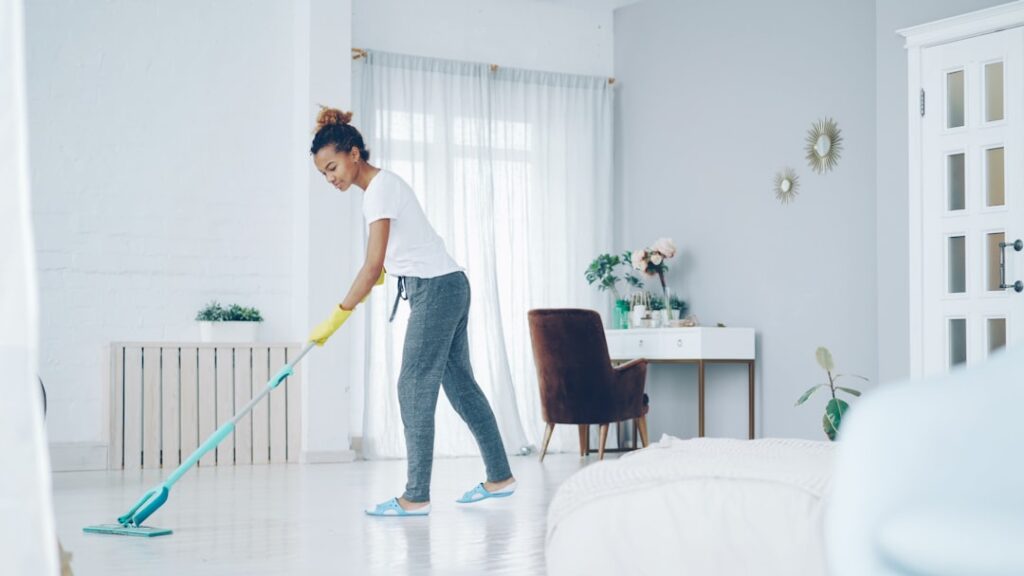
- Microfiber flat mop: a flat pad you dampen or wet, excellent for everyday cleaning, gentle on most floors, and easy to wring out so you control moisture.
- Spray mop: a refillable bottle of solution sprays a fine mist ahead of a microfiber pad. Convenient, low-moisture, and great for quick cleaning, you control exactly how wet the floor gets.
- Steam mop: heats water into steam to clean and sanitize using heat rather than chemicals. Powerful for sealed tile and stone, but risky on heat- and moisture-sensitive floors.
The Golden Rule: Match the Mop to the Floor
Before any mop touches your floor, identify the flooring and how it is finished. The biggest mistakes, warped wood, swollen laminate, dull stone, all come from using too much water or heat on the wrong surface. Here is how each floor type pairs with the mop types.
Ceramic and Porcelain Tile
Sealed ceramic and porcelain tile is the most water-tolerant flooring, and you can use almost any wet mop on it. A traditional wet mop, spray mop, or microfiber flat mop all work well. Steam mops are also safe and excellent here, the heat cuts grease and sanitizes grout lines beautifully. The main caution is grout: very wet mopping pushes dirty water into grout, so wring well and consider sealing your grout to keep it clean.
Natural Stone (Marble, Granite, Slate)
Natural stone needs more care. Use a damp microfiber or spray mop with a pH-neutral, stone-safe cleaner, never acidic cleaners (vinegar, lemon), which etch marble and other calcareous stones. Avoid soaking the floor, and skip steam mops on stone, the heat and moisture can damage sealers and, over time, the stone itself. Keep it damp, not wet, and dry any standing water promptly.
Vinyl, LVP, and Linoleum
Luxury vinyl plank (LVP), sheet vinyl, and linoleum handle moisture well, making a spray mop or damp microfiber mop ideal for everyday cleaning. Avoid leaving large amounts of standing water at the seams of click-together LVP, where water can creep underneath. Steam mops are generally not recommended on vinyl and LVP, the heat can soften adhesives, damage the wear layer, or cause planks to warp or lift, so check the manufacturer’s guidance and lean toward a low-moisture spray or microfiber mop instead.
Hardwood Floors (The Big Cautions)
Hardwood and water do not mix. Excess moisture is the enemy of wood floors, it can cause swelling, cupping, staining, and finish damage. For sealed hardwood, use a barely damp microfiber mop or a spray mop with a hardwood-specific cleaner, applying only a light mist and never pooling water. Wring mops nearly dry.
Do not use a steam mop on hardwood. This is one of the clearest don’ts in floor care. Steam forces hot moisture into the wood and through finish seams, which can cause cupping, cloudy finish, delamination, and long-term damage, even on sealed wood. Manufacturers and flooring pros widely advise against it. Stick to a lightly damp microfiber or a quality spray mop made for wood.
Laminate Flooring (Even More Sensitive)
Laminate is arguably the least water-friendly common floor. Its core is fiberboard, and once moisture penetrates a seam or edge, the board swells, bubbles, and is ruined permanently, there is no refinishing laminate. Use only a slightly damp microfiber mop or a spray mop with laminate cleaner, misting lightly and drying as you go.
Never use a steam mop on laminate. The combination of heat and moisture is especially destructive to laminate’s fiberboard core and can void warranties outright. Low-moisture is the rule, if your mop leaves the floor visibly wet, it is too wet for laminate.
Quick Reference by Floor Type
- Ceramic/porcelain tile: any mop, including steam. Safest overall.
- Natural stone: damp microfiber or spray with pH-neutral cleaner; no steam, no acids.
- Vinyl/LVP/linoleum: spray or damp microfiber; avoid steam; mind LVP seams.
- Hardwood: barely damp microfiber or wood spray mop; never steam.
- Laminate: lightly damp microfiber or laminate spray mop; never steam, keep moisture minimal.
Tips for Streak-Free, Damage-Free Results
Whatever mop you use, a few habits improve results: vacuum or sweep first so grit does not scratch as you mop, use the cleaner recommended for your floor and don’t over-dose it (excess solution causes streaks), wring or set moisture low, and change dirty water often. For wood and laminate especially, work in sections and dry up any moisture promptly rather than letting it sit.
Caring for Your Mop
A neglected mop spreads more dirt than it removes, so maintenance matters. Wash microfiber pads after each use, machine wash them without fabric softener, which clogs the fibers and ruins their grab, and air dry. Rinse string and sponge mops thoroughly and hang them to dry rather than leaving them in a bucket, where bacteria and odor breed. Descale a steam mop periodically if you have hard water, since mineral buildup clogs the steam jets. Replace pads and mop heads when they stop picking up dirt; a worn pad just pushes grime around and can leave streaks on any floor.
Choosing the Right Cleaning Solution
The mop is only half the equation, the solution matters just as much, and the wrong one can damage a floor the mop itself would not. Use a pH-neutral cleaner for stone and most sealed floors. Reach for a hardwood- or laminate-specific cleaner on those surfaces, and avoid oil-based or wax products that build up and dull the finish. Skip vinegar and other acids on stone (they etch) and on waxed or oiled wood. Always dilute concentrates to the recommended ratio, too much cleaner leaves a sticky residue that attracts dirt and causes streaks, which is the most common reason a freshly mopped floor looks worse, not better.
The Bottom Line
The best wet floor mop is the one matched to your flooring. Sealed tile tolerates anything, including steam; stone, vinyl, hardwood, and laminate all want low moisture and gentle cleaners. Above all, keep steam mops off hardwood, laminate, and vinyl, where heat and moisture cause real, often permanent damage. A good microfiber flat mop or spray mop is the safest all-around choice for moisture-sensitive floors, giving you a clean result without risking the surface you paid to install.
Prefer to explore on your own?
See how new flooring looks in your actual room in seconds — free, no signup.
Try the free Floor Studio →