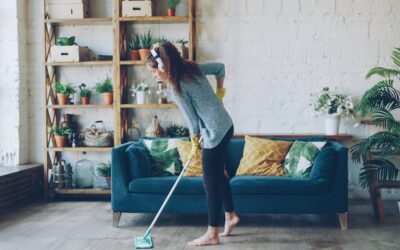
Most homeowners mop with too much soap, water that started cold, and a bucket they refill twice when they should refill six times. The wrong mop water solution leaves streaks, dulls finishes, and even voids manufacturer warranties on engineered hardwood and luxury vinyl plank. After cleaning more than 50,000 sq ft of flooring across rentals, restaurants, and homes, the formulas below cover every common surface with ingredients already in your kitchen.
- The Foundation: Water Temperature and Quantity
- All-Purpose Solution for Vinyl, Laminate, and Tile
- Hardwood Floor Solution
- Natural Stone Solution
- Deep-Clean Tile and Grout Solution
- Disinfecting Solution
- Streak-Free Glass Tile and Polished Floors
- Essential Oils for Fragrance
- Common Mistakes That Ruin Floors
The Foundation: Water Temperature and Quantity
Hot water from the tap (around 120°F) loosens grease and grime faster than cold but cooler than boiling, which can damage some sealants. Fill your bucket only halfway, roughly 1 to 1.5 gallons, so the mop has room to wring without sloshing dirty water back into the clean side of a two-chamber bucket.
Swap the water the moment it looks gray. A typical 200 sq ft kitchen needs two complete bucket changes. Reusing dirty water just smears grime in a thinner layer across the floor and is the number one reason mopped floors look hazy after drying.
All-Purpose Solution for Vinyl, Laminate, and Tile
Combine 1 gallon of warm water with 1/4 cup of distilled white vinegar and 3 drops of mild dish soap such as Dawn Free and Clear. This mix removes everyday grime from luxury vinyl plank, ceramic tile, and laminate without leaving residue. Avoid this blend on natural stone because vinegar etches marble, travertine, and limestone within seconds.
For sticky messes, increase the dish soap to 1/2 teaspoon maximum. Anything more leaves a film that attracts dirt within 48 hours and forces you to mop again. Always rinse with a clean-water pass after the soap pass on laminate, which hates lingering moisture.
Hardwood Floor Solution
Real hardwood needs gentler treatment. Mix 1 gallon of warm water with 1 tablespoon of pH-neutral hardwood cleaner like Bona Hardwood Floor Cleaner concentrate ($8 for 32 oz). Skip vinegar entirely on polyurethane finishes because the acid breaks down the protective coating over months of regular use.
Use a microfiber flat mop rather than a sponge or string mop. The flat mop releases minimal water, and damp-mopping (not wet-mopping) is the rule for any wood floor. Wring the mop until it feels barely moist to the touch before each pass.
Natural Stone Solution
For marble, granite, travertine, and slate, mix 1 gallon of warm water with 2 tablespoons of stone-specific cleaner such as Granite Gold Floor Cleaner or Black Diamond Stone & Tile Cleaner. Both run about $10 to $14 per bottle and last 6 to 12 mopping sessions.
Plain water also works for routine cleaning between deep cleans. Stone is porous, and harsh chemicals seep into the surface, degrading sealers and dulling polish. Re-seal natural stone every 12 to 24 months depending on traffic to maintain stain resistance.
Deep-Clean Tile and Grout Solution
Tile floors with discolored grout need a stronger approach. Combine 1 gallon of hot water, 1/4 cup of baking soda, and 1/4 cup of oxygenated cleaner such as OxiClean. Stir until dissolved. This solution lifts grout grime that ordinary mopping leaves behind.
Apply with a stiff-bristle brush along grout lines for the toughest spots, then mop the field with the same solution. Rinse twice with plain water afterward because residue from oxygenated cleaners hardens into white streaks if it dries on the surface.
Disinfecting Solution
For homes with pets, sick family members, or post-renovation dust, mix 1 gallon of warm water with 1/2 cup of household bleach (5.25 percent sodium hypochlorite) for non-porous tile, vinyl, and sealed concrete. Wear gloves, open windows, and never combine bleach with vinegar or ammonia.
Allow the bleach solution to sit on the surface for 5 minutes before rinsing. Do not use bleach on hardwood, laminate, natural stone, or unsealed grout. For those surfaces, use a hydrogen peroxide solution at 1/2 cup per gallon instead.
Streak-Free Glass Tile and Polished Floors
Polished porcelain, glass tile, and high-gloss luxury vinyl streak easily because the solid surface shows every drop. Mix 1 gallon of distilled water (not tap water) with 1/4 cup of isopropyl alcohol (70 percent) and 2 drops of dish soap. Distilled water eliminates mineral spots that hard tap water leaves behind.
Buff dry with a clean microfiber cloth in 4-foot sections rather than letting air-dry across the whole room. This step takes 5 extra minutes but eliminates 95 percent of streaks.
Essential Oils for Fragrance
Add 8 to 12 drops of essential oil to any of the above solutions for a subtle scent. Lemon, lavender, and tea tree oil pair well with cleaning chores and carry mild antimicrobial properties. Eucalyptus and peppermint repel some insects when used regularly around baseboards and entryways.
Skip essential oils on hardwood and natural stone since oil residue builds up over time and creates a slippery surface or attracts more dust. Use sparingly on laminate too, where oil residue dulls the protective layer within months.
Common Mistakes That Ruin Floors
Over-soaking laminate and hardwood tops the list. These materials swell and warp from standing water within minutes. Using the same solution that worked on tile but applying it to hardwood is the second mistake because the soap, vinegar, or chemical strength dulls protective finishes.
Never mop with a dirty mop head, never skip vacuuming or sweeping first, and never let any solution dry on the floor mid-mop. A 5-minute prep saves 30 minutes of re-cleaning streaks afterward.