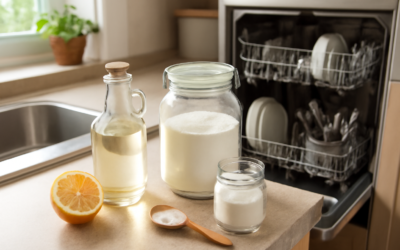
You loaded the dishwasher, hit start, and realized the pod box is empty. Before you panic and grab the Dawn, stop. What can you use instead of dishwasher detergent matters more than you think — the wrong substitute will fill your kitchen with three feet of foam, ruin a $40 Cascade purchase, or worst case, blow out a $200 pump on your Bosch or KitchenAid. The right substitute gets you through one or two cycles safely until you can restock.
- Why Hand Dish Soap Is the Worst Choice
- Baking Soda Plus Borax: The Reliable Substitute
- Baking Soda Plus Lemon Juice for Lighter Loads
- Washing Soda Solo for Greasy Loads
- Castile Soap: Only the Liquid Version, and Sparingly
- What to Never Put in a Dishwasher Dispenser
- Rinse Aid Substitutes for Spotty Glassware
- When to Just Wash by Hand Instead
- Stocking a Backup So This Doesn't Happen Again
Why Hand Dish Soap Is the Worst Choice
Every guide warns against it, but the chemistry is worth understanding. Hand dish soaps like Dawn, Palmolive, and Joy contain anionic surfactants designed to generate foam — sodium lauryl sulfate, sodium laureth sulfate, and similar. Inside a dishwasher’s high-pressure spray system, even half a teaspoon produces sudsing that overflows the door seal and floods your floor. The Bosch service network reports foam ingress as a top-three warranty claim, and most manufacturers void coverage for damage from improper detergents.
If you absolutely must use hand soap in an emergency, the technique is one drop of Dawn plus two tablespoons of baking soda — and you watch the cycle the entire time, ready to hit cancel. Even then, expect to run an empty cycle afterward to flush residue.
Baking Soda Plus Borax: The Reliable Substitute
The most homeowner-friendly substitute is two tablespoons of baking soda mixed with two tablespoons of borax. Borax (sodium tetraborate) is a mild alkaline cleaner sold at Walmart and Home Depot under the 20 Mule Team brand for about $6 a box. The combination provides the alkalinity needed to dissolve grease, with no foaming agents.
- Heavily soiled load: 2 tablespoons baking soda + 2 tablespoons borax
- Normal load: 1 tablespoon each
- Hard water above 7 grains per gallon: Add 1 teaspoon citric acid to the dispenser
Skip this combination if you have a stainless steel interior — borax is generally safe but can leave a slight chalky film on glassware in extra-hard water. Run a vinegar rinse cycle afterward to fix that.
Baking Soda Plus Lemon Juice for Lighter Loads
For a load that’s mostly glasses and lightly used dishes, two tablespoons of baking soda plus three tablespoons of fresh lemon juice works well. The citric acid in the lemon juice cuts grease and adds rinse-aid function. Skip bottled lemon juice with preservatives — they sometimes contain sulfites that leave residue.
This combo works best with white loads and avoids etching aluminum or anodized cookware. Don’t run it with cast iron or carbon steel — the acid strips seasoning.
Washing Soda Solo for Greasy Loads
Washing soda (sodium carbonate) is the active ingredient in most commercial dishwasher detergents. Arm & Hammer sells it in 55-ounce boxes for about $5 at Target and grocery stores. Use one tablespoon in the main dispenser for a normal load. It’s significantly more alkaline than baking soda — pH around 11 versus baking soda’s 8.4 — which makes it more effective on baked-on grease.
Wear gloves when handling washing soda dry. It’s not dangerous but it irritates skin and eyes. Store it in an airtight container because it absorbs moisture and clumps.
Castile Soap: Only the Liquid Version, and Sparingly
Dr. Bronner’s pure castile soap is the one exception to the no-soap rule, and only because it foams much less than detergent-based hand soaps. Use one teaspoon — not a tablespoon — in the dispenser, paired with two tablespoons of baking soda. It’s not as effective as the borax combo but it’s a workable backup if borax isn’t on hand.
Castile soap reacts with hard water to form scum, so if your water is above 10 grains per gallon, skip this option. Run a vinegar rinse afterward regardless.
What to Never Put in a Dishwasher Dispenser
Beyond hand dish soap, several other household products will damage your machine or contaminate dishes:
- Laundry detergent: Different surfactants, higher alkalinity, foams heavily
- Shampoo or body wash: Same foaming problem as hand soap
- Bleach: Damages rubber gaskets and stainless steel components; can release chlorine gas if mixed with residual acids
- Vinegar in the main dispenser: Degrades door seals over time when used as primary detergent (it’s fine for empty rinse cycles)
- Baking soda alone in large amounts: Clogs the pump filter
The Whirlpool and GE service manuals all reinforce these warnings. A pump replacement on a Bosch 800 series runs $250-$450 with labor, and Maytag warranties typically exclude foam damage.
Rinse Aid Substitutes for Spotty Glassware
If you’re rationing detergent, you might be rationing rinse aid too. White distilled vinegar in the rinse aid dispenser works perfectly. It costs about $3 a gallon and lasts months. Fill the dispenser as you would Jet-Dry. Some dishwasher manuals — Miele specifically — warn against vinegar because it can corrode rubber seals over years of use, so check yours before making it a permanent habit.
Citric acid powder dissolved in water (one tablespoon per cup) also works in the rinse aid dispenser and is gentler on seals than vinegar.
When to Just Wash by Hand Instead
If you’re staring at a sink of greasy roasting pans and you don’t have borax or washing soda, sometimes the smart move is washing the worst items by hand and running the dishwasher empty with a vinegar cycle to clean the interior. A 30-minute hand-wash beats a 90-minute cycle that doesn’t clean properly and leaves residue you have to rerun.
Stocking a Backup So This Doesn’t Happen Again
Most homeowners run out of detergent mid-week because they restock during the regular grocery run and underestimate consumption. A typical four-person household uses one Cascade Platinum 60-pod box (about $20-$25 at Costco or Sam’s Club) every six to eight weeks. Set a calendar reminder when you’re down to 10 pods. Keep a backup $4 box of borax and a backup box of Arm & Hammer washing soda on the laundry room shelf for true emergencies.
For households on septic systems, the substitute math matters more. Borax and washing soda are both septic-safe at recommended dilutions. Bleach-based products and high-phosphate commercial detergents are not. If you’ve been running a borax-and-baking-soda system for a few weeks during a detergent shortage, your tank actually fares better than under heavy commercial detergent loads.
The takeaway: knowing what can you use instead of dishwasher detergent is useful, but a $4 box of borax in the laundry room is cheaper insurance than any improvisation. Keep one on the shelf and you’ll never face an emergency mid-cycle again.