Hybrid flooring is one of the fastest-growing categories in the flooring industry, yet many homeowners have never heard of it. The name says it all: hybrid flooring combines the best qualities of laminate and vinyl into a single product that handles moisture, traffic, and style with equal competence.
If you have been comparing laminate flooring and vinyl flooring and cannot decide between the two, hybrid flooring may be exactly the middle ground you are looking for. This guide explains what it is, how it is built, where it works best, and whether it deserves a spot in your home.
- Hybrid Flooring Defined
- How Hybrid Flooring Is Constructed
- Hybrid vs. Laminate Flooring
- Hybrid vs. Luxury Vinyl Plank (LVP)
- Hybrid vs. SPC Flooring
- Hybrid vs. Laminate vs. LVP vs. Hardwood at a Glance
- Advantages of Hybrid Flooring
- Disadvantages of Hybrid Flooring
- Where to Install Hybrid Flooring
- How Much Does Hybrid Flooring Cost?
- What Changes Between Budget, Mid-Range and Premium Hybrid
- How to Choose the Right Hybrid Flooring
- How to Install Hybrid Flooring
- Waterproof Planks, Unsealed Seams
- Hybrid Flooring Care and Maintenance
- Final Thoughts
- Frequently Asked Questions
Hybrid Flooring Defined
Hybrid flooring is a rigid-core floating floor that uses a limestone and polymer composite core topped with a high-resolution printed design layer and a protective wear layer. The core structure borrows from SPC (stone polymer composite) flooring, while the printed design layer uses technology developed for laminate to create realistic wood, stone, and tile visuals.
The result is a plank or tile that is 100 percent waterproof, dimensionally stable, and capable of reproducing the aesthetics of natural materials with impressive accuracy. Most hybrid flooring uses a click-lock installation system that floats over the subfloor without glue or nails.
How Hybrid Flooring Is Constructed
Layer 1: Backing
The bottom layer is typically an attached cork or IXPE foam backing that provides sound dampening, thermal insulation, and moisture protection. This integrated backing eliminates the need for separate underlayment in most installations.
Layer 2: Rigid Core
The core is a dense blend of limestone powder and polyvinyl chloride that creates an extremely rigid, waterproof structural layer. This core will not swell, warp, or delaminate when exposed to water, which is the key differentiator from traditional laminate with its wood-fiber core.
Layer 3: Design Layer
A high-definition photographic print replicates the appearance of wood grain, stone, or concrete. The best hybrid products use multi-width printing with variation between planks to avoid obvious pattern repeats.
Layer 4: Wear Layer
A clear urethane or ceramic-bead-enhanced wear layer protects the design from scratches, scuffs, and fading. Wear layer thickness ranges from 12 mil for residential use to 28 mil or more for commercial applications. Thicker wear layers mean longer service life.
Hybrid vs. Laminate Flooring
The most important difference is water resistance. Laminate uses an HDF (high-density fiberboard) core that swells irreversibly when saturated with water. Hybrid flooring’s limestone-polymer core is completely waterproof and will not change shape regardless of moisture exposure.
Laminate traditionally offered better surface realism thanks to its embossed-in-register texture technology, but hybrid products have largely closed that gap. Modern hybrid planks feature deep embossing that aligns with the printed grain pattern for a convincing tactile experience.
Sound performance favors hybrid flooring slightly because the rigid core and attached backing absorb impact noise better than laminate’s resonant HDF core. Laminate can sound hollow underfoot, especially without premium underlayment, while hybrid feels and sounds more solid.
Hybrid vs. Luxury Vinyl Plank (LVP)
Hybrid flooring and luxury vinyl plank overlap significantly because both use vinyl-based construction. The main difference is core rigidity. Traditional LVP uses a flexible vinyl core that conforms to subfloor imperfections. Hybrid flooring uses a rigid SPC core that bridges minor subfloor irregularities without telegraphing them through the surface.
This rigidity gives hybrid flooring a more substantial feel underfoot, closer to laminate or even hardwood. It also allows installation over slightly imperfect subfloors that would cause problems with flexible LVP. However, the rigid core makes hybrid planks heavier and potentially more difficult to cut during installation.
Hybrid vs. SPC Flooring
Hybrid and SPC are often used interchangeably, and in many stores they describe the same product. Strictly speaking, SPC (stone polymer composite) names the core material, while “hybrid” names the overall concept: a plank with laminate-style visuals and click-lock installation combined with vinyl-style waterproofing. Since most hybrid planks are built on an SPC core, the two are functionally the same.
The label is mostly a marketing choice. When you compare two products, ignore the name on the box and look at wear layer thickness, total plank thickness, whether underlayment is attached, and the warranty terms.
Hybrid vs. Laminate vs. LVP vs. Hardwood at a Glance
| Feature | Hybrid | Laminate | Flexible LVP | Hardwood |
|---|---|---|---|---|
| Core | Rigid limestone and PVC composite | HDF wood fiber | Flexible PVC | Solid or engineered wood |
| Waterproof | Yes | No, water-resistant at best | Yes | No |
| Typical thickness | 5 to 8mm | 7 to 12mm | 2 to 5mm | 14 to 20mm |
| Relative cost | Moderate | Low to moderate | Low to moderate | High |
| Dent resistance | Excellent | Good | Fair | Poor to moderate |
| Installation | Click-lock floating | Click-lock floating | Glue-down or loose lay | Nail, glue or float |
| Refinishable | No | No | No | Yes, several times |
| Typical lifespan | 15 to 25 years | 10 to 20 years | 10 to 20 years | 30 to 100+ years |
Advantages of Hybrid Flooring
100 Percent Waterproof
Hybrid flooring can handle standing water, splashes, and humidity without damage. This makes it suitable for bathrooms, kitchens, laundry rooms, and basements where traditional laminate would be risky. It is an excellent waterproof flooring option for any room in the house.
Easy Installation
The click-lock system requires no special tools, adhesive, or professional skills. Most homeowners can install hybrid flooring in a weekend. The rigid planks click together with a satisfying snap and lay flat immediately without the curling or bowing that flexible vinyl sometimes exhibits.
Comfortable Underfoot
The attached cork or foam backing adds warmth and cushion that hard surfaces like tile and concrete lack. Hybrid flooring is noticeably more comfortable for standing and walking than ceramic tile or natural stone, making it a popular choice for kitchens where you spend long periods on your feet.
Low Maintenance
Regular sweeping and occasional damp mopping are all that hybrid flooring needs. There is no waxing, polishing, or refinishing required. The urethane wear layer resists stains and spills, and the waterproof core means you never need to worry about a mop being too wet.
Compatible with Radiant Heat
Most hybrid flooring products are approved for installation over radiant heating systems. The rigid core transfers heat efficiently, and the dimensional stability prevents warping as the floor temperature changes through heating cycles.
Disadvantages of Hybrid Flooring
Not Real Wood
Despite impressive printing technology, hybrid flooring is not hardwood. Up close, the printed surface lacks the depth, variation, and tactile character of genuine wood grain. For homeowners who value authenticity above all else, hardwood or engineered wood remains the superior choice.
Cannot Be Refinished
When the wear layer wears through, the floor must be replaced. It cannot be sanded and refinished like hardwood. This limits the total lifespan to 15 to 25 years for residential use, depending on the wear layer thickness and traffic levels.
Can Feel Hard
While the attached backing adds some cushion, hybrid flooring is still a hard surface. It is noticeably less forgiving than carpet for dropped items, playing children, or aging joints. Area rugs in living spaces help mitigate this.
Limited Track Record
Hybrid flooring is a relatively new product category. While the materials it is made from are well-proven, the specific combination has only been widely available for about a decade. Long-term performance data spanning 20 or 30 years does not yet exist.
Can Feel Cold
The stone-based core does not hold warmth the way wood-based floors do. Without radiant heat, hybrid planks can feel cool on bare feet in winter, especially over a concrete slab. A cork-backed product or a few area rugs help.
Off-Gassing in Low-Quality Products
Very cheap hybrid planks may release more volatile organic compounds (VOCs) after installation. Look for products that carry a third-party indoor air quality certification, and ventilate the room for a few days after the floor goes down.
Where to Install Hybrid Flooring
Hybrid flooring works in every room of the house. Its waterproof construction makes it particularly well-suited for bathrooms, kitchens, laundry rooms, and basements. The realistic wood-look options are popular in living rooms, bedrooms, and hallways. Stone and concrete patterns work in entryways and commercial spaces.
The only environment where hybrid flooring is not recommended is outdoors. UV exposure will fade the design layer, and extreme temperature swings can affect the click-lock joints.
How Much Does Hybrid Flooring Cost?
Hybrid flooring ranges from $2.50 to $7.00 per square foot for materials, positioning it between laminate and mid-range hardwood. Installation costs are similar to laminate at $2.00 to $4.00 per square foot for professional labor. DIY installation eliminates the labor cost entirely.
For a 400-square-foot living room, expect to spend $1,000 to $2,800 for materials or $1,800 to $4,400 installed. These prices reflect mid-range products from reputable brands. Budget hybrid products exist below this range but often sacrifice wear layer thickness and design quality.
What Changes Between Budget, Mid-Range and Premium Hybrid
Price tiers in hybrid flooring track a few physical specs more than anything else:
- Budget: thinner planks around 5 to 6mm, a 12 mil wear layer and simpler designs. Fine for rentals, laundry rooms and other low-traffic spaces.
- Mid-range: 6 to 7mm planks, a 20 mil wear layer, attached underlayment and textures that line up with the printed grain. The best value for most homes.
- Premium: 7 to 8mm planks, a 22 to 28 mil wear layer, the most convincing visuals and denser backing. Worth it for busy households and light commercial spaces.
How to Choose the Right Hybrid Flooring
Prioritize wear layer thickness. For residential use, 20 mil is the sweet spot between cost and longevity. For commercial spaces or homes with large dogs, step up to 28 mil. Check that the product carries a lifetime residential warranty and confirm that it is approved for wet areas if you plan to install it in bathrooms.
Look at the attached backing material. Cork provides better sound absorption and thermal performance than IXPE foam. Request samples before ordering and examine them in your home’s lighting conditions, as store lighting can make colors look different.
How to Install Hybrid Flooring
Hybrid planks float over the subfloor, locking together at the edges without glue or nails. A typical room goes like this:
- Prepare the subfloor. It must be clean, dry and flat within about 3/16 inch over 10 feet. Hybrid can go over concrete, plywood, existing vinyl or tile. If you plan to pull up old sheet vinyl or tile adhesive from before the 1980s, have it tested for asbestos first.
- Acclimate the planks. Leave the boxes in the room for 24 to 48 hours so they reach room temperature.
- Handle underlayment. Skip it if the planks have an attached pad, and never stack two cushion layers. Over concrete, add a vapor barrier if the manufacturer calls for one.
- Start on the longest wall. Use 1/4 inch spacers to leave an expansion gap at every wall.
- Lock the rows. Angle each plank into the previous row at about 20 to 30 degrees and press down until it clicks. Stagger end joints by at least 6 inches.
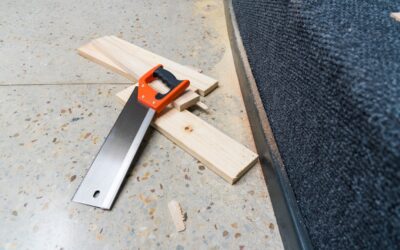
- Cut to fit. Score and snap planks with a utility knife, or use a saw for door jambs and notches. Cut outdoors or with dust collection, and wear a dust mask, since the mineral core produces fine dust.
- Finish the edges. Install baseboards, transitions and T-moldings over the expansion gaps.
Most people with basic DIY experience can finish a standard room in a day.
Waterproof Planks, Unsealed Seams
The planks themselves are fully waterproof because the core holds no wood fiber or other organic material, so it cannot swell or feed mold. The joints between planks are not sealed, though. In a real flood or a slow appliance leak, water can travel through the seams and sit on the subfloor. The planks survive, but the subfloor needs to dry: lift the affected rows, dry the area completely and check for mold before clicking the floor back together.
Hybrid Flooring Care and Maintenance
Routine Cleaning
Sweep or vacuum with a soft brush or with the beater bar turned off. Damp-mop weekly with a microfiber mop and warm water, or a pH-neutral cleaner made for vinyl floors.
What to Avoid
- Bleach, ammonia and abrasive cleaners, which dull the wear layer
- Steam mops, since high heat can damage the wear layer or loosen an attached pad
- Dragging furniture; lift heavy pieces and put felt pads on every leg
Long-Term Tips
Put mats at entries to catch grit and water, keep pet nails trimmed, and use blinds or UV-filtering window film where strong sun hits darker planks every day.
Final Thoughts
Hybrid flooring answers the question that homeowners have been asking for years: why can we not have a floor that looks like wood but handles water like vinyl? The combination of SPC rigidity, realistic design printing, and click-lock simplicity makes hybrid flooring one of the most practical and versatile options on the market in 2026. It is not perfect, and it is not real wood, but for the vast majority of homes and lifestyles, it delivers exactly what modern flooring should.
Frequently Asked Questions
What is hybrid flooring made of?
A rigid core of limestone (calcium carbonate), PVC and stabilizers, the same blend used in SPC flooring. On top sit a printed design layer, a clear wear layer and a UV-cured coating, and most planks have a cork or foam pad bonded to the bottom.
Is hybrid flooring waterproof?
Yes. The core contains no wood fiber, so it will not absorb water, swell or grow mold. It suits kitchens, bathrooms, laundry rooms and basements, but remember that water can still get under the floor through the seams in a flood.
How long does hybrid flooring last?
Most hybrid floors last 15 to 25 years in a home. Planks with a wear layer of 20 mil or more and a good UV coating last longest, and many quality products carry residential warranties of 20 years or longer.
Can hybrid flooring be installed over tiles?
Usually, yes. As a floating floor, hybrid can go over firmly bonded ceramic tile as long as the surface is flat within about 3/16 inch over 10 feet. Fill deep or wide grout lines with a leveling compound first so they do not telegraph through.
Is hybrid flooring better than laminate?
For most rooms, yes. Hybrid is fully waterproof, more stable and more dent resistant. Laminate still wins on entry-level price and has a slightly softer feel, so it remains a reasonable choice for dry bedrooms and offices.
Prefer to explore on your own?
See how new flooring looks in your actual room in seconds — free, no signup.
Try the free Floor Studio →