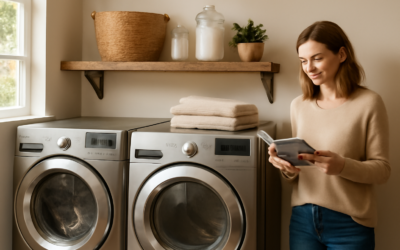
Walk into any appliance store and the dryer wall looks identical until you read the price tags, which swing from $500 to over $1,800 for machines that all seem to dry clothes. So what is the best dryer to buy? There is no single answer, because the right dryer depends on your hookups, your space, your household size, and how much you care about energy bills. What you can do is narrow the field fast by deciding four things: gas or electric, vented or heat-pump, the capacity you need, and which features are worth paying for. This guide walks through each.
Gas vs Electric: Start With Your Hookups
Your first decision is often made for you by what is behind the wall. Electric dryers run on a 240-volt outlet and cost less upfront, typically $500 to $1,200. Gas dryers require a gas line and a 120-volt outlet, cost $50 to $150 more to buy, but dry faster and cost less per load to run in most regions because natural gas is cheaper than electricity. If you have a gas line, a gas dryer usually pays back its premium over a few years. No gas hookup means electric, unless you want to pay a plumber $300 to $800 to run a line.
Vented vs Heat-Pump (Ventless) Dryers
Traditional vented dryers blow hot, moist air outside through a duct. They are inexpensive, fast, and proven, but they require an exterior vent. Heat-pump dryers recycle heat instead of venting it, using up to 50% less energy and needing no duct, which makes them ideal for apartments, closets, and interior walls where venting is impossible.
- Vented electric/gas: $500 to $1,200, fastest drying, needs a vent.
- Heat-pump (ventless): $900 to $1,800, most energy-efficient, no vent required, gentler on fabrics, but dries more slowly.
- Condenser ventless: a middle option, no vent but less efficient than a heat pump.
If your utility rates are high or you cannot vent outside, a heat-pump dryer’s energy savings and placement freedom often justify the higher sticker price.
Match Capacity to Your Household
Dryer capacity, measured in cubic feet, should roughly match or slightly exceed your washer so a full wash load fits in one dry cycle. General guidance:
- 3.5 to 6.0 cu ft: singles, couples, or compact spaces.
- 7.0 to 7.4 cu ft: the sweet spot for most families of three to five.
- 7.5 to 9.0+ cu ft: large families, frequent bedding loads, or anyone who hates running multiple cycles.
Bigger is not always better; an oversized drum costs more to buy and uses more energy if you routinely dry small loads. Aim for a dryer about twice the capacity of your washer for comfortable drying.
Features Worth Paying For
Some dryer features are genuine upgrades and others are marketing. The ones that earn their keep: a moisture sensor that stops the cycle when clothes are actually dry, which protects fabrics and saves energy compared to timed drying. A steam cycle relaxes wrinkles and refreshes clothes between washes. A wrinkle-prevention mode tumbles periodically after the cycle ends so laundry does not set. Smart connectivity that pings your phone when a load finishes is convenient if you tend to forget. Skip features you will not use, like exotic specialty cycles that mostly pad the spec sheet.
Top Brands and Models to Consider
A few machines consistently earn strong marks. The LG DLEX series and Samsung’s flagship dryers pair large capacity with reliable moisture sensing and steam. The Whirlpool and Maytag mid-range models are workhorses praised for durability and straightforward controls. For ventless efficiency, the Miele heat-pump dryers are top-tier but pricey, while LG and Bosch offer more affordable heat-pump options. Match the dryer to its companion washer when possible, since stacking kits and pedestals are brand-specific.
Energy Efficiency and Operating Costs
The sticker price is only part of the cost; the dryer runs for a decade. Look for the ENERGY STAR label, which certifies a dryer uses about 20% less energy than a standard model through better moisture sensing and heat management. Heat-pump dryers lead the pack, cutting energy use by up to half, though their slower cycles and higher purchase price mean the payback depends on your local utility rates. Gas dryers cost less per load to run than electric in most regions because natural gas is cheaper per unit of heat. A moisture sensor is the most underrated efficiency feature, since it stops the cycle the moment clothes are dry instead of running a fixed timer that bakes already-dry laundry and wastes power.
Reliability and Maintenance
A dryer that breaks in year three is no bargain, so weigh durability alongside features. Check reliability ratings and reviews for the specific model, not just the brand, since lines vary. Simpler machines with mechanical dials often outlast feature-packed touchscreen models that have more to go wrong. Whatever you buy, basic maintenance dramatically extends its life and prevents fire risk: clean the lint filter after every load, vacuum the lint trap housing a few times a year, and have the full vent duct cleaned annually. A clogged vent is the leading cause of long drying times, overheating, and dryer fires, so a clear, short vent run is as important as the machine itself.
Don’t Forget Installation and Space
Measure before you fall in love with a model. Standard dryers are about 27 to 29 inches wide, but you need clearance for the door swing and several inches behind for the vent or condenser. Stackable and side-by-side configurations need different footprints. Confirm your laundry room has the right outlet (240V for electric, gas line and 120V outlet for gas) and an accessible vent path for vented models. A short, straight vent run dries faster and safer than a long, kinked one, so plan that route in advance.
Final Recommendation
So what is the best dryer to buy for most homes? A 7.3-cubic-foot vented dryer with a moisture sensor and steam cycle, in gas if you have the hookup, hits the sweet spot of price, speed, and capacity for a typical family, landing around $700 to $1,000. Choose a heat-pump ventless model if you cannot vent outside or want the lowest energy bills, and scale capacity up only if you regularly dry bedding or feed a large household. Match it to your washer and your hookups, and you will have a machine that earns its place for the next decade.