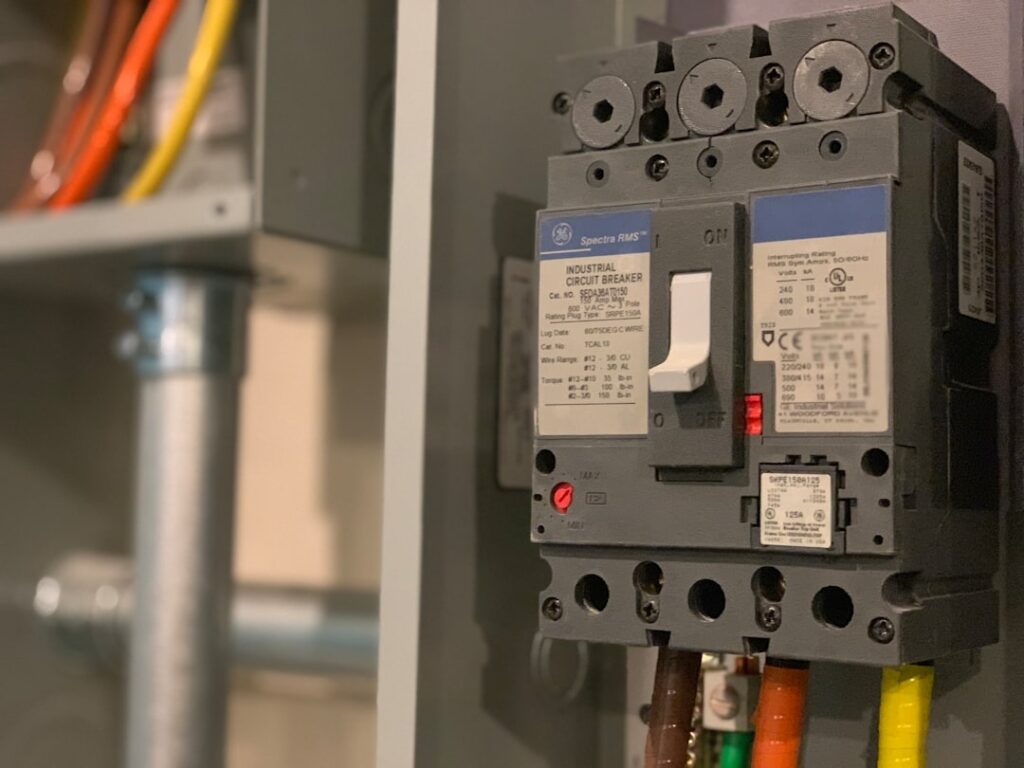
If you’re wiring an electric range, a hot tub, or an EV charger, the question what size wire do I need for a 40 amp breaker has a clear, code-based answer: 8 AWG copper. Undersizing that wire is one of the most dangerous mistakes in home electrical work because a conductor that’s too thin overheats, melts insulation, and can start a fire behind your walls. This guide explains why 8 AWG is the right call, how ampacity works, and where these circuits typically show up, but the wiring itself belongs to a licensed electrician.
The Short Answer: 8 AWG Copper
For a 40 amp breaker, run 8 AWG copper conductors. In the American Wire Gauge system, a smaller number means a thicker wire, so 8 AWG is heftier than the 10 AWG used on a 30 amp circuit. That extra copper carries 40 amps without exceeding safe operating temperatures.
If you’re using aluminum instead of copper, you need to step up to 6 AWG aluminum for the same 40 amp load, because aluminum carries less current per gauge than copper. Most residential appliance circuits use copper, so 8 AWG copper is the number to remember.
Why Ampacity Drives the Choice
Ampacity is the maximum current a conductor can carry continuously without overheating. Under the National Electrical Code, 8 AWG copper is rated for 40 to 55 amps depending on the insulation temperature rating and installation conditions. Common NM-B cable (Romex) uses the 60°C column, where 8 AWG copper lands right at 40 amps, a clean match for a 40 amp breaker.
The breaker and the wire have to be sized together. The breaker protects the wire, not the appliance. If someone pairs a 40 amp breaker with 10 AWG wire, the breaker won’t trip until the load far exceeds what that thin wire can safely handle, and the wire cooks first. That mismatch is exactly the failure mode fires are made of.
Compare: 40 Amp vs 50 Amp Wiring
People often confuse the two because ovens and ranges sometimes call for either. Here’s the clean breakdown:
- 30 amp breaker: 10 AWG copper, common for dryers and small water heaters.
- 40 amp breaker: 8 AWG copper, the subject of this guide.
- 50 amp breaker: 6 AWG copper, used for larger ranges and many EV chargers.
Notice the pattern: jumping from 40 to 50 amps means moving from 8 AWG to 6 AWG. Always size the wire to the breaker, and always confirm the appliance nameplate to be sure a 40 amp circuit is what the manufacturer actually specifies.
Common Uses for a 40 Amp Circuit
Forty-amp circuits sit in a sweet spot for several household appliances. You’ll see them feeding:
- Electric ranges and cooktops in the 7 kW to 8 kW range that don’t need a full 50 amp feed.
- Level 2 EV chargers configured for a 32 amp continuous charge rate.
- Central air conditioners and heat pumps whose nameplate calls for 40 amp protection.
- Some electric water heaters and small subpanels.
Continuous loads matter here. Devices that draw current for three or more hours, like an EV charger, are limited to 80% of the breaker rating, which is why a 40 amp breaker supports a 32 amp continuous charger. That 80% rule is baked into the code and into the wire sizing.
Factors That Can Change the Answer
Eight AWG copper is the baseline, but real installations have variables that can force an upsize. Long wire runs suffer voltage drop, and electricians often bump up a gauge when a circuit runs 100 feet or more. Bundling multiple current-carrying conductors together, or running wire through a hot attic, triggers derating that reduces a conductor’s effective ampacity.
Conduit type, ambient temperature, and whether the terminals are rated for 60°C or 75°C all feed into the final decision. This is precisely why the code fills whole tables with adjustment factors, and why a blanket answer only gets you to the starting point.
Don’t Forget the Ground and Neutral
A 40 amp circuit is more than just the two hot conductors. Depending on the appliance, you’ll also run a neutral and an equipment grounding conductor. Modern ranges and dryers require a 4-wire circuit, two hots, a neutral, and a ground, so a common choice is 8/3 copper cable with ground, which bundles all four conductors in one jacket.
The grounding conductor can sometimes be sized smaller than the current-carrying conductors, but the exact requirement comes from code tables. This is another reason the wiring belongs to a professional: getting the hots right but botching the grounding or neutral leaves a dangerous, non-compliant circuit that may fail inspection or, worse, energize an appliance chassis.
NM Cable vs. Conduit
How the wire is run affects the final gauge decision. Inside walls, electricians often use NM-B cable (Romex), which relies on the 60°C ampacity column, where 8 AWG copper is rated for exactly 40 amps. In conduit, individual THHN conductors rated at 75°C or 90°C may allow the same or slightly different sizing, but terminal ratings on the breaker and appliance usually cap you at the 75°C values.
For long runs, exterior runs to a detached garage, or installations in conduit, the calculation shifts again. Voltage drop over distance can push an electrician to upsize to 6 AWG even on a 40 amp circuit. These are exactly the judgment calls that separate a code-compliant install from a guess.
What It Costs to Install
Knowing the ballpark helps you sanity-check a quote. Materials for a typical 40 amp circuit, the 8 AWG cable, breaker, and receptacle, often run $75 to $200 depending on the length of the run and copper prices. Labor for a licensed electrician commonly adds $150 to $500, so a straightforward 40 amp circuit for a range or EV charger frequently totals $250 to $700 installed.
Longer runs, panel upgrades, or difficult access raise that figure. If a quote comes in dramatically lower than this range, ask whether the wire is being sized correctly, an undersized conductor is a corner no reputable electrician cuts.
This Is a Job for a Licensed Electrician
Knowing that a 40 amp breaker needs 8 AWG copper is useful for planning, budgeting, and double-checking a quote, but it is not a green light to wire the circuit yourself. Panel work involves live conductors, correct grounding and bonding, proper breaker seating, and permit inspections that protect your home and your insurance coverage.
Hire a licensed electrician to design, install, and inspect any 40 amp circuit. They’ll confirm the wire gauge for your specific run, account for derating, and make sure everything is safe and to code. When you’re deciding what size wire you need for a 40 amp breaker, treat 8 AWG copper as the answer to verify with a pro, not a substitute for one.