
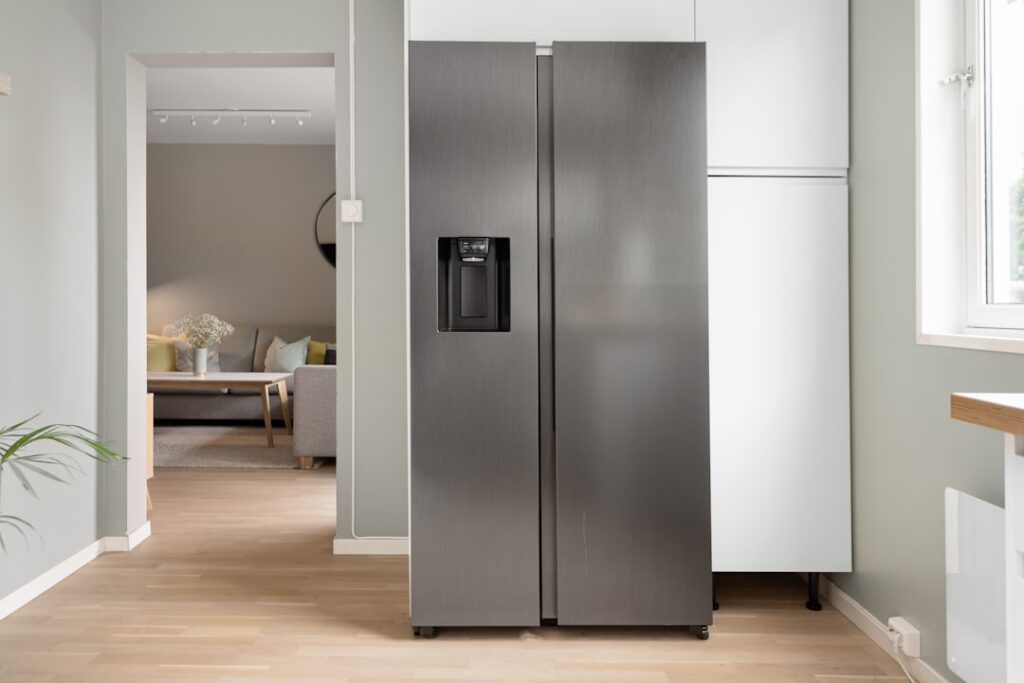
The dial inside your refrigerator probably reads “1 to 5” or “cold to coldest,” which tells you almost nothing useful. If you have ever wondered what temp should fridge and freezer be, the food-safety answer is precise: 37°F in the fridge and 0°F in the freezer. Those two numbers protect your food from spoilage, slash your grocery waste, and keep your appliance running efficiently. Here is how to hit them and hold them.
- The Two Numbers That Matter
- Why the Danger Zone Matters
- Trust a Thermometer, Not the Dial
- Where You Put Food Changes Everything
- Habits That Help You Hold Temperature
- What to Do During a Power Outage
- Signs Your Appliance Needs Attention
- Freezer Settings and Smart Freezing
- Seasonal and Placement Factors
- The Bottom Line
The Two Numbers That Matter
Federal food-safety guidance is clear and worth committing to memory.
- Refrigerator: at or below 40°F, with 37°F as the sweet spot. This is cold enough to slow bacterial growth without freezing your produce.
- Freezer: 0°F. At this temperature, food freezes solid and microbial activity essentially stops, preserving quality for months.
The fridge target leaves a small safety cushion below the 40°F danger threshold. Setting it to 37°F means brief door openings won’t push your food into the unsafe zone.
Why the Danger Zone Matters
Bacteria multiply fastest between 40°F and 140°F, the range food-safety experts call the danger zone. In that window, harmful organisms can double in as little as 20 minutes. Keeping the fridge below 40°F slows them to a crawl; keeping the freezer at 0°F stops them almost entirely.
This is why a fridge that drifts up to 45°F is a genuine problem, not a minor inconvenience. Your milk, meat, and leftovers spend hours in a range where bacteria thrive, even if nothing smells off yet.
Trust a Thermometer, Not the Dial
Built-in dials are notoriously vague and often inaccurate. Spend a few dollars on a standalone appliance thermometer and place it in the middle of a shelf, not against the back wall where it reads colder. Check it after the appliance has run undisturbed for several hours.
Put one thermometer in the fridge and another in the freezer. If the readings are off, adjust the control a notch, wait a full day, and check again. Temperatures stabilize slowly, so resist the urge to make several changes at once.
Where You Put Food Changes Everything
A refrigerator is not uniformly cold, and using its zones correctly keeps food safer and fresher.
- Coldest spots (back and bottom): raw meat, poultry, and fish, ideally on the lowest shelf so drips can’t contaminate other food.
- Middle shelves: dairy, eggs, and leftovers.
- Crisper drawers: produce, with humidity controls if your model has them.
- Door shelves (warmest area): condiments and juices, never milk or eggs, since the door temperature swings most.
That last point trips up a lot of people. The door is the warmest part of the fridge, so the built-in egg tray there is actually a poor spot for eggs.
Habits That Help You Hold Temperature
Reaching 37°F and 0°F is only half the job; keeping them there is the rest. A few habits make a real difference.
- Keep the fridge between 75 and 85 percent full. A reasonably stocked fridge holds cold better, but an overpacked one blocks airflow.
- Let hot leftovers cool briefly before refrigerating, then store them; don’t load a pot of boiling soup straight in.
- Minimize how long the door stays open, and check that the gasket seals tightly by closing it on a dollar bill, you should feel resistance pulling it out.
- Leave space around the unit so it can shed heat, and vacuum the condenser coils a couple of times a year.
What to Do During a Power Outage
Cold is a resource you can stretch if you don’t open the doors. A closed refrigerator keeps food safe for about four hours, and a full freezer holds for roughly 48 hours, half that if it is only partly full. Resist peeking.
When power returns, check the thermometers. If the fridge held below 40°F and freezer items still contain ice crystals, the food is generally safe. When in doubt, throw it out, no meal is worth a foodborne illness.
Signs Your Appliance Needs Attention
If you can’t hold the right temperatures no matter how you set the dial, something mechanical may be off. Frost buildup, a motor that runs constantly, or temperatures that swing wildly point to a failing gasket, a clogged coil, or a dying compressor. Cleaning the coils and checking the door seal solve many issues; persistent problems warrant a repair technician.
An appliance struggling to stay cold also runs longer and costs more on your energy bill, so addressing it early pays off twice.
Freezer Settings and Smart Freezing
Zero degrees keeps frozen food safe indefinitely, but quality still slowly declines over time, so 0°F is about safety and a deep-freeze hold rather than infinite perfection. If you freeze a lot of fresh food at once, some models include a “fast freeze” or “power freeze” setting that drops the temperature temporarily to freeze items quickly and lock in texture.
Freeze food in portions you’ll actually use, and label packages with the date. A well-organized freezer at 0°F also holds its temperature better because cold items act like ice packs, helping the unit recover quickly each time you open the door. Avoid cramming the vents shut, though, since trapped airflow creates warm pockets.
Seasonal and Placement Factors
Where you put the appliance affects how easily it holds temperature. A refrigerator pushed against a hot wall, sitting next to an oven, or baking in direct sunlight from a window works harder and may struggle in summer. Leave a couple of inches of clearance around and behind the unit so it can shed heat.
In a hot garage, a standard fridge or freezer may not maintain 0°F in summer or may run constantly in extreme cold, since the thermostat reads ambient air. If you keep a second unit in the garage, look for one rated for garage or wide-temperature use. Indoors, the steady climate makes holding 37°F and 0°F far easier year-round.
The Bottom Line
So, what temp should fridge and freezer be? Set the refrigerator to 37°F and the freezer to 0°F, then verify those numbers with a real thermometer rather than trusting the dial. Store food in the right zones, keep the doors closed and the seals tight, and you will waste less food, eat more safely, and keep your appliance running efficiently for years.


