If your glasses come out of the dishwasher spotty, your showerheads crust over, and your skin feels tight after a wash, you have hard water — and treating it one faucet at a time is a losing battle. A whole house water softener and filtration system solves the problem where it enters the home, conditioning and cleaning every drop before it reaches a single tap, appliance, or shower. It is one of the higher-cost plumbing upgrades a homeowner can make, typically $1,500 to $4,000 installed, but it protects tens of thousands of dollars of plumbing and appliances and pays back in longer equipment life and lower soap and detergent use.
These systems combine two distinct jobs that people often confuse. Softening removes the calcium and magnesium that cause scale; filtration removes sediment, chlorine, and other contaminants that affect taste, smell, and health. A true whole-home setup usually does both, in stages, at the main water line.
Softening and Filtration Are Two Different Jobs
Understanding the distinction is the key to buying the right equipment.
A water softener targets hardness — dissolved calcium and magnesium measured in grains per gallon (GPG). It does not make water “cleaner” in a health sense; it stops the scale that clogs pipes, ruins water heaters, and leaves spots. Most softeners use ion exchange, swapping hardness minerals for sodium (or potassium) via a resin bed that periodically regenerates with a brine solution.
A whole-house filter targets contaminants — sediment, chlorine, chloramine, iron, sulfur smell, and sometimes VOCs or heavy metals. It uses media like carbon, sediment cartridges, or specialty beds to improve taste, odor, and safety.
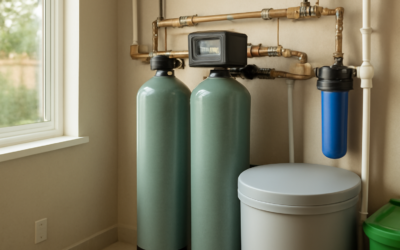
A complete whole house water softener and filtration system stacks these: typically a sediment pre-filter, a carbon filter, and a softener, plumbed in series on the main line.
Types of Systems
Salt-Based Ion-Exchange Softeners
The gold standard for hardness. They genuinely remove hardness minerals, so you get slick, spot-free soft water. They require a brine tank and salt refills (about $5 to $15 a bag, one or two bags a month for a family of four) and discharge brine during regeneration. Cost: $600 to $2,000 for the unit.
Salt-Free Conditioners (TAC)
These do not remove hardness; they crystallize the minerals (template-assisted crystallization) so they do not stick to surfaces. No salt, no brine discharge, low maintenance, but the water is not truly “soft” — you will not get the slick feel, and severe hardness still shows some scale. Good for eco-conscious homes or mild hardness. Cost: $500 to $1,500.
Whole-House Carbon Filters
Catalytic or activated carbon tanks remove chlorine, chloramine, and improve taste and smell across the whole house. Often paired with a softener. Cost: $500 to $1,800.
Combination / All-in-One Systems
Packaged systems that bundle sediment filtration, carbon, and softening (or conditioning) into a coordinated setup. Convenient and increasingly popular. Cost: $1,500 to $4,000 for the equipment.
Sizing: Match Grain Capacity to Your Household
Undersizing is the most common mistake. A softener is rated by grain capacity — how many grains of hardness it removes between regenerations. To size it, multiply your water hardness (GPG) by your daily water use (roughly 75 gallons per person per day) by the number of people. A family of four with 15 GPG water uses about 4,500 grains a day; over a 7-day regeneration cycle that is around 31,500 grains, so you want a 32,000 to 40,000-grain unit with some headroom. Get your hardness from a $10 test kit or your water utility’s report; if you are on a well, test for iron and pH too.
- 1–3 people: 24,000–32,000 grain
- 4–5 people: 32,000–48,000 grain
- 6+ people or very hard water: 48,000–64,000 grain
What It Costs, All In
Budget in three buckets: equipment, installation, and ongoing supplies.
- Equipment: $600–$4,000 depending on softener-only vs. full filtration combo
- Professional installation: $300–$1,000 (more if new plumbing, a drain line, or an electrical outlet must be run to the install location)
- Salt (salt-based systems): $60–$180 a year
- Filter cartridge or media replacement: $50–$300 a year depending on type
A typical mid-range whole-home softener-plus-carbon setup lands around $2,000 to $3,500 installed. Salt-free and simpler systems come in lower; well-water systems that also need iron and sulfur treatment run higher.
Installation Basics
The system installs on the main water line after the meter and pressure regulator but before the water heater, so the whole house gets treated water. A common order is: sediment pre-filter first (to protect the downstream media), then carbon filter, then softener, then out to the house. Salt-based softeners also need a drain connection for regeneration discharge and, for many units, a nearby 120V outlet for the control valve.
Many handy homeowners can install a system with a bypass valve and standard fittings in a half-day, but if you are cutting into copper or PEX main lines, dealing with a well, or need to add a drain, hiring a plumber for $300 to $800 is money well spent. Improper drain routing or a missed air gap can violate plumbing code.
Maintenance You Cannot Skip
These systems are not install-and-forget. Keep them running with a simple routine:
- Refill the salt tank when it drops below half; keep salt above the water line. Use quality pellets to avoid bridging (a crust of salt that stops dissolving).
- Break up salt bridges occasionally with a broom handle if you see the salt level not dropping.
- Replace sediment and carbon cartridges on schedule — sediment every 3 to 6 months, carbon every 6 to 12 months, depending on water quality.
- Clean the brine tank once a year and sanitize the resin per the manual.
- Retest water annually to confirm the system is still performing, especially on wells.
Signs You Need One
Before you spend the money, confirm you actually have a problem worth solving. The telltale signs of hard water and contamination include white, crusty scale on faucets and showerheads, spotty glasses and dishes, soap that will not lather well, stiff and dingy laundry, dry and itchy skin after bathing, and a low, slowly worsening water pressure as scale narrows your pipes. On the filtration side, a chlorine smell or taste, a rotten-egg sulfur odor, rusty orange staining in sinks and tubs (iron), or a cloudy, sediment-laden look all point to contaminants a whole-house filter would remove. The most reliable step is a water test — a $10 to $30 home kit for hardness, iron, pH, and chlorine, or a certified lab test for $50 to $150 if you want to check for specific health contaminants. On a private well, testing is essential because there is no utility treating your water before it reaches you.
Salt-Based vs. Salt-Free: Which to Choose
The most common decision point is whether to go salt-based or salt-free, and it comes down to what you value. Choose a salt-based ion-exchange softener if you have genuinely hard water (over about 7 GPG), want the slick, spot-free, truly soft water that protects appliances best, and do not mind refilling salt and dealing with brine discharge. Choose a salt-free conditioner if you have mild to moderate hardness, want the lowest maintenance and no salt or wastewater, are on a septic system or have discharge restrictions, or are watching sodium for dietary reasons. Salt-free units reduce scale buildup but do not deliver that soft-water feel, and in very hard water they underperform. A middle path some homeowners take is a salt-based softener for hot-water lines and appliances plus a separate drinking-water filter at the kitchen tap, getting the best of both without softening the water they drink.
Is It Worth It?
For homes with hard water (over about 7 GPG) or noticeable taste, odor, or staining issues, the value is real. Soft, filtered water extends the life of your water heater by years, cuts scale that strangles pipes and clogs fixtures, reduces soap and detergent use by 30 to 50 percent, and leaves dishes, glass, and skin visibly better. The upfront cost is significant, but spread over the 10-to-20-year service life of a quality system and the appliance protection it provides, a whole house water softener and filtration system is one of the more sensible long-term investments a hard-water household can make. Test your water first, size the equipment honestly, and match the system type to whether you value truly soft water or prefer a salt-free, low-maintenance approach.