
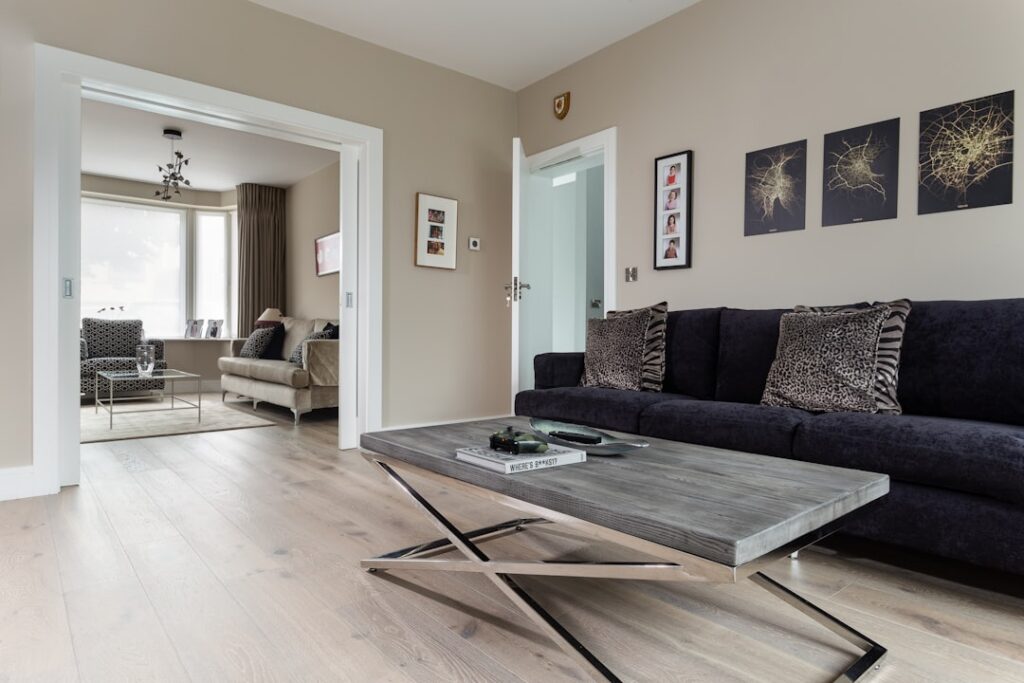
Wholesale wood flooring is the channel through which contractors, designers, and large commercial projects buy hardwood — typically 30-50 percent below retail pricing, with bulk minimums and trade-only access. This guide covers how the wholesale tier works, who can access it, the major distributor networks, and the rare cases where homeowners can buy at wholesale or near-wholesale pricing.
How Wholesale Pricing Works
Manufacturer pricing has multiple tiers:
- Manufacturer suggested retail price (MSRP) — what’s listed on packaging
- Retail price — what stores sell at, typically 60-80% of MSRP
- Distributor price — what wholesalers buy at, 50-65% of MSRP
- Contractor price — what trade accounts get, 55-70% of MSRP
- Mill direct / volume — for large orders, 45-60% of MSRP
The savings between retail and contractor pricing are typically 15-25%. For a $10/sq ft retail product, that’s $7.50-8.50/sq ft at contractor pricing — meaningful on a 1,500 sq ft job ($2,250-3,750 saved).
Major Wholesale Distribution Networks
Major US wood flooring distributors:
- BSC Flooring (Building Specialties Corp) — largest US flooring distributor, multiple regions
- Carpet One Co-op — independent flooring retailer co-op with wholesale buying power
- Anderson Tuftex Pro — Anderson’s contractor program
- Mohawk Edge — Mohawk’s pro tier with discounts and exclusive product
- Shaw Floors Pro — Shaw’s contractor channel
- Hard Surface Distribution (HSD) — regional wholesaler, multiple states
Each network requires verified trade credentials — typically a contractor’s license, business registration, or designer ASID/IIDA membership.
Trade Programs Worth Knowing
Manufacturer trade programs that contractors and designers join:
- Mohawk Pro Loyalty — discount tiers, exclusive products, training
- Shaw Floor Authority Pro — pricing, marketing co-op funds
- Anderson Tuftex Pro — designer-driven program
- Bruce / Armstrong Pro — specifically for installers
- Mannington Pro — vinyl and hardwood combined programs
- Lumber Liquidators Pro Loyalty — formerly Lumber Liquidators, now LL Flooring
Most programs require a contractor’s business license, EIN, and ongoing volume thresholds. Once enrolled, savings range 8-25 percent depending on volume and program tier.
Volume Pricing Breakpoints
Wholesale wood flooring scales with order size:
| Order size | Typical savings |
|---|---|
| Under 500 sq ft | 0% (full retail) |
| 500-1,000 sq ft | 5-10% (volume retail) |
| 1,000-2,500 sq ft | 10-20% (small contractor tier) |
| 2,500-10,000 sq ft | 20-35% (mid-tier contractor) |
| 10,000+ sq ft | 30-50% (commercial / mill direct) |
For homeowners with whole-house projects (typically 2,000-5,000 sq ft), the volume tier is meaningful but accessible only through trade relationships.
How Homeowners Can Access Wholesale or Near-Wholesale
Three legitimate paths for homeowners to access wholesale-style pricing:
Through a Contractor
Hire a flooring contractor and have them order materials at their wholesale pricing. The contractor adds a markup (typically 10-30 percent), but the final price is still often below retail. This is the most common path.
Negotiate the markup explicitly — some contractors charge wholesale + markup; others charge retail and pocket the wholesale discount. Get itemized quotes that separate material from labor.
Through an Interior Designer
Interior designers have trade accounts at most major manufacturers. For larger projects ($10,000+ in materials), designers can pass through trade pricing minus their fee. Net cost is often comparable to or below contractor pricing.
Direct from Mill
For volume projects (typically 2,000+ sq ft), some manufacturers will quote mill-direct pricing for verified buyers. This requires a flooring distributor introduction, a builder relationship, or in some cases just a phone call to the manufacturer’s regional rep with a credible project plan.
Anderson Tuftex Pro Example
Anderson Tuftex Pro tier illustrates a typical contractor program:
- Free enrollment for licensed contractors
- 5-12% discount off retail on standard products
- Access to exclusive Anderson Tuftex Designer Series
- Free samples for trade customers
- Marketing co-op for contractor businesses
- Direct manufacturer support on specifications and warranty
Anderson Tuftex offers similar programs to Shaw Floors and Mohawk through their respective Pro tiers.
What to Verify Before Wholesale Purchase
Trade pricing comes with reduced retail-style protections:
- Warranty transferability — some contractor-tier products have shorter warranty for residential use
- Return policy — wholesale orders often non-returnable
- Lead time — direct-from-mill 4-12 weeks vs in-stock 2-7 days
- Minimum order — typically 500 sq ft for trade pricing
- Color verification — must commit before mill order, no exchange after delivery
For homeowners working through a contractor, the contractor handles these details. For DIY purchases through trade channels, the homeowner takes on this responsibility.
Risk vs Reward
The decision matrix on wholesale vs retail wood flooring:
| Project size | Wholesale strategy | Approach |
|---|---|---|
| Under 500 sq ft | Skip wholesale | Big-box retail, sales cycles, closeouts |
| 500-2,000 sq ft | Maybe through contractor | Get itemized quotes; compare contractor markup vs retail |
| 2,000-5,000 sq ft | Definitely through contractor | Volume tier savings significant |
| 5,000+ sq ft | Investigate mill direct | Builder/contractor relationship for direct quotes |
For most residential projects, going through a competent contractor with trade pricing access produces the best mix of cost and risk management. Direct wholesale purchases by homeowners require trade credentials and volume that most don’t have.
Common Misconceptions
“Wholesale” advertising on retail websites usually isn’t actual wholesale. Stores like “Wholesale Wood Flooring,” “Wholesale Hardwood Outlet,” and similar names operate at retail pricing — the “wholesale” branding is marketing, not a pricing model. Real wholesale requires verified trade credentials and minimum order quantities. Verify the structure before assuming the savings are real.
Prefer to explore on your own?
See how new flooring looks in your actual room in seconds — free, no signup.
Try the free Floor Studio →

