Swap the grids in a set of windows and you can change the personality of a house without touching the siding or roof. The right window grid styles make a Colonial look properly Colonial and a Craftsman look intentional. The wrong ones make a modern home feel fussy or a traditional home feel unfinished.
Part of our Windows & Doors guide — explore the full guide →
The main patterns are colonial (an even checkerboard), prairie (a border of small squares around a large center pane), diamond (crossing diagonal bars), top-only or half grids (bars only in the upper sash), and craftsman (vertical bars in the upper sash). Choose them by matching your architecture first, then decide on bar color, profile and placement. Many newer homes, especially contemporary designs, skip grids entirely for an unobstructed view.
- Window Grid Styles at a Glance
- Colonial Grids
- Prairie Grids
- Diamond Grids
- Top-Only, Half and Craftsman Grids
- Modern and Minimal Grids
- Grids vs No Grids
- How Grids Are Built
- Black vs White Grid Looks
- Choosing the Right Pattern for Your Home
- Troubleshooting Common Grid Issues
- Cost Ranges
- When to Call a Pro
- Frequently Asked Questions
Each style, the houses it suits, how grids are built, black versus white options and practical tips for picking the right pattern are covered here.
Window Grid Styles at a Glance
Grids are the bars that divide a window into smaller panes, technically called muntins. On older windows each small pane was a separate piece of glass held by the muntin bars. On most modern windows, the glass is one large insulated unit and the grids are added for appearance. Here are the most common window grid styles and where each one works best.
| Grid Style | Pattern | Best House Styles |
|---|---|---|
| Colonial | Even rectangles across the sash | Colonial, Cape Cod, Georgian, farmhouse |
| Prairie | Small corner squares, open center | Prairie, Craftsman, Arts and Crafts, Mission |
| Diamond | Diagonal crossing bars | Tudor, Gothic Revival, cottage, Victorian |
| Top-only (half grid) | Grids in upper sash only | Craftsman, bungalow, transitional |
| Craftsman | Vertical bars in upper sash | Craftsman, bungalow, Arts and Crafts |
| Modern or minimal | One or two thin bars, often horizontal | Modern farmhouse, contemporary, industrial |
Colonial Grids
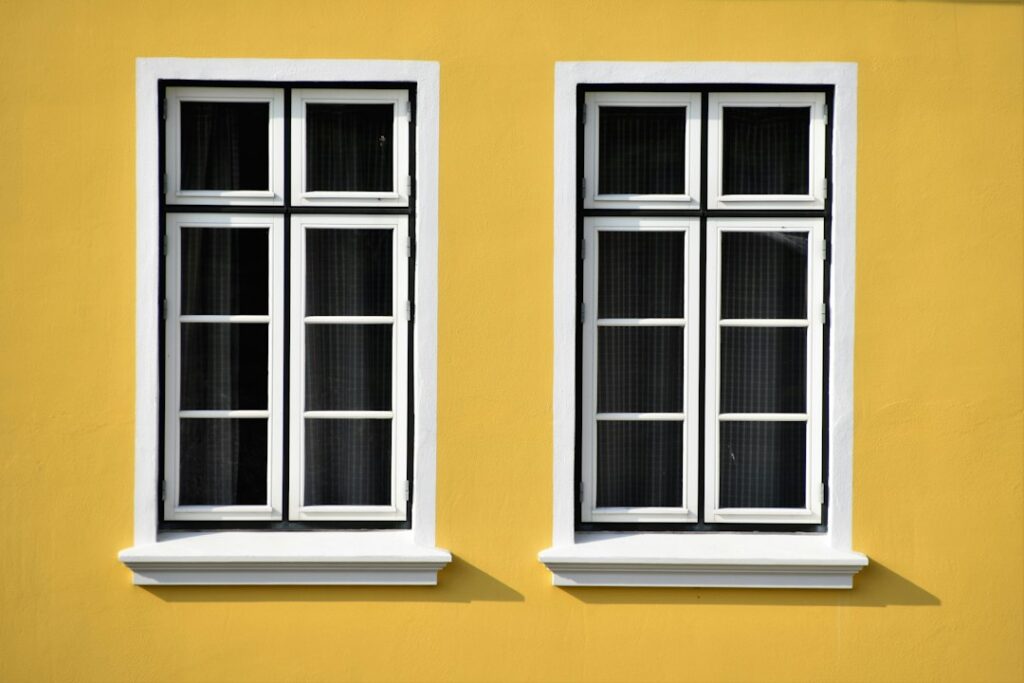
The colonial pattern divides each sash into equal rectangles, often six over six on a double-hung window, though nine over nine, four over four and two over two are common too. It is the most recognizable grid pattern in the country and the default look for traditional American homes.
Colonial grids suit Colonial, Cape Cod, Georgian, Federal and classic farmhouse styles. They give a facade rhythm and symmetry. The pane count should relate to window size: tall, narrow windows look right with six over six, while wide windows may need more columns so each pane stays taller than it is wide. A colonial window grill on a picture window should line up with the panes in neighboring double-hungs so the whole wall reads as one composition.
Prairie Grids
Prairie grid windows have bars set a few inches in from each edge, creating small squares in the corners and narrow rectangles along the sides, with a large clear pane in the middle. The look traces back to early twentieth century Prairie School architecture, which emphasized horizontal lines and a connection to the outdoors.
Prairie style grid windows work well on Prairie, Craftsman, Mission and Arts and Crafts homes, and they suit many transitional houses too. The open center preserves the view, which makes prairie a good compromise for people who like a framed look but do not want bars across the glass. Prairie grids are also popular on casement windows with grids, where a single sash looks clean framed by a border.
Diamond Grids
Diamond grid windows use diagonal bars crossing to form a lattice of diamond shapes. It is the most decorative of the common patterns and draws on medieval and English cottage traditions.
Diamonds belong on Tudor, Gothic Revival, storybook cottage and some Victorian homes. Used everywhere, they can feel heavy, so many homeowners apply them only to the upper sash, to a single feature window or to a bay. Diamond patterns cost more than rectangular grids because of the extra cutting and joining.
Top-Only, Half and Craftsman Grids
Windows with grids on top only leave the lower sash clear and pattern the upper sash. Sometimes called half grid windows, they keep a traditional look from the street while giving an open view from inside, since the lower sash sits at eye level when you are seated.
The craftsman pattern is a specific top-only version: three or four vertical bars dividing the upper sash into tall panes, sometimes with one horizontal bar. It is the signature window of bungalows and Craftsman homes. Top-only patterns also work on transitional homes where full grids feel too formal.
Modern and Minimal Grids
Modern grid windows use fewer, thinner bars. A single horizontal bar across a tall window, a two over two layout or an asymmetric pattern are common on modern farmhouse and contemporary designs. They give a deliberate, architectural line without the busy look of a full checkerboard. Industrial style homes sometimes use a tighter grid in black to echo old steel factory windows.
Grids vs No Grids
Windows without grids are increasingly popular, and for good reasons:
- Unobstructed views and more daylight
- Easier cleaning, since there are no bars to wipe around
- A clean look that suits contemporary and mid-century homes
- Lower cost on most window lines
Grids still make sense when your home’s architecture expects them. A Colonial without grids often looks stripped, and historic districts may require divided lites on street-facing windows. A common compromise is grids on the front elevation and clear glass on the back of the house, where views matter more than curb appeal.
How Grids Are Built
The grid type affects appearance, cleaning and cost as much as the pattern does.
Grids Between the Glass
Flat or contoured bars sealed inside the insulated glass unit. They never need cleaning and cannot be damaged, but they look flat up close because they have no depth on the glass surface. This is the most affordable option.
Simulated Divided Lites
Bars are bonded to the outside and inside of the glass, often with a spacer bar between the panes that lines up with them. From the curb they look like true divided windows with real shadow lines. They cost more and require cleaning around the bars.
True Divided Lites
Each pane is a separate piece of glass held in a muntin frame. Authentic and common in historic restoration, but less energy efficient and the most expensive. Wood window grill frameworks of this type are often required in strict historic districts.
Removable Grilles
Windows with muntin bars that clip onto the interior side can be lifted out for cleaning. They are practical and inexpensive but look less convincing from outside, since the exterior glass is plain.
Black vs White Grid Looks
Bar color changes the feel as much as the pattern. Black grid windows have become a signature of modern farmhouse and contemporary homes. They read as crisp lines, frame the view like a drawing and look especially sharp against white or light siding. White grids are the traditional choice, quieter and more blended, and they suit classic Colonials and Cape Cods with white trim.
Some tips for choosing color:
- Match grid color to the window frame for a unified look; mixed colors can look accidental
- Black grids show more on the interior, so consider how they look against your walls and trim
- Many lines offer different interior and exterior colors, such as black outside and white inside
- Bronze and dark gray split the difference for earthy or rustic exteriors
- Dark exterior finishes absorb more heat, so ask about finishes rated for sun exposure in hot climates
Choosing the Right Pattern for Your Home
- Start with architecture. Look at photos of original homes in your style. That is the most reliable guide among the many window grid options.
- Keep it consistent. Use the same pattern family on all windows of an elevation. Picture windows with grids should align with adjacent operable windows.
- Size the panes. Aim for panes that are taller than wide on traditional homes. Oversized or squat panes look off.
- Coordinate doors. A French door with grids should match the window pattern on the same wall, ideally with bars aligned at the same heights.
- Mock it up. Apply painter’s tape to an existing window in the planned pattern and view it from the street before ordering.
- Check rules. HOAs and historic commissions may dictate grid type, pattern or placement.
Troubleshooting Common Grid Issues
Rattling Grids Between the Glass
Internal grids can rattle when a clip loosens. A gentle tap sometimes reseats them, but often the glass unit has to be serviced or replaced under warranty.
Fog Around Grid Bars
Condensation inside the glass means the insulated seal has failed. The grid is not the cause, but the glass unit needs replacement.
Removable Grilles Not Staying Put
Broken or missing clips are the usual cause. Replacement clips are inexpensive and easy to install.
Cost Ranges
Grids between the glass usually add a modest amount per window, often a small percentage of the window price. Simulated divided lites typically add more, sometimes 10 to 20 percent per window or higher on large units. True divided lites and diamond patterns sit at the top of the range. Across a whole house, grid choice can swing a window replacement budget by several hundred to a few thousand dollars.
When to Call a Pro
A window designer or experienced installer can help you balance pattern, pane proportions and bar placement across an entire facade, which is hard to visualize from catalog photos. Call a pro for historic homes, for any project needing historic commission approval, and for full window replacements, where proper flashing and sealing matter far more to the house than the grid pattern does.
Frequently Asked Questions
What is the most popular window grid style?
Colonial grids remain the most common on traditional American homes. Prairie and top-only patterns are popular on Craftsman and transitional houses, while many new homes skip grids entirely.
Do window grids reduce energy efficiency?
Grids between the glass and simulated divided lites have little effect. True divided lites with separate small panes are less efficient than a single insulated unit.
Are black window grids a passing trend?
Black grids have been popular for years and fit modern farmhouse and contemporary designs well. On a traditional Colonial, white or matching trim color is usually the safer long-term choice.
Can I add grids to existing windows?
You can add removable interior grilles or applied exterior bars on some windows. Internal grids can only be added by replacing the glass unit.
What are half grid windows?
Half grid windows have bars in the upper sash only, leaving the lower sash clear. They give a traditional look outside while keeping the view open from inside.
Should every window in the house have the same grid pattern?
Each elevation should be consistent. Many homeowners put grids on the front and use clear glass on the back, where views matter most.