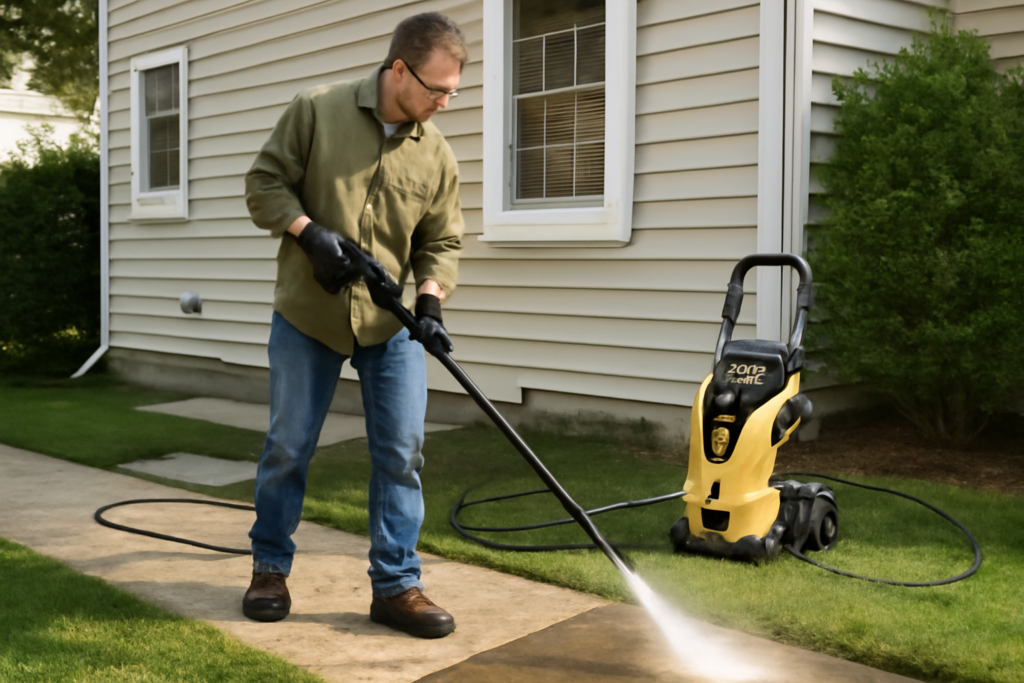
Looking up a Wirecutter power washer usually means you want a careful, tested-feeling approach to buying a pressure washer rather than gambling on a random model. While we will not invent any reviewer’s specific picks or claim to quote their lab results, the framework that thorough reviewers use is something you can apply yourself. The right power washer comes down to matching pressure and flow to your tasks, choosing gas or electric, and picking the accessories that make the work safe and efficient. Here is how to do exactly that.
Understand PSI and GPM
Two numbers define a pressure washer’s power, and you need both.
- PSI (pounds per square inch): The force of the water stream. Higher PSI blasts away tougher grime and stuck-on dirt.
- GPM (gallons per minute): The volume of water flowing. Higher GPM rinses faster and covers more area.
Cleaning power is really a product of the two, sometimes called cleaning units (PSI multiplied by GPM). A machine with high PSI but low GPM blasts hard but rinses slowly. For most homeowners, a balanced unit around 2,000 to 3,000 PSI with 1.5 to 2.5 GPM handles the majority of jobs well.
Match the Machine to Your Jobs
Buying more power than you need wastes money and risks damaging surfaces. Buying too little leaves you frustrated. Match the tool to the task.
- Light duty (1,300 to 1,900 PSI): Cars, patio furniture, grills, and small decks. Usually electric.
- Medium duty (2,000 to 2,800 PSI): Driveways, siding, fences, and patios. The sweet spot for most homes.
- Heavy duty (2,900 to 3,300 PSI): Stripping paint, deep concrete cleaning, and large areas. Often gas-powered.
- Professional (3,300+ PSI): Commercial work; more power than typical homeowners need.
Gas vs. Electric
This is the biggest decision and it shapes everything about how the machine performs and how you maintain it.
Electric pressure washers are quieter, lighter, lower-maintenance, and start with the push of a button, making them ideal for cars, furniture, and routine home cleaning. They are tethered to an outlet and generally top out at lower pressures.
Gas pressure washers deliver substantially more power and run cord-free, which suits driveways, large patios, and demanding jobs far from an outlet. The trade-offs are noise, weight, fumes that bar indoor use, and engine upkeep like oil changes and fuel management. If your needs are occasional and light, electric is the friendlier choice; if you tackle big, tough jobs regularly, gas earns its keep.
Nozzles and Attachments
The nozzle controls the spray pattern, and using the right one protects both your surfaces and yourself. Most washers include color-coded tips.
- 0-degree (red): A pinpoint jet, extremely powerful and easy to damage surfaces or injure skin. Use rarely and with caution.
- 15-degree (yellow): Strong, for stripping and heavy grime.
- 25-degree (green): A versatile general-cleaning angle for most jobs.
- 40-degree (white): A gentle, wide fan for delicate surfaces and rinsing.
- Soap (black): A low-pressure tip for applying detergent.
A surface cleaner attachment, a wide spinning disc, is worth buying if you have a lot of flat concrete; it cleans evenly and far faster than a wand.
Safety Comes First
A pressure washer is a serious tool. The stream can cut skin, especially with a zero-degree tip, so never point it at people or pets and never use your hand to clear a clogged nozzle. Wear eye protection and closed-toe shoes, brace yourself against kickback, and be cautious on ladders, where the recoil can throw you off balance. Start with a wider, gentler nozzle and a longer distance from the surface, then move closer or switch tips only if needed.
Protecting Your Surfaces
Too much pressure can do real damage, and matching the machine to the surface is as important as cleaning power. Soft and porous materials cannot take the same force as concrete. Use a wide-angle tip and a generous distance on wood decks, painted siding, and stucco, and test an inconspicuous spot first. Vinyl siding cleans well but should never be sprayed at an upward angle that drives water behind the panels. Delicate items like cars, screens, and outdoor furniture call for the gentlest white tip and a light touch. When in doubt, start far away with a wide fan and move closer gradually, because you can always increase intensity but you cannot undo gouged wood or stripped paint.
Maintenance and Storage
A little care keeps a pressure washer running for years. After each use, run clean water through the system to flush out detergent, and relieve the pressure by squeezing the trigger before disconnecting hoses. For electric models, coil the cord and hose neatly and store the unit indoors away from freezing temperatures, since trapped water can crack the pump if it freezes. Gas models need more attention: change the oil per the manual, stabilize or drain the fuel before long storage, and keep the air filter clean. Inspect hoses and O-rings periodically for leaks. This routine upkeep prevents the pump failures that send neglected machines to the curb.
Features Worth Paying For
A few extras genuinely improve the experience. An onboard detergent tank simplifies applying cleaners. A long, kink-resistant hose and a generous power cord on electric models expand your reach. Sturdy wheels and a foldable handle make storage and transport easier. Quick-connect nozzles let you swap tips without fuss. And a reputable brand with available replacement parts and good warranty support matters, since pumps and hoses are the parts most likely to need service.
Using Detergents the Right Way
The right cleaner dramatically improves results, but it has to be used correctly. Always choose a detergent formulated for pressure washers, since dish soap and household cleaners can clog or damage the pump. Apply detergent with the low-pressure soap nozzle, working from the bottom up to avoid streaks, then let it dwell for several minutes without drying. Switch to a higher-pressure tip and rinse from the top down. This soak-and-rinse method lifts grime far more effectively than blasting alone and lets you use less pressure, protecting delicate surfaces. Never let detergent dry on a surface in direct sun, and keep cleaners away from plants by wetting surrounding foliage first.
The Bottom Line
Instead of chasing one named model, evaluate any Wirecutter power washer candidate the way reviewers do: balance PSI and GPM to your actual tasks, choose gas for big, far-flung, heavy jobs and electric for quieter routine cleaning, and insist on a full set of nozzles. Respect the safety basics, look for quality-of-life features like long hoses and detergent tanks, and you will end up with a pressure washer that cleans your home effectively for years without overspending.