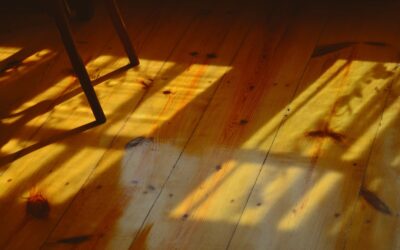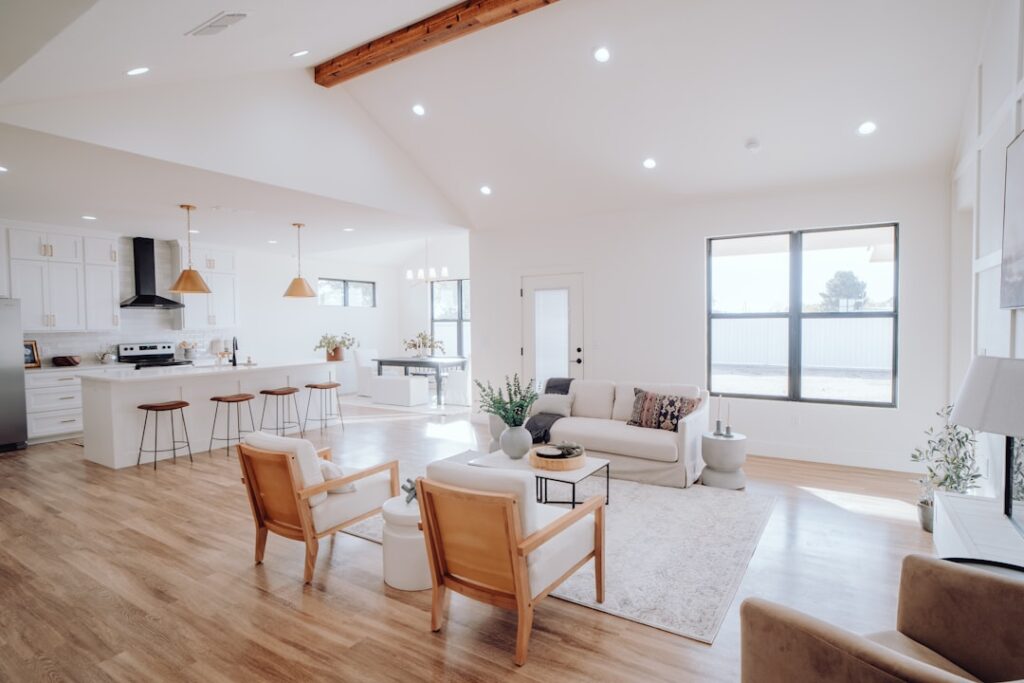
Walk into any flooring showroom and you will see five products labeled “wood floor” that have almost nothing in common. A solid oak plank, a 9-ply engineered European oak, a strand-woven bamboo board, a reclaimed barnwood, and a wood-look luxury vinyl all live under the same general category — but their construction, lifespan, and use cases are entirely different. Choosing the right wood floor material for a specific room is the difference between a 50-year floor and a 7-year mistake.
Here is the technical breakdown that matters before you sign a purchase order.
Solid Hardwood
Solid hardwood is a single piece of milled lumber, typically 3/4 inch thick by 2.25 to 5 inches wide. The board is the wood — there is no veneer, no core, no laminate layer. Standard species in the US market are red oak (Janka 1,290), white oak (Janka 1,360), hickory (Janka 1,820), maple (Janka 1,450), and walnut (Janka 1,010).
Solid hardwood is refinishable 6 to 10 times across its life, which is why properly maintained 1920s installations are still in service today. It is also the most environmentally sensitive — humidity swings of more than 25 percent cause cupping, gapping, or crowning. Solid is unsuitable for basements, full bathrooms, and any installation over concrete without a sleeper system.
Pricing runs $4.50 to $14 per square foot for material, depending on species and grade. Site-finished installation is $5.50 to $9 per square foot all-in, pre-finished closer to $4 to $7.
Engineered Hardwood
Engineered hardwood is a real wood veneer (the wear layer) glued to a multi-ply plywood, HDF, or eucalyptus core. Quality engineered floors use 7 to 11 ply cross-banded cores for dimensional stability, with wear layers ranging from 1mm (entry-level) to 6mm (premium, refinishable multiple times).
- Wear layer thickness: 2mm minimum for residential, 3 to 4mm for refinishable, 5 to 6mm for premium long-life
- Core type: Baltic birch plywood (best stability), HDF (budget), eucalyptus (premium, common in Mirage and Mohawk TecWood)
- Width range: 3 to 12 inches; wider planks require thicker cores
- Install methods: Float, glue-down, or staple over wood subfloors
Engineered handles humidity swings up to 35 percent and is suitable for basements with a vapor barrier, radiant heat installations up to 85°F, and concrete subfloors with proper moisture mitigation. Pricing is $4 to $11 per square foot material, $3.75 to $6 install.
Bamboo: Strand-Woven and Horizontal
Bamboo is technically a grass, but the finished product behaves like a hardwood. Strand-woven bamboo (most common today) shreds the bamboo into strands, treats them with a urea-formaldehyde-free or low-VOC adhesive, and presses them into dense planks with Janka ratings of 3,000 to 5,000 — harder than any traditional hardwood.
Horizontal and vertical bamboo are softer (Janka 1,300 to 1,800) and show natural node patterns. Cali Bamboo Fossilized and Teragren XCora are the dominant US brands, priced at $4.95 to $7.50 per square foot. Bamboo is dimensionally stable, often FSC certified, and tolerates radiant heat well. Drawback: most bamboo cannot be refinished more than once due to the strand-woven structure.
Reclaimed and Salvaged Wood
Reclaimed wood comes from deconstructed barns, factories, warehouses, and old-growth forests. The appeal is character — saw marks, nail holes, patina that cannot be replicated in new lumber. Common species are heart pine, oak, chestnut (now extinct due to blight), and Douglas fir.
Cost varies wildly. Tier-1 reclaimed (Pioneer Millworks, Carlisle Wide Plank) runs $14 to $28 per square foot for material. Tier-2 (regional reclaimers, smaller mills) sits at $8 to $14. Installation premium is 15 to 25 percent over standard hardwood due to milling variations and the need for hand-fitting.
Reclaimed wood often arrives at higher moisture content than new lumber — verify the supplier kiln-dried to 6 to 9 percent moisture before delivery, or plan for 3-plus weeks of on-site acclimation.
Wood-Look Vinyl and Laminate
These are not wood, but they share the visual category and frequently outperform real wood in wet or high-traffic spaces. Luxury vinyl plank (LVP) with a 20 mil wear layer and SPC core handles bathrooms, kitchens, and basements where real wood fails. Laminate with an AC5 wear rating (commercial-grade) holds up to retail traffic and pet claws.
Pricing for premium LVP (COREtec, Karndean, Mannington Adura) is $4.95 to $6.95 per square foot. Premium laminate (Pergo Extreme, Mohawk RevWood) runs $3.95 to $5.75. Neither product can be refinished, but lifespans of 20 to 30 years are common with proper care.
Brand Spotlight: Mohawk and Shaw
Mohawk and Shaw dominate the US wood flooring market with vertically integrated production. Mohawk’s TecWood Select line uses a 9-ply hybrid eucalyptus core with 3 to 4mm wear layers, priced at $4.75 to $7.25 per square foot, with a lifetime residential structural warranty.
Shaw’s Couture Oak and Castlewood engineered lines offer similar specs at $5.75 to $8 per square foot, with a 25-year finish warranty backed by aluminum oxide UV-cured urethane. Both brands are FloorScore IAQ certified for indoor air quality and CARB Phase 2 compliant for formaldehyde emissions.
Choosing by Room
For living rooms, dining rooms, and bedrooms above grade, solid hardwood remains the gold standard for resale value and refinishability. For kitchens, mudrooms, and entryways, engineered hardwood or premium LVP outperforms solid due to moisture tolerance. For basements and concrete subfloors, only engineered hardwood with vapor barrier or vinyl plank is appropriate. For radiant heat installations, engineered or wood-look LVP rated for radiant up to 85°F is the safe spec.
What to Specify Before You Buy
Confirm species, grade (Select, Common #1, Common #2 — affects price by 25 to 40 percent), edge profile (square, micro-bevel, full bevel), surface texture (smooth, wire-brushed, hand-scraped, distressed), finish chemistry (aluminum oxide UV-cured is the durable standard), and warranty terms. Buy 10 percent overage for waste and future repairs, and store one full case in a climate-controlled space for replacement decades down the line.
Prefer to explore on your own?
See how new flooring looks in your actual room in seconds — free, no signup.
Try the free Floor Studio →