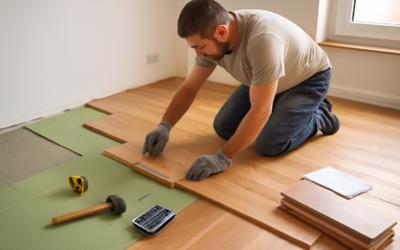
Real numbers matter when you are budgeting a floor, and wood flooring cost per square foot runs from about $6 to $22 installed, with most homeowners spending $8 to $14. That spread depends on whether you choose solid or engineered wood, which species you pick, and how much labor your subfloor and layout demand. Wood remains the flooring buyers ask for by name because it lasts generations, refinishes to look new again, and returns strong resale value. Knowing where your choices land on the price scale keeps the project from ballooning past your budget.
- Material Cost by Wood Type
- Cost by Wood Species
- Installation Labor Costs
- Total Installed Cost Examples
- Hidden Costs to Budget For
- Solid vs. Engineered: Which Costs Less Over Time
- How to Save Without Cutting Corners
- Prefinished vs. Site-Finished Costs
- Long-Term Value and Resale Impact
- The Bottom Line
Material Cost by Wood Type
The first fork in the road is solid versus engineered hardwood, and the two price differently.
- Solid hardwood: $4 to $12 per sq ft for material. A single piece of wood you can sand and refinish many times over decades.
- Engineered hardwood: $3 to $10 per sq ft for material. A real-wood veneer over a plywood core that resists moisture and installs over concrete and radiant heat.
Engineered wood is not “fake” wood; the top layer is genuine hardwood. It simply trades some refinishing life for better dimensional stability and, often, a lower price.
Cost by Wood Species
Species drives a large part of the material price, based on hardness, appearance, and availability.
- Red and white oak: $3 to $7 per sq ft. The domestic standard, durable and easy to stain.
- Maple: $4 to $8 per sq ft. Hard and light-colored with a subtle grain.
- Hickory: $4 to $9 per sq ft. Extremely hard with dramatic grain variation.
- American cherry and walnut: $6 to $12 per sq ft. Rich, warm tones at a premium.
- Exotics (Brazilian cherry, teak, mahogany): $8 to $15-plus per sq ft. Distinctive color and extreme hardness.
Harder species like hickory and Brazilian cherry resist dents better, which matters in busy households with pets and kids.
Installation Labor Costs
Labor typically adds $3 to $8 per square foot, and the installation method drives the number. Nail-down solid hardwood over a wood subfloor is straightforward and sits at the lower end. Glue-down engineered wood over concrete costs more in adhesive and labor. Floating engineered floors with click-lock edges are the cheapest to install and the most DIY-friendly. Complex layouts, diagonal or herringbone patterns, lots of doorways, and stairs all push labor higher. Removing and disposing of old flooring adds $1 to $2 per square foot.
Total Installed Cost Examples
Putting material and labor together gives you a realistic project budget.
- Budget engineered oak, floating install: about $6 to $9 per sq ft installed
- Mid-range solid oak, nail-down: about $8 to $14 per sq ft installed
- Premium walnut or exotic species: $14 to $22 per sq ft installed
For a 500-square-foot living and dining area in mid-range solid oak, expect roughly $4,000 to $7,000 all in. A whole 1,500-square-foot main floor lands around $12,000 to $21,000 for a quality job.
Hidden Costs to Budget For
The per-square-foot number rarely captures everything. Plan for these extras.
- Subfloor prep: Leveling, plywood replacement, or moisture barriers can add $1 to $3 per sq ft.
- Old floor removal: $1 to $2 per sq ft plus disposal.
- Trim and transitions: Baseboards, quarter round, and thresholds add material and labor.
- Finishing on site: Unfinished wood sanded and finished in place costs more than prefinished but yields a seamless, sealed surface.
- Furniture moving and stair work: Often billed separately.
Solid vs. Engineered: Which Costs Less Over Time
Sticker price is only part of value. Solid hardwood costs more up front but can be refinished four to eight times, giving it a 50- to 100-year lifespan that lowers its cost per year of use. Engineered wood is cheaper to buy and install and handles basements and concrete slabs where solid wood cannot go, but its thinner wear layer limits refinishing to zero, one, or two times. If you plan to stay in the home for decades and want a floor you can renew, solid wood justifies its premium. For below-grade rooms, tight budgets, or shorter time horizons, engineered wins on total cost.
How to Save Without Cutting Corners
Several moves lower the total without gutting quality. Choose domestic red oak over exotics for the best durability-per-dollar. Pick a floating engineered floor and install it yourself to erase labor. Buy prefinished planks to skip on-site sanding and finishing costs. Shop closeouts and end-of-line colors, and buy 8 to 10 percent extra rather than reordering later at full price. And get at least three itemized bids so you can compare material grade and labor line by line, not just bottom-line totals.
Prefinished vs. Site-Finished Costs
One choice that quietly shapes your budget is whether to buy prefinished planks or have raw wood finished after installation. Prefinished flooring arrives with the stain and multiple factory coats of aluminum-oxide-fortified urethane already cured on, so it installs and is walkable the same day, with no dust, fumes, or drying delays. It typically costs a bit more per square foot for the material but less in labor since finishing is skipped. Site-finished flooring is installed raw, then sanded, stained, and coated in place, which lets you choose any custom color and produces a smooth, seamless surface with no micro-bevels between boards. It costs more in labor and takes several days longer, but it allows perfect color matching and a truly flat floor.
For most homeowners, prefinished engineered or solid wood offers the best balance of durability, speed, and cost. Reserve site finishing for when you want a specific custom stain, are matching existing floors, or prefer the flush, no-bevel look of a traditional hardwood floor.
Long-Term Value and Resale Impact
Wood flooring is one of the few home upgrades that reliably returns much of its cost. Real hardwood consistently ranks among the features buyers most want, and homes with wood floors often sell faster and for more than comparable homes with carpet. Industry surveys frequently show a recovery of 70 to 80 percent of the installation cost at resale, and the intangible boost to buyer perception can be worth even more. Because solid hardwood can be refinished to erase decades of wear, its effective lifespan stretches across generations, spreading the upfront cost over a very long horizon. When you weigh wood against cheaper floors that must be fully replaced every 10 to 20 years, the higher initial price per square foot often becomes the more economical choice over the life of the home.
The Bottom Line
Wood flooring cost per square foot comes down to three choices: solid versus engineered, the species you love, and the installation method your space allows. Budget $8 to $14 per square foot installed for a typical mid-range oak floor, add for subfloor prep and old-floor removal, and remember that solid hardwood’s refinishing life often makes it the cheaper option per year lived on it. Match the wood to your rooms and lifestyle, collect itemized bids, and a well-chosen wood floor will pay you back in durability and resale for decades.
Prefer to explore on your own?
See how new flooring looks in your actual room in seconds — free, no signup.
Try the free Floor Studio →