
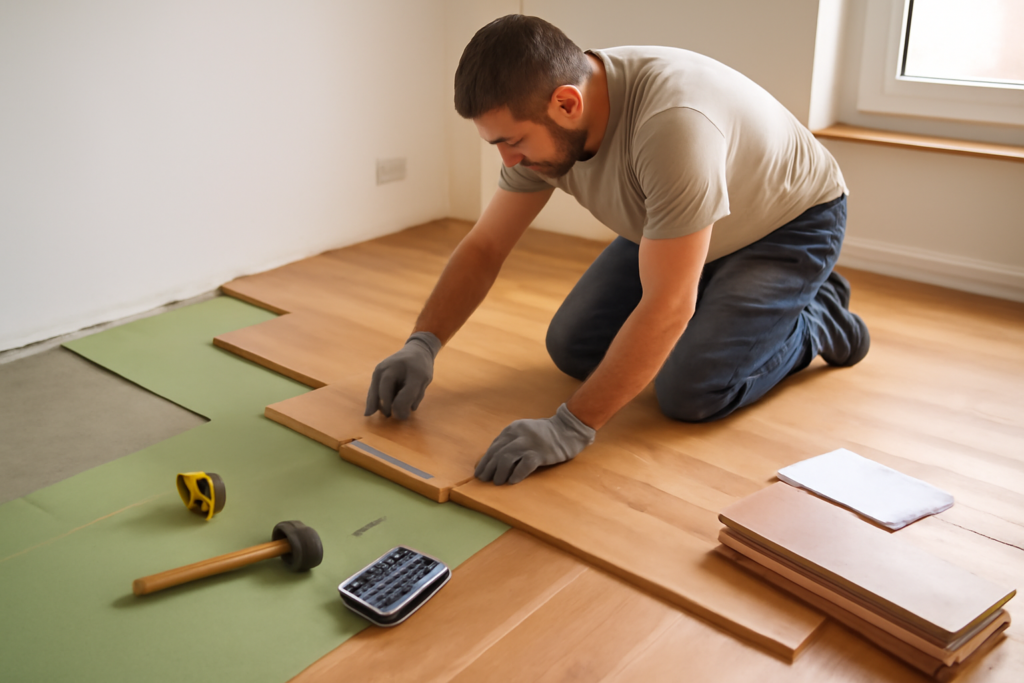
For a typical 500-square-foot room, the total engineered wood flooring installation cost lands between $3,000 and $7,500 once you add material, labor, and prep, though the range stretches wider depending on the product and your subfloor. Engineered wood costs less to install than solid hardwood because it can be floated or glued down faster, but the final number swings hard based on choices most buyers don’t see coming. This guide breaks down every line item so you can build a realistic budget before you call a contractor.
- What Drives Engineered Wood Costs
- Material Costs Per Square Foot
- Labor Costs by Installation Method
- Subfloor Prep and Hidden Costs
- Total Cost Examples by Room Size
- How to Save Without Cutting Quality
- Getting an Accurate Quote
- Regional Cost Differences Across the US
- Acclimation and Timeline Expectations
- Common Budgeting Mistakes to Avoid
- What Shapes the Average Cost to Install Wood Floors (and How Engineered Compares)
What Drives Engineered Wood Costs
Two big buckets make up the total: material and labor, with prep and extras stacked on top. Engineered planks range from budget to luxury based on the veneer thickness, wood species, plank width, and finish quality. A thin 1mm-veneer domestic oak plank costs a fraction of a 4mm-veneer wide-plank European white oak.
Labor depends on the installation method, your subfloor condition, and regional rates. A simple floating install over a flat, clean subfloor costs far less than a glue-down over concrete that needs leveling first. Knowing which factors apply to your project is the key to an accurate estimate rather than a showroom guess.
Material Costs Per Square Foot
Engineered wood spans a broad price range depending on quality:
- Budget engineered: $3 to $5 per sq ft. Thin veneers, common species, narrow planks.
- Mid-range: $5 to $9 per sq ft. Thicker veneers, better finishes, wider planks.
- Premium: $9 to $15-plus per sq ft. Thick 4mm-plus wear layers, wide European oak, hand-scraped or wire-brushed finishes.
Veneer thickness matters most for long-term value. A 2mm-plus wear layer can be sanded and refinished at least once, extending the floor’s life, while a 0.6mm veneer cannot be refinished and simply gets replaced when worn. Paying more upfront for a thicker veneer often pays off over the floor’s lifespan.
Labor Costs by Installation Method
How the floor attaches to your subfloor drives labor cost significantly:
- Floating (click-lock): $2 to $4 per sq ft. Fastest and cheapest; planks lock together over an underlayment.
- Glue-down: $3 to $6 per sq ft. Required over concrete or for a solid feel; more labor and materials.
- Nail or staple down: $3 to $6 per sq ft. Used over plywood subfloors for a traditional install.
Floating floors are the DIY-friendly, budget option, while glue-down commands a premium because of the adhesive cost, longer working time, and skill required to keep planks aligned. Complex room shapes, lots of doorways, and stairs all add labor.
Subfloor Prep and Hidden Costs
Subfloor prep is the line item that blows budgets. If your slab or plywood isn’t flat within about 3/16 inch over 10 feet, the installer has to level it, and that adds up fast. Self-leveling compound and labor can run $1 to $3 per square foot on top of everything else.
Other extras to budget for include:
- Old floor removal and disposal: $1 to $3 per sq ft.
- Underlayment or moisture barrier: $0.30 to $1 per sq ft.
- Transition strips, trim, and quarter round: $1 to $4 per linear foot.
- Furniture moving and floor prep: often billed hourly or as a flat fee.
Always ask for an itemized quote so these charges don’t surprise you after the work starts.
Total Cost Examples by Room Size
Putting the pieces together, here’s what real projects tend to cost installed, including mid-range material and standard prep:
- 200 sq ft bedroom: $1,600 to $3,600.
- 500 sq ft living area: $3,000 to $7,500.
- 1,000 sq ft main floor: $6,000 to $15,000.
Budget floating installs with inexpensive planks land at the low end, while premium wide-plank glue-down jobs over concrete that needs leveling push toward the top. A safe planning figure for a typical mid-range project is roughly $8 to $12 per square foot installed.
How to Save Without Cutting Quality
You can trim the total without ending up with a floor you regret. Choosing a quality click-lock product and floating it yourself eliminates the biggest labor line, and a competent DIYer can handle a rectangular room in a weekend. If you hire out, get three written quotes; installer rates vary widely for identical work.
Shop material during holiday sales, and consider a mid-range plank with a 2mm veneer rather than jumping to the premium tier for a look you can’t tell apart from six feet away. Handle demolition and old-floor removal yourself to save the disposal fee, and clear the room before the crew arrives so you’re not paying for furniture moving.
Getting an Accurate Quote
A trustworthy estimate starts with an in-person measurement, not a phone guess. Have the installer check your subfloor for flatness and moisture, since those two findings drive the prep budget. Ask them to spell out material, labor, prep, underlayment, trim, and removal as separate line items so you can compare bids apples to apples.
Confirm what the warranty covers and whether the quote includes hauling away the old floor and moving furniture. Get everything in writing before work begins, and build in a 10 to 15 percent contingency for surprises hidden under the existing floor. With a detailed quote and a realistic buffer, your engineered wood project stays on budget from demo to final trim.
Regional Cost Differences Across the US
Labor rates swing more by geography than most homeowners expect, and the same 500 sq ft floating install can vary by $1,500 depending on where you live. Metro markets on the coasts carry the highest labor, while the South and Midwest tend to run cheaper.
- Northeast and West Coast metros (NYC, Boston, SF, Seattle): $5 to $8 per sq ft labor.
- Midwest and Mountain West: $3.50 to $5.50 per sq ft labor.
- Southeast and Texas: $3 to $5 per sq ft labor.
Material prices are far more consistent nationwide because flooring ships from the same distributors, so if two quotes differ sharply, the gap is almost always in labor and prep, not the planks themselves.
Acclimation and Timeline Expectations
Budgeting isn’t only about dollars; time on site affects both cost and outcome. Engineered wood needs to acclimate in the room for 48 to 72 hours at normal living conditions, roughly 60 to 80°F and 35 to 55 percent humidity, before a single plank goes down. Skipping this step is the top warranty-voiding mistake and leads to gapping or buckling within a season.
A typical 500 sq ft floating install takes a two-person crew one to two days once acclimation is done. Glue-down over concrete adds a day because the adhesive needs open time, and if the slab requires self-leveler, expect an extra day for the compound to cure before any flooring. Build these days into your schedule so you’re not pressuring a crew to rush the parts that matter most.
Common Budgeting Mistakes to Avoid
The projects that blow their budgets usually trip on the same few things:
- Ignoring the subfloor: assuming a flat slab and getting hit with $1 to $3 per sq ft in leveling after demo.
- Forgetting trim and transitions: quarter round, T-molding, and reducers add $1 to $4 per linear foot and disappear from rough estimates.
- Under-ordering material: not adding 7 to 10 percent for waste, then paying rush freight for a second box that may not dye-match.
- Choosing veneer by price alone: a 0.6mm wear layer saves money now but can’t be refinished, costing a full replacement in 10 to 15 years.
Plan for each of these upfront and your final invoice should land within a few percent of the original quote instead of thousands over.
What Shapes the Average Cost to Install Wood Floors (and How Engineered Compares)
Search for the average cost to install wood floors and you will find numbers that look precise but rarely match a real quote. An average blends solid and engineered products, factory-finished and site-finished floors, simple bedrooms and complicated open plans. The more useful approach is to understand which cost drivers apply to your home, then build your own estimate from them.
Why Averages Mislead
- Solid vs. engineered: Solid hardwood is typically nailed or stapled over a wood subfloor and cannot go directly on concrete, so a slab home may need a plywood layer first. Engineered wood can usually float or be glued directly to concrete, which removes that extra step.
- Prefinished vs. site-finished: Unfinished boards need on-site sanding, staining, and several coats of finish, adding labor days and drying time. Prefinished planks are ready to walk on once installed.
- Room shape and details: Stairs, closets, angled walls, and many doorways all take more cutting time per square foot than an open rectangle. Stairs are commonly priced separately from the main floor.
- Small-job minimums: Many installers set a minimum charge, so a single small room can cost more per square foot than a whole-floor project.
- Existing conditions: Tear-out, leveling, moisture control, and trim replacement can add as much as the flooring labor itself.
Build your own average. Measure the actual square footage and add your waste allowance, price your chosen material per square foot rather than a category average, and match labor to your installation method: floating, glue-down, or nail-down. Then add prep, removal, underlayment, transitions, and trim as separate lines, plus a contingency for conditions hidden under the old floor. Dividing that total by your square footage gives a true installed cost per square foot for your project, which is a far better number to compare against contractor bids than any national figure. For most homes, engineered wood lands at or below solid hardwood once prep and finishing are counted, mainly because it installs faster, arrives prefinished, and handles concrete without an added subfloor.
Prefer to explore on your own?
See how new flooring looks in your actual room in seconds — free, no signup.
Try the free Floor Studio →

