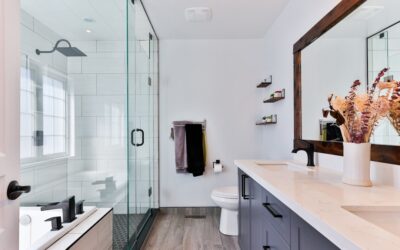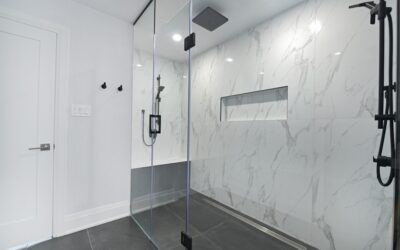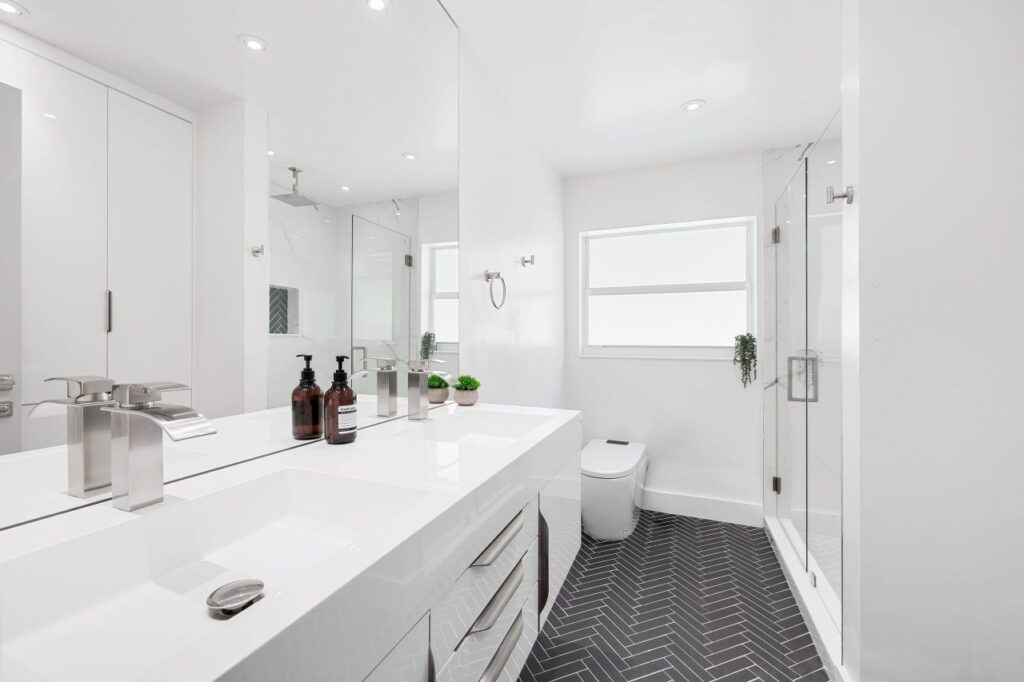
Sticker shock on a bathroom remodel almost always comes from one overlooked truth: the flooring material is only part of the price. The full bathroom flooring cost includes the material, the labor to install it, the prep work to get the subfloor ready, and any extras like waterproofing or removing the old floor. A small bathroom can range from a few hundred dollars for DIY vinyl to several thousand for professionally installed stone tile. This guide breaks down realistic price ranges by material so you can budget with confidence instead of guessing.
Part of our Bathroom Remodeling & Flooring guide — explore the full guide →
- What Goes Into the Total Cost
- Vinyl Flooring Cost
- Ceramic and Porcelain Tile Cost
- Natural Stone Cost
- Laminate and Engineered Wood Cost
- Comparing the Options at a Glance
- Hidden Costs to Plan For
- How to Save Without Cutting Corners
- DIY vs. Professional Installation
- Which Floor Gives the Best Value?
- Tips for Getting an Accurate Quote
- The Bottom Line
What Goes Into the Total Cost
Before comparing materials, understand the four pieces that make up any flooring project. Material cost is the per-square-foot price of the flooring itself. Labor is what an installer charges, usually a separate per-square-foot or per-project fee. Prep includes leveling the subfloor, removing the old floor, and repairing any water damage. Extras can include underlayment, waterproof membranes, transitions, and trim. A quote that seems low often leaves out prep or removal, so always ask what is included.
Bathroom size also drives the total. Many bathrooms are small, 40 to 100 square feet, which keeps material costs modest but can raise per-square-foot labor because small spaces involve more cutting around fixtures.
Vinyl Flooring Cost
Vinyl is the most budget-friendly waterproof option and a top choice for bathrooms. Luxury vinyl plank (LVP) and tile (LVT) typically run about $2 to $7 per square foot for materials, with sheet vinyl even cheaper at roughly $1 to $4. Professional installation adds about $1 to $4 per square foot. Because LVP often uses a click-lock system, it is one of the most DIY-friendly floors, so handy homeowners can save the labor cost entirely. For a typical small bathroom, a vinyl floor might run $200 to $700 installed.
Ceramic and Porcelain Tile Cost
Tile is the classic bathroom floor, prized for being waterproof and durable. Ceramic tile materials run about $1 to $8 per square foot, while denser, more water-resistant porcelain runs roughly $3 to $12. Tile installation is labor-intensive, generally $5 to $14 per square foot, because it involves setting, spacing, grouting, and sealing. Total installed costs for a small bathroom commonly land between $700 and $2,000, depending on tile choice and pattern complexity. Intricate layouts and small mosaic tiles cost more to install.
Natural Stone Cost
Natural stone such as marble, travertine, slate, and granite delivers a high-end look at a high-end price. Stone tile materials typically run $5 to $20-plus per square foot, and some premium marble runs higher. Installation costs are similar to or above ceramic tile, often $7 to $15 per square foot, because stone is heavy and requires careful setting and sealing. Stone also needs periodic resealing, adding to long-term cost. A stone bathroom floor commonly runs $1,500 to $4,000-plus installed for a small space.
Laminate and Engineered Wood Cost
Standard laminate is inexpensive, around $1 to $5 per square foot, but only water-resistant laminates rated for bathrooms should be used, since moisture is laminate’s weakness. Waterproof laminate runs a bit more. Engineered wood, which tolerates humidity better than solid hardwood, runs about $3 to $10 per square foot in materials. Both add roughly $2 to $5 per square foot for installation. These options suit powder rooms and low-moisture bathrooms better than wet, high-traffic family baths.
Comparing the Options at a Glance
Here is a quick summary of typical installed costs per square foot, combining material and labor for a standard bathroom:
- Sheet vinyl: roughly $2 to $7 per sq ft installed, lowest cost and fully waterproof.
- Luxury vinyl plank/tile: about $3 to $11 per sq ft installed, waterproof and DIY-friendly.
- Ceramic tile: about $7 to $18 per sq ft installed, durable and waterproof.
- Porcelain tile: about $9 to $22 per sq ft installed, very durable and water-resistant.
- Natural stone: about $12 to $30-plus per sq ft installed, premium look, needs sealing.
- Water-resistant laminate: about $3 to $9 per sq ft installed, best in low-moisture baths.
These are general US market ranges. Actual prices vary by region, material grade, and the installer.
Hidden Costs to Plan For
The line items that surprise homeowners usually hide beneath the surface. Removing and disposing of old flooring adds $1 to $3 per square foot. Leveling or replacing a damaged subfloor can add hundreds of dollars, and water damage discovered during demolition can balloon a budget quickly. Waterproofing membranes under tile, new toilet wax rings and reset, and transition strips between rooms all add small but real costs. Build in a contingency of 15 to 20 percent for older bathrooms where surprises are common.
How to Save Without Cutting Corners
You can trim costs intelligently without ending up with a floor that fails. Choose LVP for a waterproof floor that you can install yourself. Pick a mid-range porcelain in a larger format, which installs faster than tiny tiles. Get at least three written quotes and confirm each includes removal and prep. Keep the existing toilet and vanity in place if they are in good shape, since moving fixtures adds labor. Above all, never skip waterproofing to save money; a failed bathroom floor costs far more to fix than to do right.
DIY vs. Professional Installation
One of the biggest levers on total cost is who does the work. Installing click-lock LVP or peel-and-stick vinyl yourself can eliminate the entire labor charge, often cutting a small bathroom project roughly in half. These materials are forgiving and need only basic tools. Tile and stone, by contrast, reward professional skill; setting tile flat, waterproofing properly, and cutting cleanly around a toilet flange and vanity are harder than they look, and mistakes are costly to fix. A reasonable approach is to DIY the simple, waterproof materials and hire out tile and stone unless you have real experience.
Which Floor Gives the Best Value?
Value is not just the lowest price; it is cost weighed against durability and performance. Luxury vinyl plank tends to win on overall value because it is affordable, fully waterproof, comfortable, and DIY-friendly, making it ideal for the moisture and traffic of a real bathroom. Porcelain tile costs more but lasts for decades and resists everything a bathroom throws at it, so it earns its price in a long-term home. Natural stone is a luxury choice that adds beauty and resale appeal but demands the highest budget and ongoing sealing. Match the spend to how long you will stay and how the room is used.
Tips for Getting an Accurate Quote
To avoid budget surprises, insist on a detailed written estimate. Ask each contractor to itemize material, labor, old-floor removal and disposal, subfloor prep, waterproofing, and trim or transitions. Confirm whether the quote assumes the toilet will be pulled and reset. Provide accurate square footage and photos so the estimate reflects your real bathroom. Comparing three itemized quotes side by side reveals who is cutting corners and who is charging fairly, and it protects you from the vague all-in numbers that often balloon mid-project.
The Bottom Line
Bathroom flooring cost spans a wide range, from a few hundred dollars for DIY vinyl to several thousand for installed stone tile. Vinyl offers the best value and waterproofing for tight budgets, porcelain tile balances durability and looks, and natural stone delivers luxury at a premium. Factor in labor, prep, removal, and a contingency, get multiple itemized quotes, and prioritize proper waterproofing, and you will land on a floor that fits both your bathroom and your budget.
Prefer to explore on your own?
See how new flooring looks in your actual room in seconds — free, no signup.
Try the free Floor Studio →