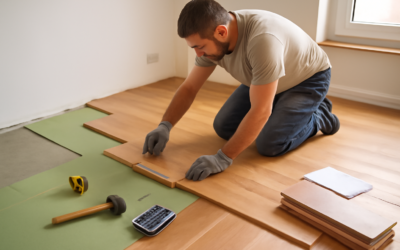
Engineered wood sits in the sweet spot between solid hardwood’s price and vinyl’s practicality, giving you a real wood surface that tolerates basements, concrete slabs, and humidity that would ruin solid planks. The question of how much to install engineered wood flooring depends on three levers: the quality of the boards, the installation method, and what your existing floor and subfloor demand. Get a handle on all three and you can build a budget that will not blow up when the contractor’s estimate arrives. Here is the full cost breakdown, method by method.
- Material Cost by Quality Tier
- Labor Cost by Installation Method
- Total Installed Cost
- The Hidden Costs
- Why Engineered Costs Less to Install Than Solid Wood
- How to Save on the Job
- How Room and Job Complexity Affect Price
- Where the Floor Goes Changes the Method
- Getting Accurate Quotes
- Frequently Asked Questions
Material Cost by Quality Tier
Engineered wood is a real hardwood veneer bonded over a plywood or HDF core, and the price hinges on the veneer thickness and the species. Thicker wear layers can be sanded and refinished, which is a major value driver:
- Budget engineered (1 to 2 mm veneer): $3 to $5 per sq ft. Thin wear layer, cannot be refinished, fine for light use.
- Mid-range (2 to 3 mm veneer): $5 to $8 per sq ft. Can be refinished once, good species selection.
- Premium (3 to 6 mm veneer, wide planks, exotic species): $8 to $14 per sq ft. Refinishable multiple times, closest to solid hardwood.
A thicker wear layer is the single most important spec for longevity, because it determines whether you can ever sand and renew the floor.
Labor Cost by Installation Method
Engineered wood can be installed three ways, and the method drives labor cost:
- Floating (click-lock or glued edges): $2 to $4 per sq ft labor. Planks lock together over underlayment with no fasteners, the fastest and cheapest method and the most DIY-friendly.
- Glue-down: $3 to $6 per sq ft labor. Planks are troweled to the subfloor with adhesive, standard over concrete slabs and preferred for a solid, quiet feel.
- Nail/staple-down: $3 to $6 per sq ft labor. Fastened to a plywood subfloor, common in traditional installations.
Complex layouts, diagonal or herringbone patterns, and lots of cuts around obstacles push labor toward the top of these ranges or beyond.
Total Installed Cost
Putting materials and labor together:
- Budget engineered, floating: roughly $5 to $9 per sq ft installed
- Mid-range, glue-down or nail-down: roughly $8 to $14 per sq ft installed
- Premium wide-plank, professionally installed: roughly $12 to $20 per sq ft installed
For a 300-square-foot room, expect roughly $1,500 to $2,700 on the budget end and $3,600 to $6,000 for premium. A 1,000-square-foot main floor in mid-range engineered wood typically runs $8,000 to $14,000 installed. These are national averages; high-cost metro areas run higher.
The Hidden Costs
The advertised per-square-foot price rarely includes everything. Budget for these extras:
- Old floor removal and disposal: $1 to $3 per sq ft
- Subfloor prep or leveling: $1 to $3 per sq ft; slabs often need grinding or leveling compound
- Underlayment: $0.30 to $0.75 per sq ft for floating floors
- Moisture barrier over concrete: $0.30 to $0.60 per sq ft
- Transition strips and trim: $2 to $6 per linear foot
- Baseboard/shoe molding and furniture moving: varies
- Waste factor: order 5 to 10 percent extra material for cuts
These can add $2 to $5 per square foot to a job, so ask for an itemized estimate rather than a single blended number.
Why Engineered Costs Less to Install Than Solid Wood
Engineered wood is frequently cheaper to install than solid hardwood for two reasons. First, its layered plywood core is dimensionally stable, so it can float or glue down over concrete and below grade, which avoids the plywood subfloor buildout solid wood often requires. Second, click-lock floating engineered floors are DIY-friendly, letting handy homeowners skip labor entirely. Solid hardwood almost always needs professional nail-down installation plus sanding and finishing on site, adding cost that pre-finished engineered planks avoid.
How to Save on the Job
The biggest savings come from installation method and DIY. Choosing a click-lock floating engineered floor and installing it yourself can cut $2 to $6 per square foot in labor. Buying pre-finished planks avoids on-site sanding and finishing costs and the mess. Shopping seasonal sales, ordering full pallets, and handling your own demolition trim more. Just do not cut the moisture barrier over concrete or rush acclimation; those shortcuts cause gapping and cupping that cost far more to remedy than they save.
How Room and Job Complexity Affect Price
Two rooms of identical square footage can carry very different installation bills depending on their complexity. A simple open rectangle installs fast and cheap, while a room broken up by closets, kitchen islands, floor vents, angled walls, and multiple doorways demands more cuts, more fitting, and more labor. Pattern layouts push costs highest: a herringbone or chevron installation can add 30 to 50 percent to the labor rate because each plank is cut and set at an angle. Stairs are billed separately per tread and riser, often $40 to $70 per step, since they are glued and trimmed individually. When you compare bids, make sure each installer is pricing the same scope, including these complexity factors.
Where the Floor Goes Changes the Method
The location dictates the installation method, which in turn drives cost. Over a concrete slab or below grade, engineered wood is floated or glued down, and glue-down over concrete requires slab prep and a moisture barrier that add to the bill. Over a plywood subfloor on an upper level, nail-down is common and generally straightforward. Radiant-heated floors call for glue-down and a product rated for radiant heat, plus careful temperature management. Knowing your subfloor and location before you shop lets you target the right method and get accurate quotes, rather than being surprised by prep charges once the installer inspects the space.
Getting Accurate Quotes
The surest way to nail down what your job will cost is to gather three or more itemized, in-home estimates from local flooring installers. A trustworthy quote breaks out material, labor by method, old-floor removal, subfloor prep, underlayment, moisture barrier, trim, and disposal, rather than lumping everything into one blended per-square-foot figure that hides where your money goes. Ask each installer what could change the price mid-job, uneven subfloors and hidden damage are common culprits, so there are no surprises. Comparing detailed bids side by side also reveals which contractor is cutting a corner that will cost you later.
Frequently Asked Questions
How much does it cost to install engineered wood flooring?
Installed engineered wood typically runs $5 to $20 per square foot. Budget floating installations land around $5 to $9, mid-range glue-down or nail-down around $8 to $14, and premium wide-plank professional jobs around $12 to $20 per square foot including materials and labor.
Is engineered wood cheaper to install than solid hardwood?
Usually yes. Engineered wood’s stable core lets it float or glue down over concrete and below grade, and click-lock versions are DIY-friendly. Pre-finished planks also skip the on-site sanding and finishing that solid hardwood requires, reducing labor cost.
What is the labor cost to install engineered wood floors?
Labor runs $2 to $4 per square foot for floating click-lock installation and $3 to $6 per square foot for glue-down or nail-down methods. Complex patterns like herringbone and rooms with many cuts push labor higher.
What hidden costs come with engineered wood flooring?
Beyond material and labor, budget for old floor removal ($1 to $3/sq ft), subfloor leveling ($1 to $3/sq ft), underlayment, a moisture barrier over concrete, transition strips, and a 5 to 10 percent material waste factor. These extras can add $2 to $5 per square foot.
Does engineered wood veneer thickness affect cost?
Yes, significantly. Thicker wear layers cost more but can be sanded and refinished, extending the floor’s life. Budget 1 to 2 mm veneers cannot be refinished, while premium 3 to 6 mm veneers can be renewed multiple times, justifying their higher price.
Prefer to explore on your own?
See how new flooring looks in your actual room in seconds — free, no signup.
Try the free Floor Studio →