Engineered hardwood gives you the look and feel of real wood with better stability over concrete slabs and basements, but the sticker shock can be real if you do not know the numbers. The typical engineered flooring price lands between $4 and $9 per square foot for the material, with installed costs running $8 to $15 per square foot once you add labor, underlayment, and trim. Premium wide-plank European oak can push the total past $20. Knowing where your project falls on that range keeps your budget honest before the quotes start rolling in.
What Drives the Price Per Square Foot
Three factors move the needle most: wood species, wear-layer thickness, and plank format. A domestic oak with a 2mm veneer sits at the affordable end. Switch to walnut, hickory, or a hand-scraped finish and you climb fast. Wide planks (7 inches and up) and longer board lengths command a premium because they require larger, cleaner logs.
The veneer thickness matters for both price and longevity. A 1mm wear layer cannot be refinished and costs less, while a 4mm to 6mm veneer can be sanded twice and costs considerably more. For a floor you want to keep 25 years, paying up for a thicker veneer is money well spent.
Material Cost by Quality Tier
Here is how the market generally breaks down for the planks alone:
- Budget ($3 to $5/sq ft): 1mm to 2mm veneer, 3/8-inch total thickness, narrow oak or birch, often big-box house brands.
- Mid-range ($5 to $8/sq ft): 2mm to 3mm veneer, 1/2-inch thickness, 5 to 7-inch planks, brands like Bruce, Mohawk, and Shaw.
- Premium ($8 to $14/sq ft): 4mm to 6mm veneer, 5/8 to 3/4-inch thickness, wide European white oak, wire-brushed or live-sawn looks.
- Luxury ($14 to $22/sq ft): Wide, long planks, custom finishes, exotic species, and specialty lines.
Installation Labor Costs
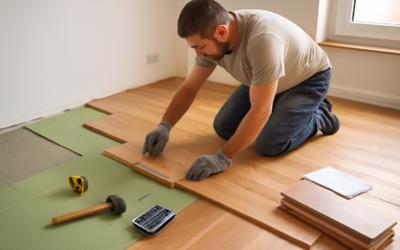
Labor typically adds $3 to $7 per square foot depending on your region and the install method. Floating click-lock floors are cheapest to install because they go down fast over an underlayment pad. Glue-down installation over concrete costs more in both adhesive and time, often $5 to $8 per square foot in labor. Nail-down over plywood subfloors falls in between.
Expect extra line items for tear-out of old flooring ($1 to $2 per square foot), subfloor leveling, and stair treads, which can run $40 to $75 each.
Sample Project Budgets
Numbers make this concrete. For a 300-square-foot living room:
- Budget build: $4/sq ft material + $4 labor = roughly $2,400 installed.
- Mid-range build: $6.50/sq ft material + $5 labor = roughly $3,450 installed.
- Premium build: $11/sq ft material + $6 labor = roughly $5,100 installed.
Add 5 to 10 percent extra material for waste and future repairs. A 300-square-foot room should be ordered at around 325 square feet to cover cutting offcuts and pattern matching.
Hidden Costs People Forget
The plank price is only the headline. Underlayment runs $0.30 to $0.80 per square foot, transition strips and reducers cost $15 to $40 each, and quarter-round or baseboard replacement adds up across a whole house. If your slab needs a moisture barrier or self-leveling compound, budget another $1 to $3 per square foot. These extras commonly add 15 to 25 percent to a quote that looked clean on paper.
How to Lower Your Engineered Flooring Price
You can trim the bill without buying junk. Shop discontinued and overstock lines for 30 to 50 percent off, choose a 7-inch plank instead of a trendy 9-inch one, and pick a matte finish that hides wear so you delay refinishing. Buying material yourself and hiring an independent installer often beats an all-in retailer quote, provided your installer is reputable and insured. Finally, get three quotes; spreads of 20 percent between contractors on identical specs are common.
How Plank Width Changes the Price
Plank width quietly drives a surprising share of the cost. Narrow boards in the 3 to 5-inch range are the most affordable because mills can cut them from smaller, less perfect logs with high yield. Step up to 7-inch planks and the price climbs modestly; jump to the trendy 9-inch and wider formats and you pay a real premium, often $2 to $4 more per square foot, because those boards demand wide, clean, defect-free logs. Wider planks also expand and contract more across their face, so manufacturers spec thicker, more stable cores to keep them flat, adding further cost.
There is a practical angle too. Wide planks show off grain and make rooms feel larger, but they are less forgiving over uneven subfloors, sometimes requiring extra leveling work that adds to the labor bill. If your budget is tight, a 6 or 7-inch plank delivers most of the modern look at a noticeably lower price than the widest formats.
Timeline and What to Expect
Budgeting is not only about dollars; time has a cost too, especially if you are living in the home during the work. A typical single-room engineered floor takes one to three days once material has acclimated. Acclimation itself adds 48 to 72 hours, during which the boxed planks sit in the room adjusting to your home’s humidity, a step that prevents costly gapping later. Glue-down installs over concrete add curing time before you can move furniture back. For a whole-house project, plan on a week or more, and factor in the disruption when comparing a slightly cheaper quote with a longer schedule against a pricier crew that finishes faster.
Is Engineered Worth the Money?
Against solid hardwood, engineered usually costs 10 to 30 percent less and performs better over slabs and radiant heat. Against laminate or LVP, it costs more but delivers genuine wood underfoot and adds resale appeal. For most homeowners, a mid-range 1/2-inch engineered oak with a 3mm veneer hits the sweet spot of price, durability, and refinishing potential, landing most projects in that $10 to $13 per square foot installed window.
Prefer to explore on your own?
See how new flooring looks in your actual room in seconds — free, no signup.
Try the free Floor Studio →