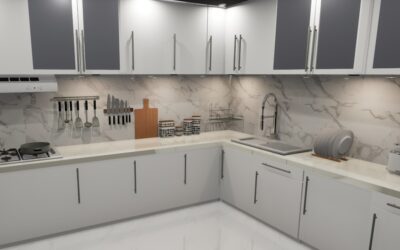
Few surfaces make a kitchen feel as warm and inviting as natural timber, and a wood kitchen counter remains one of the most versatile work surfaces you can install. It is genuinely food-safe for prep, can be sanded and refinished for decades, and costs less than stone in many configurations. The trade-off is care: wood reacts to water, heat, and knife marks, so it rewards owners who keep up with simple maintenance. Here is what you need to know before choosing one.
Part of our Kitchen Remodeling guide — explore the full guide →
Types of Wood Countertops
Not all wooden tops are built the same, and the construction style changes both the look and how you should use it.
- Edge grain: Long boards laid side by side showing their faces. Clean, linear grain and a moderate price.
- End grain: Square blocks arranged so the cut ends face up, the classic butcher block checkerboard. The most durable for chopping and the most expensive.
- Face grain: Wide planks that showcase dramatic figure. Beautiful but softer and best treated as a display or low-traffic surface.
Popular species include hard maple, walnut, cherry, oak, and bamboo. Maple is the workhorse choice, walnut delivers rich color, and bamboo offers a sustainable, hard-wearing option at a friendly price.
What a Wood Counter Costs
Pricing varies widely by species, thickness, and whether you buy a stock slab or a custom fabricated top. As a general range, expect:
- Stock bamboo or birch: $30 to $60 per square foot
- Maple or oak butcher block: $40 to $100 per square foot
- Walnut, cherry, and exotic species: $100 to $200 per square foot
Pre-cut slabs from a home center cost far less than a fully custom installation. If you are handy, a stock slab cut and finished at home is one of the most budget-friendly upgrades in the kitchen.
Oil Finish vs Film Finish
How you finish the surface determines how you use it, and this is the most important decision after choosing the wood.
Oil and Wax (Food-Safe)
A penetrating finish of food-grade mineral oil, often blended with beeswax, soaks into the fibers and leaves the surface ready for direct food prep. You can chop right on it. The downside is upkeep: you re-oil monthly at first, then every few months once the wood is saturated. Scratches and water marks blend in and sand out easily.
Hard Film Finish (Sealed)
A durable topcoat such as a waterproof varnish or conversion finish creates a sealed shell that resists water and stains with little maintenance. The catch is that you should not cut on it, because knife marks slice through the film and let moisture reach the wood. Treat a film-finished top like a furniture surface and use a cutting board.
Daily Care and Cleaning
Routine cleaning is simple. Wipe spills promptly, wash with mild dish soap and a damp cloth, and dry the surface rather than letting water sit. Avoid soaking the wood, harsh abrasive cleaners, and bleach, which can dry out and discolor the timber. For an oiled prep surface, sanitize occasionally with a light wipe of diluted white vinegar, then re-oil.
Protecting Against Heat and Water
Wood and standing water are the classic enemies. Always set a trivet or hot pad under pots and pans, since direct heat scorches and cracks the finish. Pay special attention to the area around the sink and any range edge, sealing seams well and wiping up splashes immediately. Many owners install a wood top everywhere except a small stone or stainless inset around the sink to handle the wettest zone.
Refinishing and Repairs
The best part of a wood counter is its renewability. Minor scratches in an oiled top vanish with a light sanding and a fresh coat of oil. Deeper damage, burns, or a tired film finish can be fully restored: sand the whole surface with progressively finer grits, then re-oil or re-seal. A counter that looks worn after ten years can be made to look brand new in an afternoon, something no stone or laminate top can match.
Wood vs Other Countertop Materials
Seeing how wood stacks up against the alternatives clarifies the trade-offs. Quartz and granite shrug off heat and water and need almost no maintenance, but they cannot be sanded smooth again, and a deep chip is permanent. Laminate is cheap but looks and feels synthetic and cannot be refinished. Stainless steel is hygienic and heatproof but cold and prone to showing scratches. Wood lands in a unique spot: warm and renewable, but reactive to moisture and heat. If renewability and a natural feel matter most to you, wood wins; if zero upkeep is the priority, stone is the safer pick.
Installing a Wood Countertop
One reason wood is popular with DIYers is that it is genuinely workable with standard shop tools. A stock slab can be cut to length with a circular saw and a straightedge, sink and cooktop openings traced and cut with a jigsaw, and edges sanded smooth. Wood expands and contracts with humidity, so it should be fastened with slotted screws or clips from below that allow seasonal movement rather than glued rigidly in place. Acclimate the slab in your kitchen for several days before installing, seal all cut edges, and pay extra attention to sealing around any sink or dishwasher opening where moisture concentrates.
Common Mistakes to Avoid
- Letting water pool around the sink, which causes swelling, staining, and eventually black mold
- Setting hot pans directly on the surface and scorching the finish
- Cutting on a film-sealed top, which breaks the protective coating
- Skipping re-oiling on an oiled top until it dries out and cracks
- Using harsh abrasive pads or bleach that strip and discolor the wood
Avoiding these few habits is the difference between a counter that looks great for decades and one that warps and stains within a couple of years.
Is a Wood Kitchen Counter Right for You?
Choose wood if you love a natural, warm aesthetic, want a true prep surface, and do not mind periodic upkeep. Lean toward stone or quartz if you want a near-zero-maintenance surface that shrugs off heat and water without thought. Many kitchens get the best of both worlds by pairing a hardworking quartz or granite perimeter with a wood island or baking station.
A well-cared-for wood kitchen counter can serve beautifully for decades and only grows more characterful with age. Match the wood species and finish to how you actually cook, stay on top of oiling or sealing, and you will have a surface that is both functional and genuinely beautiful.