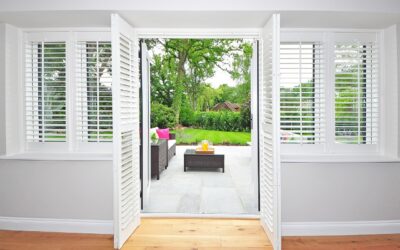
Wooden plantation shutters remain the gold standard in interior window coverings, and for good reason. Unlike blinds or curtains that hang in front of the glass, these shutters mount directly into the window frame, adding architecture, insulation, and resale value in one move. Real estate agents routinely tell homeowners that quality shutters are one of the few window treatments buyers actually notice on a walkthrough.
That permanence is exactly why the buying decision matters. You are not swapping these out next spring. Choosing the right material, louver size, and tilt mechanism up front saves you from staring at a compromise for the next 15 to 20 years. Here is what an experienced installer wants you to understand before you spend a dollar.
Real Wood vs. Faux and Composite
Nearly all premium real-wood shutters are milled from basswood, a lightweight North American hardwood that is dimensionally stable, holds paint and stain beautifully, and resists warping. Poplar and alder show up occasionally, but basswood dominates because it delivers the best strength-to-weight ratio, which lets manufacturers build wide panels without sagging.
Faux and composite shutters are a different animal. They are built from engineered wood substitutes, vinyl-wrapped MDF, or solid PVC. The trade-offs break down like this:
- Real basswood: Widest louvers available, lightest panels, premium look, takes custom stains. Runs $250 to $450+ per window. Not ideal in constantly damp rooms.
- Composite/faux wood: Heavier, limited to white and off-white tones, maxes out around 3.5-inch louvers on wider windows. Costs $200 to $350 per window. Handles humidity and moisture without swelling.
- Solid vinyl/PVC: The budget option and the most waterproof. Best for bathrooms and laundry rooms. Panel widths are limited, so large openings need extra divider posts.
My rule of thumb: choose basswood everywhere except bathrooms, over kitchen sinks, and in three-season porches. Composite belongs anywhere water and steam are constant.
Louver Sizes and What They Do
Louver width dramatically changes the personality of a room. The three standard options are 2.5-inch, 3.5-inch, and 4.5-inch louvers.
- 2.5-inch: A traditional, busier look. More slats per panel means more parts blocking your view when open. Best for small windows and historic homes.
- 3.5-inch: The most popular choice by a wide margin. It balances a clean sightline with solid light control and suits almost any window.
- 4.5-inch: The widest and most modern. Fewer, larger slats give you the most unobstructed view and the maximum light when open. It needs real-wood construction to stay light enough to operate smoothly.
If you are unsure, 3.5-inch is the safe default that resale buyers expect. Reserve 4.5-inch for larger windows where the big slats have room to breathe.
Tilt Rod Options
The tilt rod controls how the louvers open and close, and it is a bigger aesthetic decision than most shoppers realize:
- Standard front tilt rod: The visible vertical bar down the center of each panel. Classic and reliable, but it interrupts the view.
- Hidden (clearview) tilt: The mechanism moves to the side edge or back of the panel, leaving an uninterrupted face. This is the most requested upgrade today and adds roughly $15 to $35 per panel.
- Split tilt: One panel gets two independently controlled sections, so you can close the bottom for privacy while keeping the top open for light. Ideal for street-facing rooms.
Hidden tilt is worth the modest upcharge for most living spaces. Split tilt earns its keep in bedrooms and first-floor windows facing a sidewalk.
What They Cost Per Window
Expect professionally measured and installed wooden plantation shutters to land between $200 and $450 per window, with custom-stained basswood and specialty shapes pushing above $500. Pricing scales with square footage, so a standard 24-by-36-inch window sits at the low end while a large slider or arched top costs considerably more.
A realistic budget for a whole home of 12 to 15 windows runs $3,000 to $6,000 installed. Big-box catalog shutters can shave that number, but the material is usually thinner and the color range limited. Custom shops cost more and deliver exact-fit panels, better hinges, and a wider finish selection.
Installation and Fit
Shutters install as either an inside mount, recessed within the window jamb, or an outside mount on the wall surrounding the opening. Inside mount looks built-in and is preferred when your window is deep enough, typically needing at least 2.5 inches of depth for a standard louver frame. Shallow windows use an outside mount or a frame with a spacer.
Precise measuring is non-negotiable. Pros measure the width and height at three points each and use the smallest reading, then account for out-of-square openings that are common in older homes. A DIY installer can hang factory-built panels in a couple of hours per window, but a bad measurement means a return trip and a re-order, which is why paying for professional measuring is money well spent.
Energy and Light Control
Closed shutters create a solid, insulating barrier at the glass. The louvers plus the frame trap a pocket of air that slows heat transfer, cutting summer cooling load and blocking winter drafts. They will not match a triple-pane window, but layered over existing glass they measurably reduce heat gain on south- and west-facing rooms.
For light, few treatments compete. Tilt the louvers a few degrees to bounce daylight up toward the ceiling, angle them down for privacy while keeping the room bright, or close them fully to darken a room for daytime sleep. That range of control is the single biggest reason homeowners choose shutters over blinds.
Care and Longevity
Maintenance is refreshingly minimal. Dust the louvers weekly with a microfiber cloth or a vacuum brush attachment, wiping along the slat rather than across it. For painted finishes, an occasional pass with a barely damp cloth handles smudges. Avoid soaking real-wood shutters, since standing moisture is the one thing that can warp basswood over time.
Check hinge screws once a year and tighten any that have loosened from daily operation. Treated well, a quality set easily lasts 20 years and often outlives the paint color trends of the decade.
Pros and Cons at a Glance
- Pros: Add resale value, superb light and privacy control, durable, energy-saving, and easy to clean. They read as a permanent architectural upgrade rather than a temporary accessory.
- Cons: Higher upfront cost than blinds, permanent installation, real wood struggles in wet rooms, and very wide windows need divider posts that interrupt the view.
For homeowners who want a window treatment that looks intentional and lasts decades, the math favors shutters. Match basswood to your dry living spaces, choose 3.5-inch louvers with a hidden tilt rod for the cleanest everyday look, and budget for professional measuring so the fit is right the first time.
Frame Styles and Configurations
The frame around the panels is not an afterthought; it determines how the shutters sit in the opening and how finished they look. The common choices are a Z-frame, an L-frame, and a deco or bead frame. A Z-frame is the most popular for inside mounts because its stepped profile hides gaps and mounts flush against the drywall return. An L-frame suits shallow windows and outside mounts, while a bead frame adds a decorative rounded edge for traditional interiors.
Panel configuration matters just as much on wide openings. A single window up to about 36 inches uses one or two panels, but a 60-inch opening typically needs a two-panel bifold or a T-post divider so the individual panels stay narrow enough to operate without sagging. Sliding glass doors call for a bypass or bifold track system, and specialty shapes such as arches and circles are built as fixed or operable custom units at a premium.
Paint and Stain Finishes
White remains the runaway favorite because it brightens rooms and matches almost any trim, but real basswood opens the door to a full stain palette that shows off the grain. Painted finishes are baked or sprayed at the factory for a smooth, furniture-grade surface that resists yellowing far better than a brush-painted job. Expect roughly 25 to 40 named white shades from a quality manufacturer, so you can match existing millwork rather than settle for a generic off-white.
Custom stain colors usually add $20 to $50 per panel and a week or two of lead time, but they are the reason wood beats composite in a room where the shutters are meant to be seen. Request a physical finish sample before you order, since screen colors and showroom lighting both lie. Hold the sample against your trim at different times of day before committing.