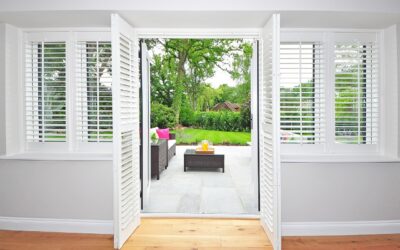
Wood plantation shutters are the premium window treatment — solid louvered panels mounted in a frame that tilt to control light and swing open for a full view. Unlike fabric shades that eventually wear out, wood plantation shutters are architectural: they become part of the window itself, add resale appeal, and can last for decades with almost no maintenance beyond dusting.
- Real Wood vs. Faux Wood
- Louver Sizes and What They Do
- Tilt Styles
- Frame Types
- Measuring for Shutters
- Installation Overview
- Light Control and Privacy
- Finishes and Color Choices
- Where Shutters Work Best
- Common Configurations
- Value, Cost, and Care
- Energy and Sound Benefits
- Buying: Stock, Semi-Custom, or Custom
Real Wood vs. Faux Wood
The first decision is material. Genuine wood shutters — most often basswood, prized for being lightweight, strong, and straight-grained — offer the largest louvers, the widest paint and stain options, and the lowest weight per panel, which matters on tall windows. Faux wood (engineered polymer or composite) costs less, resists moisture and warping, and is the smart pick for bathrooms, kitchens, and humid climates where real wood can swell. The trade-off is weight and louver size: faux wood is heavier and usually can’t span the very widest louvers without sagging. For a dry living room or bedroom where you want a stain finish or the biggest louvers, choose basswood; for a steamy bathroom or a budget project, faux wood is the practical winner.
Louver Sizes and What They Do
- 2.5 inch: a traditional look, tighter light control, more slats across the window.
- 3.5 inch: the most popular size, a good balance of view and coverage.
- 4.5 inch: the largest common louver, giving the clearest outside view when open and the most contemporary look.
Bigger louvers mean fewer slats, a more open view, and a cleaner modern appearance; smaller louvers give a classic, more layered look and slightly finer light adjustment. Match the louver to the window scale — 4.5-inch louvers can overwhelm a small window, while 2.5-inch looks busy on a large one.
Tilt Styles
How the louvers tilt changes the look considerably. A traditional tilt rod runs vertically down the center front of each panel and moves all the louvers together — a classic, recognizable style. A hidden or clearview tilt hides the mechanism inside the panel’s side stile, so nothing interrupts the view when the louvers are open, giving a sleek, uncluttered face. Hidden tilt costs a little more but is the go-to for a modern room and for maximizing the outward view.
Frame Types
Shutters mount inside a frame that fixes to your window opening, and the frame style depends on your window’s depth and trim.
- L-frame: a simple flush frame for windows with enough depth for an inside mount.
- Z-frame / deco frame: includes a built-in casing that covers the existing trim for a finished, built-in look.
- Bi-fold and multi-panel configurations: for wide windows and doors, where panels hinge together and fold to the side.
Shallow windows may need a frame that projects slightly outward, while deep frames allow a fully recessed inside mount that looks built-in. A dealer or the measuring guide will specify the minimum depth your window needs.
Measuring for Shutters
Shutters are unforgiving of measurement errors because they’re rigid, so measure carefully or have a pro do it.
- Confirm window-frame depth to know whether an inside mount fits or you need a projection frame.
- Measure width at top, middle, and bottom; note the smallest.
- Measure height at left, center, and right; note the smallest for inside mount.
- Check that windows are reasonably square — shutters expose out-of-square openings, so the frame may need adjustment.
Because a mis-measured rigid shutter can’t be trimmed like fabric, many buyers pay for professional measuring, which is often included with installation.
Installation Overview
Installation involves fitting the frame into or over the window opening, shimming it square, fastening it with screws into the window jamb or surrounding studs, and hanging the panels on their hinges. A single window takes an experienced installer under an hour; a whole house is typically a one-day job. DIY is possible for handy homeowners on standard rectangular windows, but arched, angled, or very large openings are best left to a professional, since a poorly aligned frame leaves gaps and panels that won’t close flush.
Light Control and Privacy
Shutters offer more nuanced control than most treatments. Tilt the louvers partway to filter daylight while keeping privacy, close them fully for a near-blackout in the bedroom, or swing the panels wide for an unobstructed view and full airflow. Because the louvers block light along their whole length rather than through a single fabric layer, closed shutters give strong privacy day and night. They also add a measure of insulation and sound dampening by adding a solid barrier at the glass.
Finishes and Color Choices
Finish is where wood shutters show their range. Painted finishes — crisp white being by far the most popular — suit almost any room and give a clean, timeless look that brightens a window. Off-whites and soft grays are common too, letting you match trim or lean warm or cool. Real basswood also takes stains beautifully, so you can show off natural grain in tones from honey to walnut for a richer, more traditional or rustic feel; faux wood is generally limited to painted colors and wood-look laminates. Factory finishes are baked or sprayed for durability and even coverage, which holds up far better than a brush-painted job and resists yellowing over the years.
Where Shutters Work Best
Shutters flatter some spaces more than others. In living rooms and bedrooms, wood plantation shutters read as an architectural upgrade and pair well with both traditional and transitional décor. In bathrooms and kitchens, moisture makes faux wood or a moisture-treated composite the smart pick, since steam and splashes can swell real wood over time. For sliding patio doors and wide openings, bi-fold shutter panels fold neatly to the side and stand in for bulky vertical blinds. Shutters also excel on odd-shaped windows — arched, angled, or specialty shapes can be custom-built, something fabric shades handle poorly. About the only place to think twice is a very humid, unventilated room, where even faux wood benefits from good airflow.
Common Configurations
- Full-height: panels cover the whole window, the most common style, with an optional divider rail so the top and bottom louvers tilt independently.
- Café style: shutters cover only the lower half of the window, giving privacy while letting light pour in up top — popular in kitchens and street-facing rooms.
- Tier-on-tier: separate upper and lower panels that open independently, combining full coverage with café-style flexibility.
- Bi-fold and bypass: multiple hinged panels for wide windows and patio doors.
Choosing the right configuration up front matters, since shutters are custom-built to the opening and can’t be reconfigured later like curtains.
Value, Cost, and Care
Plantation shutters are the priciest common window treatment — often $200 to $400 per window for quality faux wood and $300 to $500-plus for custom basswood, installed — but they’re considered a permanent home improvement that can stay with the house at resale, unlike blinds or curtains buyers expect to replace. Care is minimal: dust the louvers with a soft cloth or a vacuum brush, wipe faux wood with a damp cloth, and touch up paint chips on real wood over the years. With that light upkeep, wood plantation shutters keep looking crisp for decades, which is why owners often view them as an investment in the home rather than a decorating expense.
Energy and Sound Benefits
Beyond looks, solid shutters do quiet practical work. Closed louvers add a physical barrier at the glass that slows heat transfer, helping keep rooms cooler in summer and reducing drafts in winter — not as much as an insulating cellular shade, but a real contribution, especially on older single-pane windows. The same solid panels dampen outside noise, taking the edge off street or neighbor sounds better than thin blinds or sheer curtains. In a bedroom facing a busy road, that combination of light blocking and sound dampening is a genuine comfort upgrade. Shutters also block UV when closed, protecting furniture, flooring, and artwork from sun fading over the years.
Buying: Stock, Semi-Custom, or Custom
Shutters come in three tiers. Stock shutters are pre-made in standard sizes, the cheapest option but rarely a perfect fit and usually faux wood. Semi-custom shutters are built to your measurements from set options for louver size, frame, and finish — the sweet spot for most buyers balancing cost and fit. Fully custom shutters, ordered through a specialty dealer with in-home measuring and installation, give the best fit and finish, the widest material and color range, and a warranty, at the highest price. Because shutters are rigid and unforgiving of measurement error, the professional measuring bundled with custom orders is worth real money — a mis-sized stock shutter that won’t close flush is a costly disappointment.