Dryer sheets are a $1.5 billion industry built on the premise that you need a chemical-coated disposable product every time you dry clothes. Wool balls for dryer use accomplish the same softening and static reduction naturally, last for over 1,000 loads each, and cut drying time by 15 to 25 percent. A one-time investment of $10 to $15 replaces years of dryer sheet purchases.
How Wool Dryer Balls Work
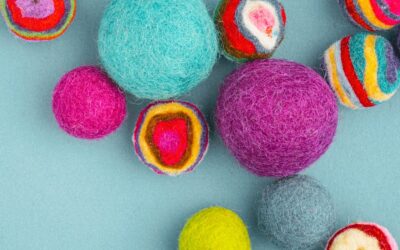
Wool dryer balls are dense, tightly compressed spheres of 100% natural wool, typically 2.5 to 3 inches in diameter. When tossed in the dryer, they bounce between garments, physically separating fabric layers that would otherwise clump together. This separation creates air pockets that allow hot air to circulate more efficiently through the load.
The mechanical action of the balls tumbling against fabric also softens fibers without the coating of fatty acids and fragrances that dryer sheets deposit. Wool naturally absorbs moisture from wet clothes and releases it as the dryer heats up, further improving drying efficiency. The combination of better airflow and moisture wicking is what reduces drying time.
Benefits Over Dryer Sheets and Liquid Softener
Conventional fabric softeners work by depositing a thin layer of lubricating chemicals (quaternary ammonium compounds) on fabric fibers. This coating makes clothes feel soft but reduces towel absorbency, clogs athletic wear’s moisture-wicking properties, and builds up in the dryer’s lint trap and exhaust vent over time.
- Cost savings: A set of 6 wool dryer balls costs $10 to $15 and lasts 1,000+ loads. Dryer sheets at $0.05 to $0.10 per sheet cost $50 to $100 over the same number of loads.
- Faster drying: Expect 15 to 25% reduction in drying time, saving roughly $50 to $80 per year in energy costs for a household running 5 to 7 dryer loads per week.
- No chemical residue: Wool is hypoallergenic and leaves no chemical coating on clothes. Safe for babies, sensitive skin, and people with fragrance allergies.
- Towel performance: Towels dried with wool balls retain their full absorbency, unlike towels coated with fabric softener residue.
- Reduced waste: Eliminates hundreds of single-use dryer sheets per year from landfills.
Best Wool Dryer Balls
Quality varies significantly across brands. Cheap dryer balls made from loosely felted wool unravel within weeks, shedding fibers onto dark clothes. Look for tightly compressed, XL-sized balls from reputable brands.
- Best Overall: Friendsheep Organic Eco Wool Dryer Balls — handmade from certified organic New Zealand wool, extremely dense and durable, 6-pack around $17
- Best Value: Smart Sheep Wool Dryer Balls — XL size, tight felting, 6-pack around $11
- Best for Large Loads: Handy Laundry Wool Dryer Balls — extra-large 3.5 inch diameter for heavy comforters and king-size bedding, 6-pack around $10
- Best Scented Option: Woolzies — comes with optional essential oil spray bottle, 6-pack around $14
How Many Balls to Use
The number of balls affects performance proportionally. More balls means more separation and faster drying, up to a point.
- Small loads: 3 balls
- Medium loads: 4 to 6 balls
- Large loads and bedding: 6 to 8 balls
- Comforters and heavy blankets: 8 to 12 balls
Using fewer than 3 balls provides minimal benefit. The balls need to create enough separation between garments to improve airflow. For most standard loads, 6 balls is the sweet spot between performance and having enough balls to handle multiple simultaneous loads if you separate them across batches.
Adding Scent Naturally
One common complaint about switching from dryer sheets is missing the fresh laundry scent. Wool dryer balls solve this easily. Add 3 to 5 drops of essential oil to one or two balls before each dryer cycle. Lavender, lemon, eucalyptus, and tea tree are popular choices. The heat of the dryer diffuses the scent throughout the load without leaving oily residue on clothes.
Let the essential oil absorb into the wool for a few minutes before tossing the ball in the dryer. Applying oil immediately before starting the dryer can cause the oil to transfer directly to wet fabric, potentially leaving spots on light-colored garments. Use pure essential oils, not fragrance oils, which contain synthetic chemicals that defeat the purpose of switching to a natural product.
Static Reduction Tips
Wool dryer balls reduce static effectively in most situations, but static is primarily caused by over-drying. When clothes are bone dry with zero moisture left, friction between fibers generates a strong static charge. The solution is simple: reduce your drying time or use the moisture-sensor setting if your dryer has one.
Mixed loads of synthetics and natural fibers produce the most static. If static remains a problem after adjusting dry time, pin a small safety pin to one of your wool balls. The metal dissipates the static charge as it builds. Another effective trick is to toss a damp washcloth into the dryer for the last 10 minutes of the cycle. The residual moisture prevents the extreme dryness that creates static.
How to Make DIY Wool Dryer Balls
Making your own is straightforward and costs about $3 to $5 for a set of 6 if you buy wool roving in bulk.
- Purchase 100% wool roving or wool yarn (must be animal fiber, not acrylic or superwash wool). You need about 1 oz of wool per ball.
- Wind the wool tightly into a ball roughly the size of a tennis ball.
- Tuck the loose end under several layers to secure it.
- Place the ball inside a knee-high nylon stocking and tie a knot on each side.
- Wash and dry the stocking-wrapped balls on the hottest settings 2 to 3 times. The heat and agitation felt the wool, bonding the fibers permanently.
- Remove from the stocking. The balls should be hard and dense, with no loose fibers pulling free.
If the balls feel soft or shed fibers after felting, repeat the hot wash and dry cycle until they are fully compressed. Properly felted balls should feel like dense, hard spheres with a slightly fuzzy surface. They are ready for hundreds of loads of chemical-free, energy-saving drying.