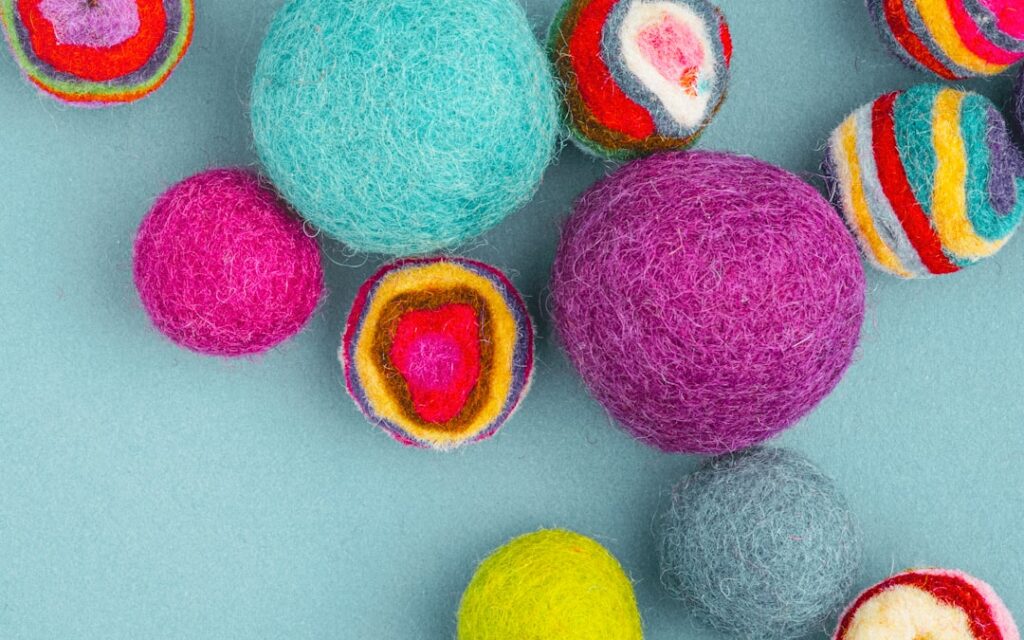
Those fuzzy felt spheres tumbling around in your neighbor’s dryer are not a gimmick, and once you understand what are wool dryer balls used for, you may never buy another box of dryer sheets. Wool dryer balls are tightly compressed balls of 100 percent wool, roughly the size of a tennis ball, that you toss in with a wet load. As they bounce through the laundry, they separate garments, absorb moisture, and mechanically soften fabric, delivering several of the benefits of dryer sheets and fabric softener without the chemical coatings. Here is everything they actually do and how to get the most out of them.
They Cut Drying Time
The headline benefit is speed. As wool dryer balls tumble, they physically separate clothes, allowing hot air to circulate through the load instead of past a clumped-together wad of fabric. Better airflow means faster evaporation.
In practice, most people see drying times drop by roughly 10 to 25 percent depending on load size and fabric. Wool also absorbs some moisture itself, then releases it, helping balance humidity in the drum. Shorter cycles mean lower energy bills and less wear on your clothes over time.
They Reduce Static and Wrinkles
Static cling happens when garments rub together and build up an electric charge, most noticeably in dry winter air. Wool dryer balls help in two ways: they keep clothes separated so there is less rubbing, and because wool naturally holds a little moisture, they keep the load from becoming bone-dry, which is when static spikes.
The constant tumbling and separating also means clothes come out with fewer wrinkles. They will not replace an iron for dress shirts, but a load of everyday wear comes out noticeably smoother, especially if you pull it out promptly.
They Soften Laundry Naturally
Commercial fabric softener works by coating fibers in a waxy chemical film, which can build up over time and reduce the absorbency of towels. Wool dryer balls soften mechanically instead. The gentle pounding action relaxes and fluffs the fibers, leaving towels, sheets, and clothes soft and fluffy without any coating.
This is a genuine advantage for towels, which stay more absorbent, and for anyone with sensitive skin or allergies who wants to avoid fragrances and chemicals. There is a trade-off worth noting: without added softener, some people find the effect subtler than a dose of liquid softener provides.
How Many Should You Use
Quantity matters, because too few will not make much difference. Match the number to your load size:
- Small loads: 3 balls.
- Medium loads: 4 to 5 balls.
- Large or bulky loads (comforters, towels): 6 or more.
More balls mean more separation and faster drying, so err on the higher side for big loads. A set of six is enough to cover most household laundry.
Adding Essential Oils for Scent
One popular use is as a natural fragrance carrier. Since dryer balls skip the perfumes of dryer sheets, you can add scent yourself: place 2 to 3 drops of an essential oil like lavender or eucalyptus on each ball, let it dry for a few minutes, then toss them in.
Use the oil sparingly and let it absorb before adding the balls to avoid oil spots on clothes. The scent is light and fades faster than chemical fragrance, which many people prefer. Refresh the oil every few loads to maintain it.
Wool Dryer Balls vs. Dryer Sheets
It helps to see the comparison directly:
- Reusability: A good set of wool balls lasts 1,000-plus loads, or 2 to 5 years; dryer sheets are single-use.
- Cost: A one-time purchase versus buying sheets forever.
- Chemicals: Wool balls add nothing; sheets leave a fragranced coating.
- Static control: Sheets are slightly better at eliminating static, but wool balls handle most loads well.
- Scent: Sheets have built-in fragrance; wool balls need optional essential oils.
Which Fabrics Benefit Most
Wool dryer balls help nearly every load, but they shine with certain fabrics and are less noticeable with others. Bulky items like towels, comforters, and duvets benefit the most, because the balls burrow into the folds, keep the fabric separated, and prevent the wadding that leaves big items damp in the middle. You will often notice the biggest time savings on exactly these heavy loads.
They also work beautifully on cotton sheets and everyday clothing, cutting wrinkles and static. Where they matter less is with very lightweight synthetics that dry almost instantly anyway, and they will not tame static on highly synthetic loads as completely as a dryer sheet would. For cloth diapers and baby clothes, wool balls are a favorite precisely because they add no chemical residue against sensitive skin, softening naturally instead.
Common Questions and Troubleshooting
A few practical concerns come up repeatedly, and they are easy to address. The most common worry is noise: new wool balls can thump a bit in the dryer, especially with small loads, but the sound softens as they felt further with use and is barely noticeable in a normal load. If the noise bothers you, adding a couple more balls or a fuller load quiets things down.
- Do they shed? A quality tightly wound ball sheds very little; cheap ones may pill and leave fuzz, so buy well-made 100 percent wool balls.
- Are they safe for people with wool allergies? Because they only touch clothes briefly and leave no residue, most sensitive users tolerate them, but the cautious can test on a small load first.
- How long do they last? Expect 1,000 loads or more; retire them when they start to unravel or shrink noticeably.
- Can you make your own? Yes, by wrapping wool yarn into a tight ball and felting it in a hot wash, though pre-made ones are inexpensive and more consistent.
With those questions settled, most people find dryer balls a genuinely low-hassle upgrade that quietly does its job load after load.
Getting the Most From Them
Now that you know what are wool dryer balls used for, use them well: run at least four to six per load, keep them in the dryer between loads so they are always ready, and refresh essential oils periodically if you want scent. When they eventually start to unravel or pill heavily after years of use, simply replace the set. It is also worth noting that they reduce lint and help clothes hold their shape by preventing the twisting and tangling that a crowded dryer causes. For a cheap, reusable, chemical-free way to dry laundry faster and softer, they are one of the best small upgrades you can make to your laundry routine, and a single set will quietly pay for itself many times over.