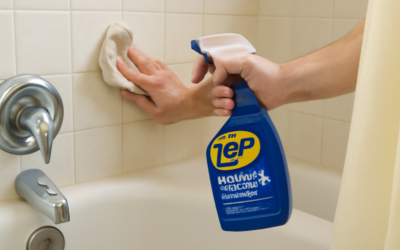
Layers of soap scum and hard water film can turn a glass shower door cloudy and a white tub gray no matter how often you wipe them down. Zep Shower Tub and Tile Cleaner is the industrial-strength answer, an acid-based formula that dissolves mineral deposits and scum that gentler bathroom sprays just smear around. It’s one of Zep’s most popular consumer products for good reason: it works fast on the stuff that makes bathrooms look permanently dingy.
Part of our Bathroom Remodeling & Flooring guide — explore the full guide →
What It Is and How It Works
This is a professional-grade, ready-to-use spray sold in a 32-ounce trigger bottle. The active chemistry is acidic, which is exactly what cuts through the alkaline mineral scale, calcium, and soap scum that build up in showers and tubs. Where a general-purpose cleaner relies on surfactants alone, Zep’s acid actually breaks down the deposits chemically, so you get results with far less scrubbing.
It’s formulated for hard, non-porous bathroom surfaces: ceramic and porcelain tile, fiberglass, acrylic tubs and surrounds, glass shower doors, chrome fixtures, and grout. That acid strength is its power and its caution flag at the same time.


Where to Buy and Price
Zep is widely stocked at Home Depot, Lowe’s, Walmart, and Amazon. A 32-ounce bottle typically runs $4 to $7, and multi-packs bring the per-bottle cost down further. It’s one of the better values in bathroom cleaning because a little goes a long way and it replaces the need for separate scale removers and scum sprays.
How to Use It Step by Step
- Ventilate the bathroom. Open a window, run the exhaust fan, and keep the door open. The acidic fumes are strong.
- Put on rubber gloves and, ideally, eye protection.
- Spray directly onto the dry or damp surface, covering the scum and stains fully.
- Let it dwell 1 to 3 minutes for light buildup, up to 5 for heavy scale. Don’t let it dry on the surface.
- Scrub lightly with a non-abrasive sponge or brush where needed. Most film wipes away with minimal effort.
- Rinse thoroughly with water. Because it’s acidic, complete rinsing matters.
Critical Safety Notes
Never mix it with bleach or any chlorine product; acid plus bleach can release dangerous gas. Keep it off natural stone. The acid will etch marble, travertine, and other calcium-based stone, leaving dull spots you can’t buff out. It can also dull some polished metals and damage certain finishes, so test an inconspicuous spot first. This is a strong cleaner, not a gentle one, and it deserves respect.
Real-World Performance
On soap scum and hard water spots, it’s genuinely impressive. Cloudy glass doors clear up, chrome fixtures brighten, and grimy fiberglass surrounds come back to a clean matte finish, usually with far less elbow grease than baking-soda pastes or vinegar. Hard water rings in a tub that survived months of ordinary cleaners often surrender after one application.
It is not a whitening or mildew product first and foremost. For black mildew stains in grout, a bleach-based or oxygen product does better; just don’t combine the two in the same session. Use Zep for the mineral and scum problem it’s built for, and reach for a different tool for mold.
Pros and Cons
- Pros: powerful on soap scum and hard water scale, fast-acting with little scrubbing, inexpensive, ready to use, brightens chrome and glass, professional-grade strength.
- Cons: strong acidic fumes require ventilation, will etch natural stone, not a dedicated mildew remover, harsh on skin and eyes, must never be mixed with bleach.
Honest Alternatives
- CLR Bath & Kitchen: another acid-based scale and scum remover, similar performance, sometimes gentler odor.
- Kaboom Shower, Tub & Tile: a foaming option that clings to vertical surfaces well.
- Scrub Free or Method daily shower spray: for maintenance rather than heavy restoration, a no-rinse daily mist prevents buildup so you rarely need the heavy stuff.
- Vinegar solution: a milder DIY acid for light hard-water spots, though far slower and weaker than Zep, and still unsafe on stone.
Coverage, Surfaces, and What One Bottle Handles
Because it’s ready to use straight from the trigger, there’s no mixing math to get wrong. A single 32-ounce bottle covers a lot of ground when you use it right: figure roughly six to eight full shower-and-tub cleanings per bottle for an average bathroom, more if you’re spot-treating maintenance buildup rather than restoring a neglected surface. Mist a light, even coat rather than soaking the wall; drenching a surface wastes product and makes rinsing take longer without cleaning any better.
Match your dwell time to the surface and the severity. Here’s a quick field guide from real cleanups:
- Glass shower doors: 1 to 2 minutes, then a soft sponge and a squeegee. Cloudy etching that’s actually mineral scale clears; permanent glass corrosion will not.
- Fiberglass and acrylic surrounds: 2 to 3 minutes, non-abrasive pad only. Skip Magic Erasers and scouring pads, which micro-scratch the gel coat and make future scum stick faster.
- Ceramic and porcelain tile: up to 5 minutes on heavy scale. Safe on the tile face and epoxy grout.
- Chrome and stainless fixtures: 1 minute max, then rinse immediately. Longer contact can haze certain plated finishes.
- Cement grout lines: fine for cleaning, but repeated acid exposure over years can slowly erode unsealed grout, so reseal grout annually if you clean it hard.
Keeping Scum From Coming Back
Zep fixes the problem, but a few habits keep you from needing the heavy stuff every weekend. Hard water is the root cause in most homes, so if you’re fighting scale constantly, a water softener or even an inexpensive shower-head filter cuts the mineral load at the source. After each shower, a quick pass with a squeegee on glass and a wipe-down of the tub walls removes the film before it hardens into scum, and that thirty-second habit does more than any product.
Switching from bar soap to a liquid body wash also helps dramatically, since the tallow and stearates in most bar soaps are exactly what forms scum when they hit hard-water minerals. Keep a daily no-rinse shower spray in the stall for maintenance and save the Zep for the monthly deep clean or the occasional restoration job.
Frequently Asked Questions
Can I use it on a glass shower door with a hard-water coating? Yes, that’s one of its best uses. If the glass stays cloudy after cleaning, the damage is etched into the glass itself and no cleaner will fix it.
Is it safe on colored or textured tile? On sealed ceramic and porcelain, yes. Test an inconspicuous corner first on any glazed color you’re unsure of, and never let it dwell on the surface until it dries.
How is it different from Zep’s other bathroom products? This one is acid-forward for scale and scum. Zep also sells foaming and mold-and-mildew formulas that are chlorine-based; those target black staining, not mineral buildup, and the two should never be mixed or used back to back without a thorough rinse in between.
Will it hurt my septic system? Used as directed and rinsed down normally, small consumer quantities are generally fine. Don’t pour concentrated amounts down the drain at once.
Bottom Line
For cutting through soap scum, hard water stains, and mineral scale on tile, fiberglass, acrylic, and glass, Zep Shower Tub and Tile Cleaner earns its reputation. It’s cheap, fast, and strong. Just treat the acid seriously: ventilate, glove up, keep it off natural stone, and never mix it with bleach. Pair it with a daily shower spray to slow future buildup, and keep a separate mildew product on hand for the black stuff in the grout. Used correctly, it’s one of the most effective bathroom cleaners on the shelf.
Prefer to explore on your own?
See how new flooring looks in your actual room in seconds — free, no signup.
Try the free Floor Studio →