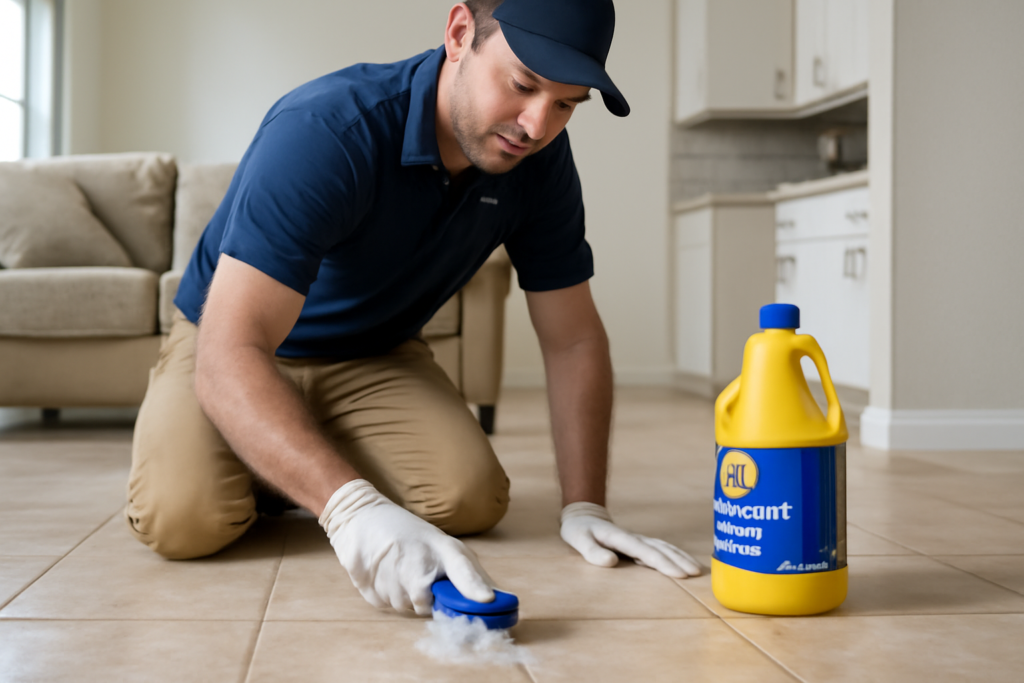
Zep tile and grout cleaner is one of the most aggressive acidic cleaners a homeowner can buy off the shelf, and that strength is exactly why it works on grout lines that regular mopping never touches. When cheaper cleaners have failed to lift years of soap scum, mildew, and ground-in dirt, this is often what finally does it. But that potency cuts both ways, and using it carelessly can etch stone or burn your skin.
I’ve used Zep products on countless bathroom and kitchen restoration jobs. Here’s how to get professional results without damaging your surfaces or yourself.
What Makes It Different
Zep’s grout and tile cleaner is a concentrated acidic formula, typically sold in a 32-ounce or 1-gallon bottle for roughly $6 to $15 depending on size and retailer. The acid dissolves mineral deposits, hard-water scale, and the grime embedded in porous grout that alkaline cleaners simply can’t break down.
Because it’s acid-based, it excels at exactly the problems that plague grout: white haze from hard water, orange rust staining, and the gray discoloration that builds up in high-traffic tile. It is not a general-purpose floor soap, and using it that way is overkill and risky.
Where You Can and Cannot Use It
This is the most important section, so read it before you spray anything. Acidic cleaners will etch and permanently dull acid-sensitive surfaces.
- Safe: ceramic tile, porcelain tile, and glazed surfaces with cement-based grout
- Never: marble, travertine, limestone, and other natural stone
- Test first: colored or sealed grout, since the acid can strip sealer and lighten pigment
- Avoid: polished stone countertops, metal fixtures, and anything chrome-plated for prolonged contact
If you have any doubt about whether your tile is porcelain or a natural stone like travertine, do not use this product. Test an acidic cleaner in a hidden corner and wait an hour before committing to the whole floor.
Step-by-Step Application
Getting the dwell time and dilution right is what separates a great result from a streaky mess. Always follow the label directions for the specific Zep product you bought, since concentrations vary.
- Ventilate the room. Open windows and run an exhaust fan; acidic fumes are harsh.
- Wear chemical-resistant gloves and eye protection. This is non-negotiable.
- Pre-wet the tile with plain water so the acid concentrates on the grout, not the glaze.
- Apply the cleaner directly to grout lines, following the label’s dilution guidance.
- Let it dwell two to five minutes. Do not let it dry on the surface.
- Scrub grout lines with a stiff nylon grout brush, not a wire brush.
- Rinse thoroughly with clean water and wipe up the residue completely.
Getting the Toughest Stains Out
For deeply stained grout, a single pass rarely does it. Work in small sections of about 3 by 3 feet so the cleaner never dries before you scrub. A grout brush with a handle saves your knuckles and gives you the leverage to actually agitate the line.
For mildew and mold that has grown into the grout, the acid handles the staining, but you may need a separate mold-killing treatment for the spores. Never mix Zep acidic cleaner with bleach or ammonia; combining acids with bleach releases toxic chlorine gas.
Safety and Ventilation
I can’t overstate the ventilation point. Working in a small, closed bathroom with an acidic cleaner will leave you lightheaded fast. Open a window, run the fan, and take breaks if the fumes build up.
Keep the product off your skin and out of your eyes. If it does contact skin, rinse immediately with plenty of water. Store it capped, upright, and well out of reach of children and pets. Read the safety data sheet on Zep’s website if you want the full chemical detail before starting.
Sealing Grout Afterward
Here’s the step most homeowners skip. Once you’ve stripped the grout clean, that acid has also removed any old sealer. Bare cement grout will re-stain within weeks if you don’t reseal it.
Let the grout dry fully for 24 hours, then apply a penetrating grout sealer with a small applicator bottle or brush. A quality sealer costs $15 to $25 and takes an afternoon to apply. This single step is what keeps your hard scrubbing work looking good for a year or two instead of a month.
Is It Worth Buying?
For ceramic and porcelain tile with dingy cement grout, Zep tile and grout cleaner is one of the most effective products you can buy without hiring a pro. It costs a fraction of a professional tile-and-grout restoration, which runs $1 to $3 per sq ft, and it delivers real results when used correctly. Just respect its strength: protect natural stone, ventilate, wear gloves, and reseal when you’re done. Do those four things and your grout will look years younger.
Application Tips for Best Results
Zep’s tile and grout cleaner works on contact time, not just scrubbing. Apply it to a dry or lightly damp surface, let it dwell for the time listed on the label so the alkaline formula can break down soap scum and grime, then agitate the grout lines with a stiff nylon brush before rinsing. Working in small sections keeps the product from drying out before you scrub, which is the most common reason people feel it underperformed.
For heavily soiled grout, a second application beats scrubbing harder, since the chemistry does the work that muscle cannot.
Safety and Surface Cautions
Because it is a strong cleaner, treat it with respect. Ventilate the room, wear gloves, and never mix it with bleach or other cleaners, which can create hazardous fumes. Test it first on natural stone tile like marble or travertine, since acidic or harsh formulas can etch stone; for those surfaces a pH-neutral stone-safe cleaner is the better choice. On ceramic and porcelain the cleaner is safe and effective. After cleaning, rinse the area well with plain water so no residue remains to attract dirt, and once the grout is clean and dry, sealing it helps the results last far longer before the next deep clean.
Prefer to explore on your own?
See how new flooring looks in your actual room in seconds — free, no signup.
Try the free Floor Studio →