
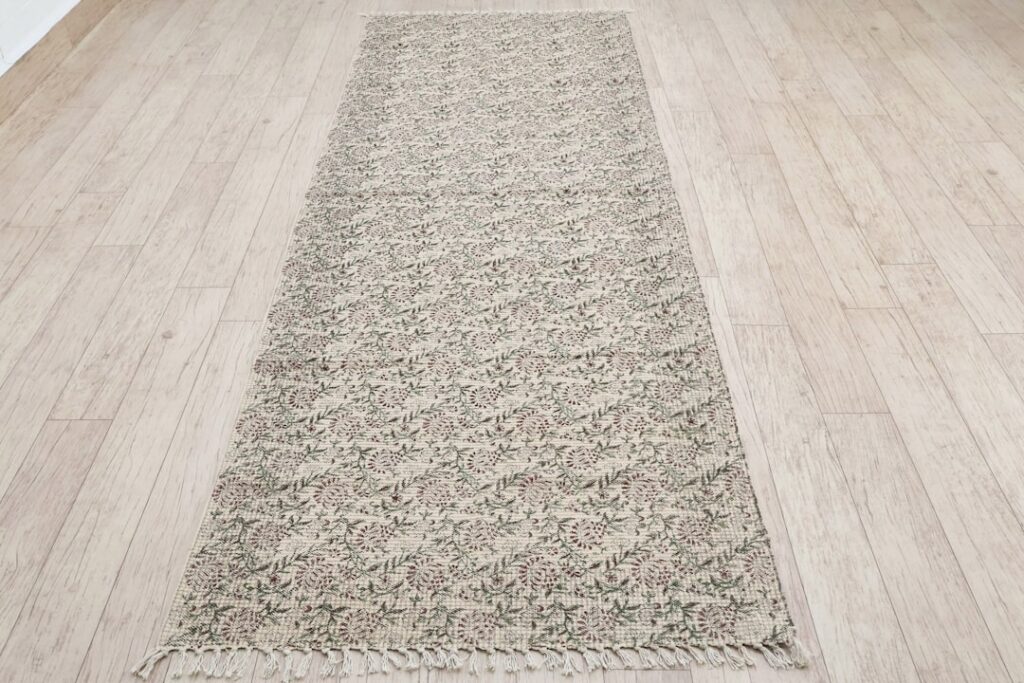
A 10 ft runner rug is the long, narrow rug that turns a bare hallway, galley kitchen, or stretch of foyer into a finished, comfortable space. At ten feet long, it covers serious ground while staying slim enough to leave a clean border of flooring on either side.
If your hallway echoes underfoot or your kitchen floor feels cold and hard while you cook, this is the size that solves the problem. This guide explains where a ten-foot runner fits, how to choose the right width and material, how much to budget, and how to keep it flat, safe, and looking sharp.
Where a 10 Ft Runner Rug Belongs
Runners are built for narrow, high-traffic passages, and ten feet is long enough to handle most real-world halls. A 10 ft runner rug is a natural fit for a long entry hallway, a galley kitchen between counters, the foot of a bed in a larger bedroom, or a covered porch or mudroom that needs a durable strip underfoot.
Measure your space before you shop. A runner should stop short of the walls or doorways at each end, leaving roughly 4 to 8 inches of bare floor so it reads as intentional rather than wall-to-wall. If your hallway runs 11 or 12 feet, a ten-foot runner is close to ideal; for shorter spans, you may want an 8-foot version instead.
Standard Widths and Why They Matter
Length gets the attention, but width is what makes a runner feel right. Most runners come in widths between 2 and 3 feet, and the common options are:
- 2 ft to 2.5 ft: Best for tight hallways and galley kitchens where you need clear floor on both sides.
- 2.5 ft to 3 ft: A more generous look for wider halls, foyers, and the foot of a bed.
Aim to leave about 4 to 5 inches of exposed floor on each side of the runner. In a kitchen, also confirm the runner clears the swing of your oven and cabinet doors. A runner that crowds a doorway or bunches against an appliance becomes a daily annoyance and a trip hazard.
Choosing the Right Material
Runners live in busy zones, so durability and cleanability come first. Match the fiber to where the rug will work hardest:
- Wool: Resilient, soft, and naturally stain-resistant. Excellent for hallways and bedrooms, though pricier.
- Polypropylene: Affordable, fade-resistant, and easy to wipe clean. A smart pick for kitchens and entries.
- Cotton flatweave: Often machine washable and low-profile, which suits kitchens and laundry passages.
- Jute and sisal: Tough and textured for a natural look, but harder to clean if liquids soak in, so keep them out of spill-prone kitchens.
- Indoor-outdoor synthetics: Built to shrug off moisture and grit, ideal for mudrooms and covered porches.
For a kitchen, a low-pile washable cotton or polypropylene runner is the most practical choice. For a hallway you want to feel plush, wool or a quality wool blend is worth the investment.
What a 10 Ft Runner Rug Costs
Price depends mostly on fiber and construction. As rough estimates, machine-made synthetic runners in this length often run about $40 to $130. Washable cotton runners tend to land in a similar range. Machine-woven wool or quality wool blends usually fall between $150 and $400, and hand-knotted or hand-tufted wool pieces can exceed $500 depending on craftsmanship.
Treat these as ballpark figures rather than firm prices, since sales and brands vary widely. For a high-traffic hallway, spending a little more on wool or a denser weave usually pays off in years of extra wear before the runner looks tired.
Placement, Pads, and Safety
A long runner needs to stay put, and a non-slip rug pad is the single best upgrade you can make. On hard floors a pad prevents the runner from sliding underfoot, which matters most in exactly the kind of busy passages where runners live. It also adds cushioning and lets air move beneath the rug.
- Center the runner along the length of the hallway, leaving even margins on both sides.
- Cut a rug pad about an inch smaller than the runner on all sides so it stays hidden.
- On hardwood, choose felt or felt-and-rubber pads rather than cheap PVC, which can mar the finish over time.
- Smooth out any ripples right away, since a wave in a long runner is an easy thing to trip over.
If a corner curls up out of the box, lay the runner flat under a few books for a day or two, or reverse-roll it gently to relax the backing.
Cleaning and Care
Because runners catch concentrated foot traffic, regular care keeps them from wearing out in lanes. Vacuum at least weekly, shake out smaller washable runners, and blot spills immediately instead of grinding them in. Rotating the runner end to end every few months evens out wear so one stretch does not flatten before the rest.
Always check the care label before wet cleaning. Many cotton and synthetic runners are machine washable on a gentle, cold cycle and should be air-dried to protect the backing. Wool generally calls for cold-water spot cleaning and professional service for deep stains, while jute should never be soaked. Test any cleaning product on a hidden section first to be safe.
Styling a Long Runner
A runner is a chance to add color and pattern to spaces that often get ignored. In a neutral hallway, a patterned runner draws the eye down the corridor and makes the space feel longer and more intentional. In a kitchen, a runner can pick up an accent color from your backsplash, cabinets, or window treatments to tie the room together.
Patterns also do practical work, hiding crumbs and footprints between cleanings. If your floor is busy, a calmer runner balances it; if your floor is plain, a bolder design gives the space a focal point.
Final Takeaway
A 10 ft runner rug is one of the easiest ways to make a hard, narrow space warmer, quieter, and more polished. Measure carefully, leave a clean border at the ends and sides, match the material to the traffic, and pair it with a non-slip pad. Do that, and your hallway or kitchen will feel finished and comfortable for years.


