The flooring industry throws around the word “waterproof” so loosely that it has nearly lost meaning. There is a real difference between water-resistant and 100 waterproof flooring, and confusing the two can cost you a ruined floor after a single dishwasher leak. Truly waterproof flooring can sit in standing water without swelling, warping, or delaminating, which makes it the only safe choice for bathrooms, basements, laundry rooms, and flood-prone homes. This guide explains what genuinely qualifies and how to choose the right product for each space.
Part of our Roofing guide — explore the full guide →
Waterproof vs Water-Resistant
This distinction matters more than any other spec. Water-resistant flooring repels surface moisture for a limited time, giving you a window to wipe up spills before damage occurs. Fully waterproof flooring, by contrast, is unaffected by water even when submerged, because its core does not absorb moisture at all.
Standard laminate is water-resistant at best; its fiberboard core swells permanently if water penetrates the seams. True waterproof products use cores that water simply cannot harm.
SPC Rigid-Core Vinyl
Stone-plastic composite, or SPC, is the gold standard for affordable 100 percent waterproof flooring. Its core blends limestone powder and PVC into a dense, rigid plank that will not absorb water, swell, or warp. SPC is dimensionally stable across temperature swings, handles uneven subfloors well, and typically runs $2.50 to $5 per square foot.
With wear layers from 12 to 20 mil, SPC suits everything from busy kitchens to basements and rental properties. It is the most versatile waterproof option on the market today.
WPC Wood-Plastic Composite
WPC is SPC’s softer, warmer cousin. It uses a wood-plastic composite core that is slightly thicker and more cushioned underfoot, often with attached padding. WPC is equally waterproof but feels more comfortable to stand on, making it popular in bedrooms and living areas.
The trade-off is a higher price, generally $3.50 to $7 per square foot, and a slightly softer surface that can dent more easily under heavy furniture than rigid SPC.
Waterproof Laminate
A newer category, waterproof laminate, uses a treated or water-resistant core plus tight seam technology to achieve genuine waterproof ratings, unlike traditional laminate. Brands market these with 24- to 72-hour waterproof warranties. They deliver laminate’s realistic, scratch-tough surface with vinyl-like water protection, typically at $2.50 to $5 per square foot.
Read the warranty closely. Some “waterproof” laminates require spills to be cleaned within a stated window, which edges back toward water-resistant territory.
Porcelain Tile
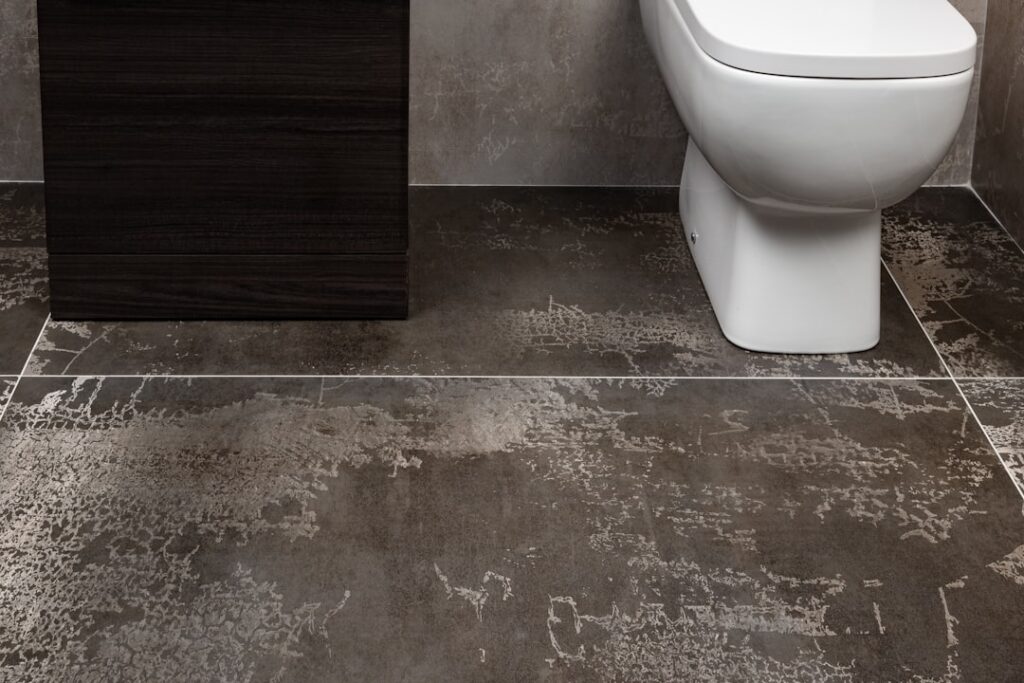
The original waterproof flooring is still one of the best. Porcelain tile absorbs less than 0.5 percent water, lasts decades, and is impervious to moisture from any direction. It is the top choice for showers, bathrooms, and entryways. The catch is that grout lines can stain or harbor mildew if not sealed, and installation is labor-intensive, pushing installed costs to $8 to $15 per square foot.
Matching the Floor to the Room
Different waterproof products excel in different spaces:
- Bathrooms and showers: porcelain tile or SPC.
- Basements: SPC for its stability over concrete and moisture resistance.
- Kitchens: SPC or waterproof laminate with a 20-mil wear layer.
- Bedrooms and living rooms: WPC for comfort, or SPC for durability.
- Laundry and mudrooms: tile or SPC for heavy splash zones.
Pros and Cons of Waterproof Flooring
Pros: complete protection against spills, leaks, and flooding; suitable for any room including below-grade spaces; low maintenance; and strong durability with wear layers rated for years of traffic.
Cons: waterproof flooring costs more than basic water-resistant products; the waterproof core protects the floor but not the subfloor beneath it, so standing water from a major flood can still require subfloor drying; and some products marketed as waterproof carry fine-print time limits.
Smart Buying Tips
- Confirm the label says waterproof, not water-resistant, and read the warranty terms.
- Choose a wear layer of 12 to 20 mil based on traffic.
- Match the product to the room’s moisture and comfort needs.
- Remember the subfloor still needs protection; use recommended underlayment.
- Buy 7 to 10 percent extra for cuts and future repairs.
Installation Considerations for Waterproof Floors
Even the most waterproof plank depends on correct installation to deliver on its promise. For floating SPC and WPC, leave the manufacturer’s expansion gap, usually 1/4 to 3/8 inch, around the perimeter so the floor can move without buckling. Seams should be tight and fully locked, since gaps let water reach the subfloor. In bathrooms and laundry rooms, many pros run a bead of silicone caulk at the perimeter and around fixtures for an extra moisture seal.
Tile requires a waterproof membrane or backer board in wet areas, particularly showers, where the substrate matters as much as the tile itself. The lesson is consistent: the finished material may be waterproof, but the system around it, seams, edges, and substrate, has to be installed correctly to keep water out.
Protecting the Subfloor Beneath
One detail homeowners often overlook is that waterproof flooring protects itself, not necessarily the structure underneath. A waterproof plank will survive standing water, but if that water seeps through seams or perimeter gaps during a major flood, it can still saturate a wood subfloor and lead to mold or rot. This is why proper underlayment, vapor barriers over concrete, and sealed perimeters matter so much. In genuinely flood-prone homes, pairing waterproof flooring with a moisture-resistant or concrete substrate gives you a system that recovers cleanly after water intrusion. Think of waterproof flooring as the first line of defense, with subfloor protection as the essential second layer that determines how easily you bounce back from a real water event.
The Bottom Line
When a space sees real moisture, only 100 waterproof flooring will do, and SPC rigid-core vinyl leads the pack for value and versatility, with WPC, true waterproof laminate, and porcelain tile filling specific niches. Read the warranty fine print, match the material to the room, and you will get a floor that survives spills, leaks, and the occasional flood without missing a beat.
Prefer to explore on your own?
See how new flooring looks in your actual room in seconds — free, no signup.
Try the free Floor Studio →