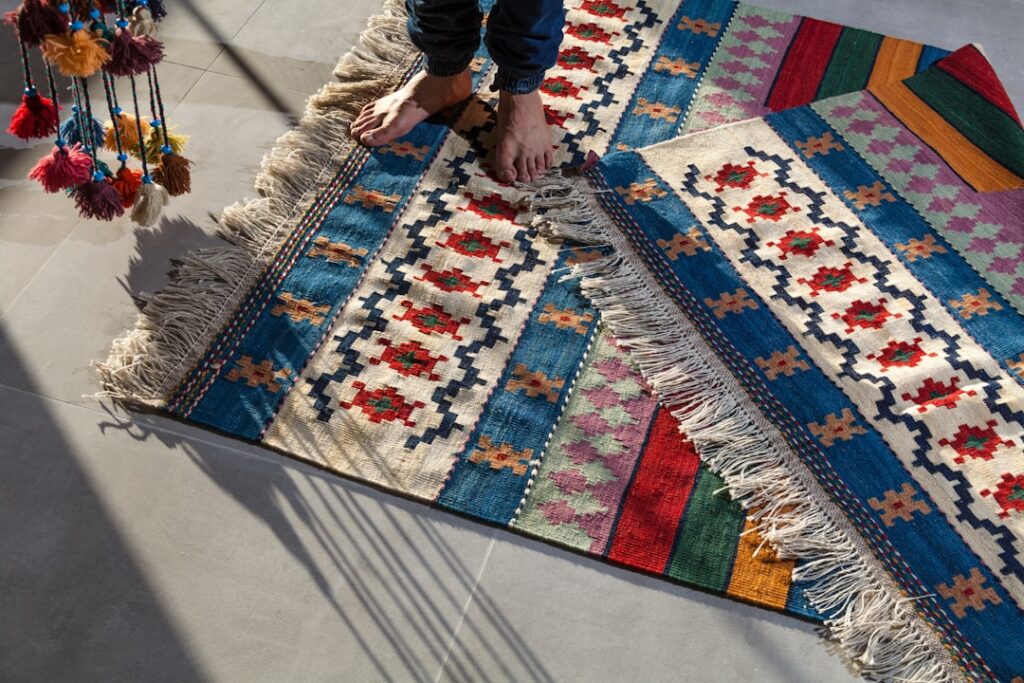
Most people pick a rug that’s too small for their room, and it makes the whole space feel disjointed. A 12 x 15 rug is an oversized statement piece, 180 square feet of floor coverage, built to anchor large living rooms, great rooms, and open-concept spaces where standard sizes float awkwardly. I’ve helped homeowners size rugs for everything from cramped condos to sprawling lake houses, and getting the scale right transforms a room more than almost any other decor choice. Here’s how to know if this size is the one for you.
What Rooms Suit This Size
A 12 by 15 foot rug is genuinely large, so it belongs in genuinely large rooms. It shines in spaces of roughly 16 by 19 feet or bigger, leaving the recommended border of bare floor around the edges. The most common homes for this size:
- Large living rooms and great rooms
- Open-concept living and dining combinations
- Spacious master bedrooms under a king bed
- Finished basements and bonus rooms
In a properly sized room, all your furniture legs can sit on the rug, which is the designer ideal. That single detail makes a seating area feel intentional and pulled together rather than scattered.
Will It Actually Fit?
Before you buy, tape it out. Measure your room and leave 8 to 18 inches of exposed floor on each side, which keeps the rug from looking wall-to-wall and crowded. In a 16 by 19 foot room, a 12 by 15 rug leaves a clean 2-foot border, just about perfect.
For a living room, position the rug so the front legs of your sofa and chairs rest on it at minimum, with all legs on it being the gold standard. In a dining room, the rug needs to extend at least 24 inches beyond the table edge so chairs stay on the rug when pulled out. Always test the footprint with painter’s tape on the floor before committing.
Material Options
At this size, material affects both feel and budget heavily, since you’re covering 180 square feet. The main choices:
- Wool: durable, soft, naturally stain-resistant, the premium long-term choice
- Polypropylene (olefin): affordable, stain-resistant, great for high-traffic and indoor-outdoor use
- Jute and natural fiber: casual texture for coastal and farmhouse looks, but rough underfoot
- Cotton: washable and budget-friendly, but less durable in busy rooms
For a high-traffic family living room, I steer people toward wool or a quality polypropylene. Wool ages beautifully and hides wear; polypropylene cleans up easily when kids and pets are in the mix.
Cost Expectations
Bigger rugs mean bigger price tags. A 12 by 15 rug spans a wide range depending on material and construction:
- Machine-made polypropylene: $200 to $600
- Machine-made wool blends: $500 to $1,200
- Hand-tufted wool: $1,000 to $3,000
- Hand-knotted Persian or Oriental: $3,000 to $10,000-plus
Because this is a non-standard size, your selection at big-box stores may be limited, and you might pay a premium or wait for a special order. Online retailers and rug specialists carry the widest range in this dimension.
Don’t Forget the Rug Pad
A rug this large needs a quality pad underneath, and skipping it is a costly mistake. A good felt-and-rubber pad does three things: it stops the rug from sliding, adds cushioning underfoot, and protects both the rug backing and your floor finish from abrasion. Size the pad about an inch smaller than the rug on all sides so it stays hidden.
Budget $80 to $200 for a pad in this size. On hard flooring it prevents dangerous slipping, and on any surface it dramatically extends the life of the rug by absorbing foot pressure.
Cleaning and Maintenance
A 12 x 15 rug is too big to toss in a washer, so plan your care accordingly. Vacuum weekly to lift grit that grinds down fibers, and rotate the rug 180 degrees every six months so sun fading and foot traffic wear evenly. Treat spills immediately by blotting, never rubbing, with a clean cloth.
For deep cleaning, wool and large hand-knotted rugs benefit from professional cleaning every one to three years, which runs $150 to $500 depending on material. Synthetic rugs can often be cleaned in place with a rented extraction machine. Whatever you do, dry the rug fully before putting furniture back to avoid mildew and rust marks from metal feet.
Patterns and Color Choices
At this scale, the rug becomes a major design element, so choose its pattern with care. A large solid or subtly textured rug recedes and lets your furniture and art take center stage, which suits busy rooms. A bold patterned rug, on the other hand, becomes the room’s focal point and can carry an otherwise simple space. In an open-concept layout, a patterned rug is also a clever way to visually separate the living zone from the dining or kitchen area.
Color affects how the room feels at this size more than with a small accent rug. Light, neutral tones make a large room feel airier, while deep colors ground the space and add coziness. Because you’re covering 180 square feet, a very bold color or busy pattern is a big commitment, so view a sample in your own lighting before ordering. Non-standard sizes like 12 by 15 are easiest to find through online rug specialists and dedicated flooring retailers rather than general big-box stores, and you should expect longer shipping times and possible freight charges since a rug this large is heavy and bulky.
When it arrives rolled, plan to have a second person help you unroll and position it, and let it relax flat for a day or two to release shipping creases. Reverse-rolling a stubborn corner gently or placing furniture on it overnight helps it lie flat. Always vacuum the floor beneath before laying the rug, since you won’t be moving it often once it’s down.
Is This the Right Rug Size?
If you have a big room that’s feeling empty or a furniture arrangement that looks like it’s floating, a 12 x 15 rug may be exactly the fix. It anchors large spaces the way smaller rugs simply can’t, unifying seating areas and defining open-concept zones. Just confirm the fit with painter’s tape, invest in a proper pad, and choose a material matched to your traffic. Get the scale right and the room finally feels complete.