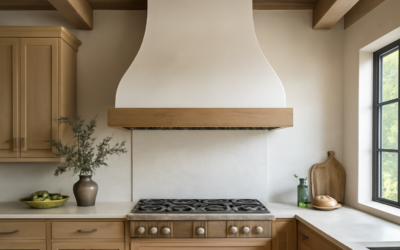
Most American kitchens are built around a 30-inch range, so a 30 inch range hood is the default choice for the majority of homeowners. That default works well for a standard electric range with moderate cooking. It works less well when the cooktop is a high-output gas unit, when the hood sits on an island, or when the hood is mounted too high to catch rising smoke.
Part of our Kitchen Remodeling guide — explore the full guide →
The short answer: a 30-inch hood matches a 30-inch range, should move roughly 300 CFM for electric cooking and more for gas, and usually mounts 24 to 30 inches above an electric surface or 30 to 36 inches above a gas burner, per the maker’s manual. If you cook heavily on gas, or the hood will be ceiling-mounted over an island, stepping up to a 36-inch width captures far more grease and steam.
- Does a 30 Inch Range Hood Fit Your Range?
- CFM Targets for Gas vs Electric Cooking
- Mounting Height Above the Cooktop
- Ducted vs Ductless 30 Inch Kitchen Hoods
- Choosing a Style: Under Cabinet, Wall Chimney, or Insert
- Installing a 30 Inch Range Hood: Step by Step
- Troubleshooting Common Problems
- Typical Cost Ranges
- When to Call a Pro
- Frequently Asked Questions
Those rules of thumb have exceptions, and getting them wrong means a fan that roars without clearing the air. The details on fit, airflow, ducting, and installation follow.
Does a 30 Inch Range Hood Fit Your Range?
The basic rule for any hood is simple: the hood should be at least as wide as the cooking surface. A 30 inch range hood covers a standard 30-inch freestanding range, a 30-inch slide-in range, or a 30-inch cooktop set into a countertop. The cabinet opening above most ranges is also 30 inches, which is why under-cabinet models in this width are so common.
Hood capture works like an inverted funnel. Smoke and steam rise in a plume that widens as it climbs, so a hood mounted 30 inches up is catching a column that has already spread a few inches past the burner edges. A same-width hood captures most of that plume on the back burners and a bit less on the front burners, which is why cooking on the rear burners is a practical habit with any hood.
When to Size Up to 36 Inches
- High-output gas cooktops: burners over roughly 15,000 BTU throw a wider, faster plume.
- Island installations: without walls or cabinets to contain the plume, cross drafts push smoke sideways. Island hoods are often sized 3 inches wider than the cooktop on each side.
- Wok cooking, searing, and frequent frying: heavy grease loads benefit from the extra capture area.
- Open floor plans: anything that escapes the hood drifts straight into the living area.
If your cabinet opening is fixed at 30 inches, you can still improve capture by choosing a hood with a deeper front-to-back dimension (around 20 to 22 inches instead of 17 to 18) so it reaches over the front burners.
CFM Targets for Gas vs Electric Cooking
CFM (cubic feet per minute) measures how much air a hood fan moves. More is not always better, because an oversized blower can be loud, can pull conditioned air out of the house, and may trigger makeup air requirements. Use these starting points:
| Cooking setup | Rule of thumb | Typical target for 30 inches |
|---|---|---|
| Electric or induction, wall mount | About 10 CFM per inch of width | 250 to 350 CFM |
| Gas, wall mount | About 1 CFM per 100 BTU of total burner output | 400 to 600 CFM |
| Island mount (any fuel) | Add roughly 50 percent over wall-mount numbers | 450 to 650 CFM |
To use the gas rule, add up the BTU ratings of all burners. A range with four burners totaling 45,000 BTU suggests a hood around 450 CFM. Long or twisting duct runs also cut real-world airflow, so if your run has several elbows, choose a model near the upper end of the range.
Makeup Air and Large Blowers
Many local codes require a makeup air system when a hood exceeds 400 CFM, especially in tightly built homes. Without replacement air, a strong hood can backdraft a gas water heater or furnace, pulling combustion gases into the living space. Check with your building department before buying a high-CFM 30 inch hood vent, and keep a working carbon monoxide alarm on every level if you have fuel-burning appliances.
Mounting Height Above the Cooktop
Mounting height is where many installations go wrong. Too low and tall cooks bump their heads and the hood can overheat; too high and the plume spreads past the hood before it gets there. Typical ranges:
- Electric and induction: 24 to 30 inches from the cooking surface to the bottom of the hood.
- Gas: 30 to 36 inches, because open flames produce more heat.
- Island hoods: often 30 to 36 inches, with some designs allowing slightly higher mounts when paired with more CFM.
The manufacturer’s installation manual always takes priority, since it lists the minimum clearance required for the product’s safety listing. If you must mount higher than recommended, add CFM and width to compensate, roughly 3 inches of width for every extra 6 inches of height is a common designer’s shortcut.
Ducted vs Ductless 30 Inch Kitchen Hoods
A ducted hood pushes air outdoors through a wall or roof cap. A ductless (recirculating) hood pulls air through a grease filter and a charcoal filter, then blows it back into the kitchen. Ducted is always the better performer for heat, moisture, and odor. Ductless is the fallback for condos, interior walls, or rentals where you cannot run a duct.
For ducted 30 inch kitchen hoods, match the duct to the hood’s outlet. Smaller models often use a 3.25 by 10 inch rectangular duct or a 6-inch round duct; hoods above about 400 CFM typically need 7- or 8-inch round duct. Never reduce the duct size below the outlet, keep the run as short and straight as possible, and use smooth rigid metal duct rather than flexible foil. Terminate outside with a damper cap, never into an attic, soffit, or crawlspace.
Choosing a Style: Under Cabinet, Wall Chimney, or Insert
An under cabinet range hood is the most common choice at this width because it mounts directly to the bottom of the cabinet that already sits above most 30-inch ranges. It is affordable, easy to duct up through the cabinet or out the back wall, and it leaves the upper cabinet usable if the duct runs through the back.
Wall-mount chimney hoods suit kitchens with no cabinet above the range. Their vertical chimney cover hides the duct and gives a strong design focal point. Insert (liner) hoods are blowers built to sit inside a custom wood or plaster surround; size the insert slightly smaller than the surround, often a 28-inch insert inside a 30- to 34-inch enclosure. Microwave-hood combos fit 30-inch openings too, but their shallow depth and low capture make them the weakest option for serious cooking.
Features Worth Paying For
- Baffle filters, which handle grease better and wash in the dishwasher.
- A sone rating near 1 to 3 on low speed so you will actually run it.
- A delayed shutoff that runs the 30 inch hood fan for a few minutes after cooking.
- LED task lighting that brightens the full cooktop.
Installing a 30 Inch Range Hood: Step by Step
Replacing a hood with a similar unit on an existing circuit and duct is a reasonable weekend project for a confident DIYer. Gather a drill, stud finder, level, tape measure, foil tape, wire nuts, a non-contact voltage tester, and a helper to hold the hood.
- Kill the power. Turn off the breaker for the hood circuit and confirm power is off at the wires with a non-contact voltage tester before touching anything.
- Remove the old hood. Disconnect the wiring, unscrew the hood from the cabinet or wall, and inspect the duct for grease buildup or damage.
- Check the duct alignment. Hold the new hood in place and mark where its outlet lands. Adjust or extend the duct with matching rigid metal pieces.
- Set the height. Measure from the cooking surface and mark the hood’s bottom edge, staying within the manual’s range.
- Mount securely. Fasten to cabinet bottoms or wall studs with the supplied hardware. Use blocking behind drywall if no stud lands where you need it.
- Connect the duct. Join with metal screws and seal seams with foil tape (not cloth duct tape).
- Make the electrical connection. Match conductors as the manual shows, secure them with wire nuts, attach the ground, and close the junction box cover.
- Test. Restore power, run every fan speed and light, and hold a piece of tissue near the filter to confirm suction.
Most hoods run on line voltage (120 volts), which is why the breaker step matters. If there is no existing junction box, or the hood needs a new dedicated circuit, hire a licensed electrician rather than tapping into a nearby outlet or lighting circuit.
Troubleshooting Common Problems
- Smoke escapes the front: mount is too high, hood is too shallow, or you are cooking on front burners. Lower the hood if the manual allows, or switch to rear burners.
- Loud fan, weak suction: undersized or crushed duct, a stuck damper, or clogged filters. Clean filters monthly with heavy use.
- Grease dripping from the hood: filters are saturated or the duct is sloped back toward the hood.
- Cold drafts with the fan off: the exterior damper is stuck open or missing.
- Fan or light dead: check the breaker first, then the hood’s internal connections with power off.
Typical Cost Ranges
A basic under-cabinet 30-inch model costs roughly $100 to $300. Mid-range units with quieter blowers and baffle filters run about $300 to $800, and wall chimney or premium insert hoods commonly land between $600 and $2,000 or more. Professional installation on existing ductwork typically adds $150 to $500; new duct runs through walls or roofs, new circuits, or makeup air systems can push labor well past $1,000.
When to Call a Pro
Call a licensed electrician for any new circuit, new junction box, or rewiring, and a qualified contractor for new roof or wall penetrations, makeup air systems, or hoods over 400 CFM that may require permits. If you cook on gas and notice signs of backdrafting at a water heater or furnace after installing a stronger hood, stop using the hood on high and have an HVAC pro evaluate the house. A properly sized and mounted 30 inch range hood should quietly clear the air without fighting the rest of the home.
Frequently Asked Questions
Can I put a 30 inch hood over a 30 inch range?
Yes. Matching widths is standard and works well for most electric ranges and moderate gas cooking. For heavy gas cooking or island setups, a wider hood captures more smoke.
How many CFM do I need for a 30 inch range hood?
Plan on about 250 to 350 CFM for electric or induction, and roughly 1 CFM per 100 BTU of burner output for gas, which often lands between 400 and 600 CFM.
How high should a 30 inch range hood be mounted?
Generally 24 to 30 inches above an electric cooktop and 30 to 36 inches above a gas cooktop. Always follow the minimum clearance in the hood’s installation manual.
Is a ductless 30 inch range hood worth it?
A ductless hood filters grease and some odor but returns heat and moisture to the kitchen. It is a reasonable choice when ducting outside is impossible, but a ducted hood performs better.
Do I need makeup air for a 30 inch hood?
Many local codes require makeup air when a hood exceeds 400 CFM. Most 30-inch hoods under that level do not need it, but check with your building department.