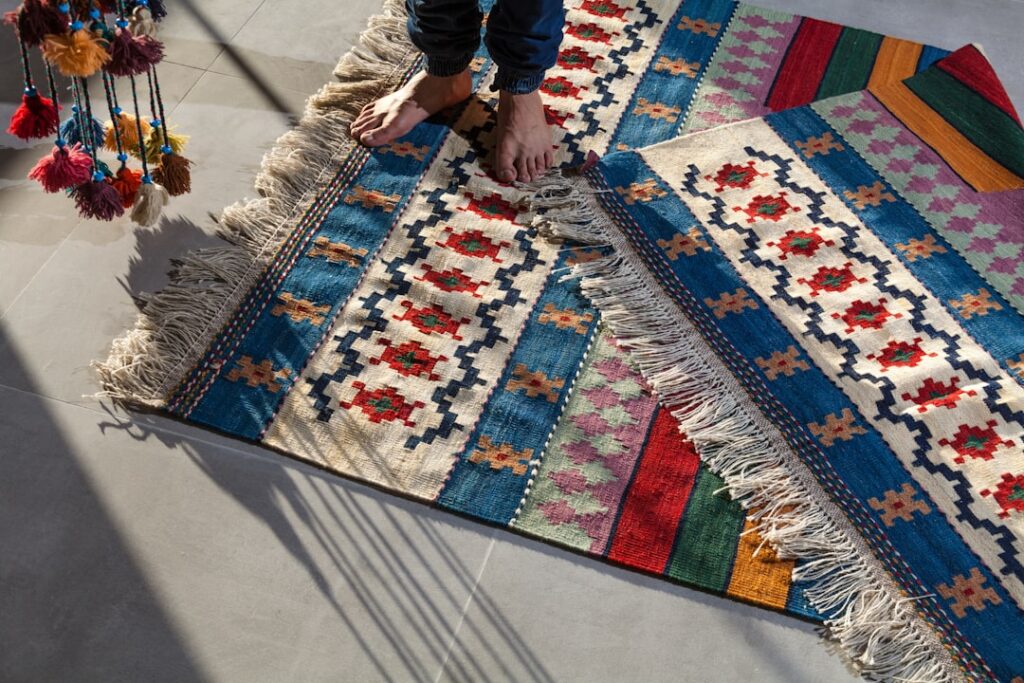
A 4 by 6 rug is one of the most useful sizes you can own, yet it gets overlooked because people assume bigger is always better. In reality, this compact footprint anchors small spaces beautifully: entryways, reading nooks, the side of a bed, or in front of a kitchen sink. It defines an area without overwhelming it, and it is light enough to move, clean, and swap with the seasons.
Measuring 4 feet by 6 feet, this rug covers about 24 square feet, large enough to feel intentional but small enough to be affordable and flexible. Here is how to choose one and where to put it.
Best Rooms and Spots for a 4 By 6 Rug
This size shines in tight or transitional spaces where a larger rug would crowd the room. Common placements include:
- Entryways and foyers: Catches dirt and grounds the space without running into doorways.
- Bedsides: Run one along the side of a bed so your feet land on softness, instead of buying one oversized rug.
- Reading nooks: Defines a chair-and-lamp corner.
- Kitchens: Sits in front of the sink or island as a cushioned standing surface.
- Home offices: Fits neatly under a desk and chair.
In a small bedroom, a 4 by 6 can sit at the foot of the bed. In a living room, it works under a coffee table in a compact seating arrangement, though larger rooms usually call for a bigger size.
How to Place It Correctly
The most common mistake is floating a small rug in the middle of a large room, which makes it look like a postage stamp. A 4 by 6 should relate to furniture or define a clear zone. In a seating area, let the front legs of chairs or a sofa rest on the rug, or keep all furniture off it entirely as a centered accent under a coffee table.
By a bed, align the rug with the mattress and let it extend past the side where you step out. In an entry, center it on the door or the main walking path. Keep at least a few inches of bare floor showing around the edges so the rug reads as a deliberate frame.
Choosing the Right Material
Match the material to the traffic and the room. Each has trade-offs:
- Wool: Durable, naturally stain-resistant, and soft. Best for living rooms and bedrooms. Higher cost, often $100 to $400 in this size.
- Polypropylene (olefin): Affordable, stain-resistant, and easy to clean. Ideal for entries and kitchens. Often $30 to $90.
- Cotton: Casual, washable, and budget-friendly. Great for bathrooms and laundry rooms.
- Jute or sisal: Natural texture for entries and low-traffic accents, but not ideal where they get wet.
For high-traffic or messy areas, a flatweave or low-pile rug cleans up far more easily than a deep shag.
What a 4 By 6 Rug Typically Costs
Price spans a wide range depending on material and construction. Machine-made synthetic rugs in this size commonly run $30 to $90. Quality wool and hand-tufted options fall in the $100 to $400 range, while hand-knotted or specialty designer rugs climb well beyond that. Because the size is small, even premium materials stay reasonably priced compared to room-sized rugs.
This affordability is part of the appeal. You can buy two or three 4 by 6 rugs to refresh several spots in a home for the price of one large area rug.
Styling and Layering With a 4 By 6 Rug
Beyond placement, a 4 by 6 rug is a flexible styling tool. Because it is small and affordable, you can rotate it seasonally, swapping a bright pattern in summer for a warmer, deeper tone in winter. It also works beautifully for layering: set a smaller patterned 4 by 6 over a larger neutral jute rug to add color and texture without committing to a full room-sized statement piece.
Color and pattern choice should respond to the room. In a small or busy space, a low-contrast, tonal rug keeps things calm and makes the room feel larger. In a plain, neutral room, a 4 by 6 with a bold pattern or rich color becomes the focal point that gives the space personality. Round out the look by tying the rug’s accent colors to a throw pillow, a piece of art, or a lampshade nearby.
For open-plan homes, several coordinating 4 by 6 rugs can define separate zones, such as an entry, a reading corner, and a workspace, without the cost or commitment of large rugs in each area. This zoning trick is one of the most practical reasons designers keep this size in rotation.
How to Measure for the Right Fit
Before buying, measure the space so a 4 by 6 actually fits the way you imagine. Tape out a 4-foot by 6-foot rectangle on the floor with painter’s tape to visualize the footprint in the room. This simple step prevents the common mistakes of buying a rug that crowds a walkway or floats awkwardly in a too-large area.
In an entry, make sure the rug clears the door swing and leaves room to step on and off it. Beside a bed, confirm the 6-foot length runs along the mattress with the rug extending past the side where you get out. Under a table, check that chairs can pull out and still rest on or near the rug. Taking two minutes to tape the size out saves the hassle of returning a rug that looked right online but feels wrong in the room.
Pads, Care, and Longevity
Always use a rug pad underneath, even on a small rug. A pad prevents slipping, cushions the rug, protects the floor, and extends the rug’s life by reducing wear on the backing. A grippy pad costs $10 to $25 and is non-negotiable on hard floors for safety.
Vacuum regularly, rotate the rug every few months to even out wear and sun fading, and spot-clean spills promptly. Many synthetic and cotton 4 by 6 rugs are small enough to take outside, hose down, or even machine-wash, which is another quiet advantage of choosing this manageable size. A well-placed 4 by 6 rug delivers comfort, definition, and style in exactly the spots where a bigger rug would simply be too much.