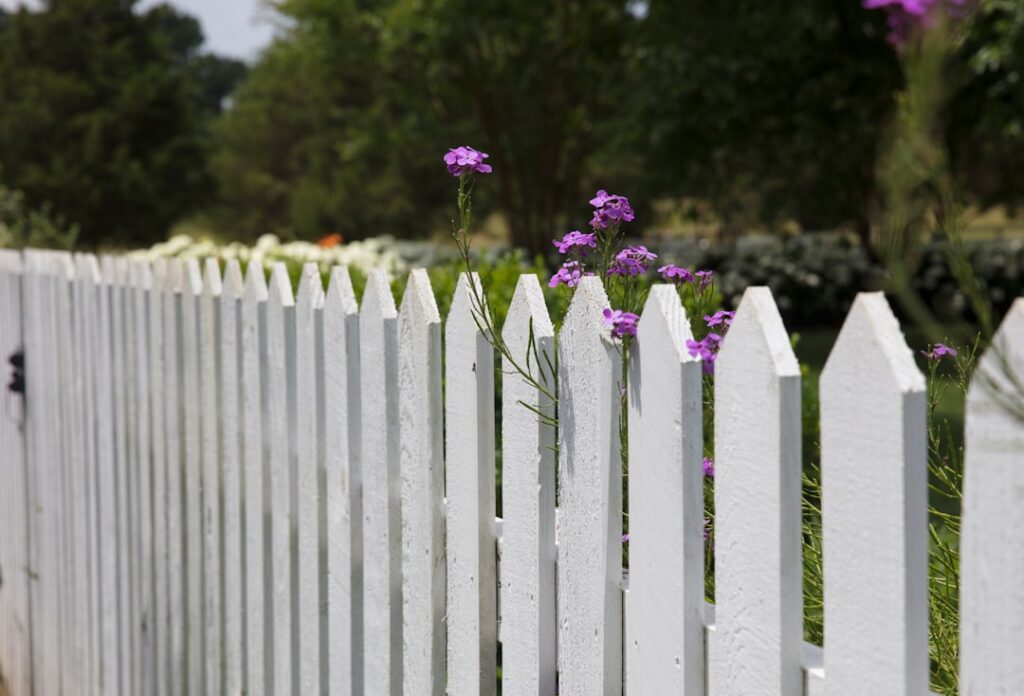
Few fences say classic American home quite like a 4 ft white vinyl picket fence running along a front yard. It delivers the timeless cottage charm of a traditional wood picket fence but in low-maintenance PVC that never needs scraping or repainting to stay bright white. At four feet tall, it defines a boundary, keeps kids and pets contained, and frames the landscaping without walling off the view or the neighborhood.
I steer a lot of homeowners toward this exact configuration when they want curb appeal more than privacy. The four-foot height is friendly and welcoming, the white finish is crisp and photogenic, and vinyl construction means the fence still looks new a decade later. In this guide I will walk through styles, real-world costs, installation, and what to check before you buy so you end up with a fence that looks great and lasts.
Why a 4-Foot White Vinyl Picket Fence
Four feet is the sweet spot for a decorative front-yard fence. It is tall enough to contain most dogs and to clearly mark your property line, yet low enough to keep the open, approachable feel that picket fences are loved for. Taller fences start to feel like barriers; a four-foot picket feels like a garden accent that happens to be functional.
White is the traditional picket color and the reason the style is so instantly recognizable. In vinyl, that white is molded through the material and protected with UV inhibitors, so it resists the yellowing and chalking that plague painted wood. The result is a fence that keeps its clean, bright appearance with nothing more than an occasional rinse, which is a big part of why vinyl has largely replaced wood for this look.
Styles and Picket Options
Even within the four-foot white picket category there is meaningful variety. Picket tops come in several profiles: classic pointed, or gothic; flat-top or square; and dog-eared, among others. The pointed top is the most traditional and also sheds water and discourages perching, while a flat top reads slightly more contemporary. Picket spacing also varies, with wider gaps feeling more open and tighter spacing giving a bit more containment for small pets.
You can also choose between a straight-top run and a scalloped or arched top, where the pickets dip or rise between posts for a more decorative rhythm. Post caps add another layer of personality, from simple flat caps to New England style, gothic points, and solar-lit versions that glow at dusk. Matching gates, single walk gates and wider drive or double gates, complete the system so everything coordinates.
Cost of a 4-Ft White Vinyl Picket Fence
For a four-foot white vinyl picket fence, expect installed pricing of roughly $20 to $40 per linear foot, with the range driven by picket density, panel quality, terrain, and local labor. Because it is a lower fence than a six-foot privacy panel, it uses less material and generally costs less per foot than taller vinyl styles. Material-only pricing for do-it-yourself installs commonly falls around $12 to $28 per linear foot for panels, posts, and hardware.
To put that in perspective, fencing the front of a typical lot, say 100 linear feet, runs roughly $2,000 to $4,000 installed, with each gate adding a few hundred dollars. Vinyl costs more upfront than a comparable wood picket fence, but you are trading that premium for years of never sanding, priming, or repainting. Over the life of the fence, skipping all that maintenance usually makes vinyl the better value.
Vinyl Versus Wood Pickets
A wood picket fence is charming on day one but demands ongoing care. Wood must be sealed or painted, and even then it eventually grays, splits, and loses pickets to rot at the ground line. Repainting a picket fence with all its individual boards is famously tedious work that comes around every few years.
Vinyl sidesteps all of that. It will not rot, warp, splinter, or attract insects, and it never needs paint. Quality vinyl resists impact and stays flexible in cold weather thanks to modifiers in the compound. The main honest trade-offs are a higher purchase price and less repairability, since a badly damaged vinyl section is usually replaced as a panel rather than board by board. For most homeowners chasing that bright-white picket look, the low upkeep tips the decision to vinyl.
Installation Overview
Installation starts with layout and post setting, and level, plumb posts are the foundation of a good-looking fence. Posts are typically set in concrete, dug below the frost line in cold regions so the ground does not heave them out of alignment over winter. Many vinyl systems use routed posts into which the rails slide, so post spacing must match panel width exactly, string a line and measure carefully.
Before any digging, call your local utility locate service so buried lines are marked, and verify property boundaries and any homeowner association or town rules on fence height and front-yard setbacks. On sloped ground you will either step the panels down the grade or rack them to follow it, so confirm your chosen system’s racking capability. A four-foot fence is light and manageable, which makes it one of the more DIY-friendly vinyl projects, but patience with the post layout is what separates a straight, professional-looking run from a wavy one.
Maintenance and Longevity
The upkeep on a four-foot white vinyl picket fence is close to nothing. An occasional wash with a garden hose, or a wipe-down with mild soap and water for stubborn dirt or algae in shaded spots, keeps it looking fresh. There is no painting, sealing, or board replacement in the normal course of ownership.
Quality vinyl fencing typically carries a limited lifetime warranty, and with UV-stabilized material the white stays white rather than fading or yellowing. Barring physical impact, such as a car or a falling limb, the fence should hold its clean appearance for decades. That combination of classic looks, modest cost, and near-zero maintenance is exactly why the 4 ft white vinyl picket fence remains one of the most popular front-yard choices in the country.
Matching the Fence to Your Home
A picket fence is as much a design element as a functional barrier, so think about how it will relate to your house. The four-foot white picket is at home in front of cottages, colonials, bungalows, farmhouses, and traditional suburban homes, where its symmetry and bright color complement the architecture and the landscaping. It frames a walkway, encloses a front garden, and gives climbing roses or perennials something to spill over.
Consider the picket profile and spacing in the context of your style. A pointed, closely spaced picket reads formal and classic, while a wider, flat-top spacing feels more relaxed and modern. Pair the fence with a coordinating gate at the main walk, and choose post caps that echo the home’s detailing, simple flat caps for a clean look or gothic points for period charm. Small choices like these are what make the finished fence feel designed for the house rather than generic.
Common Uses and Practical Benefits
Beyond looks, a four-foot picket fence does real work. It contains small children and most dogs in a front or side yard, defines the property boundary clearly for neighbors and visitors, and gently discourages people and stray animals from cutting across the lawn. At four feet it does all of this without blocking sightlines, so the yard stays open and the house stays visible from the street, which many homeowners prefer for both aesthetics and security.
It also helps organize a landscape. A picket fence can separate a front garden from a lawn, screen a utility area at low height, or create a defined dooryard garden near the entry. Because it is low and open rather than tall and solid, it adds structure to the yard without the boxed-in feeling a privacy fence creates. For pure curb appeal combined with light-duty function, few options match it.