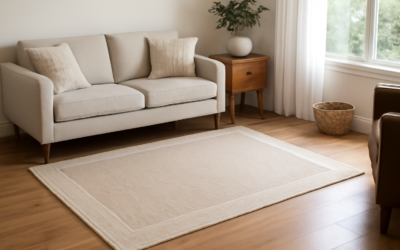
When you are shopping for area rugs, dimensions can get confusing fast. A 5×7 rug in inches measures 60 inches by 84 inches, since each foot equals 12 inches. That conversion sounds simple, but knowing the exact measurement helps you judge whether the rug will actually fit your room, your furniture, and the look you want.
This guide covers the precise dimensions, how a 5×7 compares to other common sizes, which rooms it suits, and the layout tricks that make a rug this size feel intentional rather than undersized.
The Exact Measurements
Let us start with the math, because precision matters when you are measuring a floor. A 5-foot by 7-foot rug is technically 60 inches by 84 inches. Many rugs sold as “5×7” are actually labeled 5 feet 3 inches by 7 feet 6 inches, which works out to 63 by 90 inches.
That small variation matters when space is tight. Always check the listed dimensions in inches before buying, and measure your floor area with a tape so you know exactly how much clearance you will have on each side.
Quick Size Conversions
Here is a handy reference for popular rug sizes converted to inches, so you can compare at a glance:
- 4×6 rug: 48 by 72 inches.
- 5×7 rug: 60 by 84 inches.
- 5×8 rug: 60 by 96 inches.
- 6×9 rug: 72 by 108 inches.
- 8×10 rug: 96 by 120 inches.
Seeing the sizes side by side makes the jump between them clearer. A 5×7 sits in the sweet spot for medium rooms, larger than an accent rug but smaller than a full room-anchoring piece.
What Rooms Suit a 5×7 Rug
The 5×7 size is one of the most versatile on the market. At 60 by 84 inches, it covers enough floor to define a space without overwhelming it. It works especially well in:
- Smaller living rooms, anchoring a sofa and coffee table.
- Bedrooms, placed under the lower two-thirds of a queen bed.
- Home offices, grounding a desk and chair.
- Dining nooks with a small table.
- Entryways and large hallways as a statement piece.
Because it is a common size, you will also find the widest selection of styles and prices in 5×7, which makes it a practical default when you are unsure.
Living Room Placement Tips
In a living room, a 5×7 typically works best when the front legs of your seating sit on the rug while the back legs rest on the floor. This pulls the furniture grouping together visually and keeps the rug from looking like it is floating.
If your living room is large, a 5×7 may read as too small to anchor the whole arrangement. In that case, use it to define a specific zone, like a reading corner with a chair and side table, rather than trying to stretch it under a full sectional. Leave a consistent border of exposed floor, ideally 8 to 18 inches, around the rug for a balanced look.
Bedroom Placement Tips
Bedrooms give you a few good options with this size. Under a queen bed, a 5×7 placed across the lower two-thirds leaves a soft landing for your feet when you wake up, while the nightstands sit on the bare floor. That arrangement looks deliberate and saves money versus a larger rug.
For a twin or smaller bed, a 5×7 can sit fully under the bed with margin to spare. With a king bed, this size is usually too small to center underneath, so consider running it sideways at the foot of the bed instead, or step up to a 8×10.
Choosing Material and Pile
Size is only half the decision. The material and pile height determine how the rug feels and how well it holds up. For high-traffic living rooms, a low-pile wool or durable synthetic blend resists crushing and cleans easily. Bedrooms can handle a plusher, higher pile because the traffic is lighter and the softness underfoot is welcome.
Consider these factors alongside the dimensions:
- Traffic level: low pile for busy rooms, high pile for cozy retreats.
- Material: wool for durability, synthetics for stain resistance and price, natural fibers like jute for texture.
- Pad: a quality rug pad prevents slipping and extends the rug’s life.
A rug pad cut slightly smaller than 60 by 84 inches keeps the rug flat and protects your flooring underneath.
Dining Rooms and Other Spaces
Dining rooms have a specific requirement: the rug must extend far enough that chairs stay on it when pulled out, ideally 24 inches past the table edge on all sides. At 60 by 84 inches, a 5×7 only suits a small bistro table or a compact two-to-four-seat setup. For a standard six-seat dining table, you will usually need to step up to a 8×10 or larger.
Where the 5×7 truly excels is in defining zones within larger, open-plan spaces. Use one to carve out a reading nook, anchor an accent chair and ottoman, or mark a conversation area within a great room. In a nursery or kids’ room it provides a soft, contained play surface. Thinking in terms of zones rather than whole rooms is the key to placing this size well.
Common Mistakes to Avoid
The most frequent error is buying a rug that is too small for the room, which makes the space feel disconnected. Before you order, tape out 60 by 84 inches on your floor with painter’s tape and live with it for a day. Seeing the actual footprint prevents disappointment.
Another pitfall is ignoring the slight size variations between brands. A rug listed as 5×7 might arrive at 63 by 90 inches, which could be the difference between fitting under a doorway swing or not. When clearance is tight, trust the inch measurement over the rounded foot label.
Final Takeaways
A 5×7 rug in inches comes out to 60 by 84 inches, a flexible mid-size that suits smaller living rooms, queen and twin bedrooms, offices, and entryways. Measure your space, tape out the dimensions, and pick a material suited to the room’s traffic. Get those basics right, and a 5×7 will look perfectly scaled and pulled together in nearly any setting you choose.