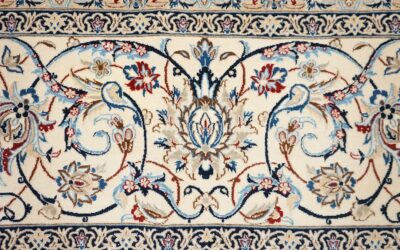
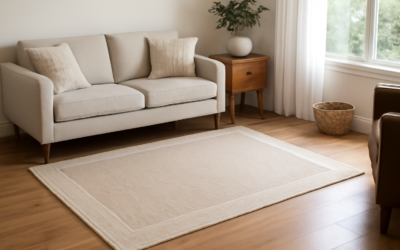
The 5×7 ft area rug is the workhorse of residential design. It’s small enough to ship affordably, big enough to define a seating area, and priced reasonably even in premium materials. The trouble is that buyers often pick the size assuming it’ll fit, then realize at delivery that it floats awkwardly in the middle of a too-large room. A real 5×7 rug example applied to common floor plans clarifies what works, what doesn’t, and how to make the size shine. This guide covers placement, room compatibility, layering, and pricing.
- Actual Dimensions and What They Mean
- Where 5×7 Rugs Work Best
- Where 5×7 Rugs Fall Short
- Living Room Layouts That Work
- Bedroom Placement Examples
- Rug Material Choices for 5×7
- Layering Strategies
- Pad Recommendations
- Common Mistakes With 5×7 Rugs
- Pricing Across Categories
- Maintenance for 5×7 Rugs
- Final Take
Actual Dimensions and What They Mean
“5×7″ is a nominal size. Actual rug dimensions vary by manufacturer, ranging from 5’x7′ to 5’3″x7’6”. This 3-6 inch variation matters in tight rooms or under furniture. Always measure your specific rug before assuming a layout will work.
The 5×7 covers 35 square feet, occupying a meaningful but not dominant portion of most rooms. For comparison, an 8×10 covers 80 square feet, and a 9×12 covers 108. The visual impact of a 5×7 sits firmly in the “anchor a small zone” category rather than “cover most of the room.”
Where 5×7 Rugs Work Best
The size shines in specific applications:
- Apartment living rooms (under 200 sq ft): The rug fills enough of the space to define a seating area without overwhelming.
- Bedrooms with queen beds: Place at the foot of the bed, perpendicular, with about 18 inches extending beyond the sides of the bed for warm landing zones.
- Dining nooks (small tables): Anchor a 36-42 inch round or 36×48 rectangular table with chairs that stay on the rug when pulled out.
- Entryways and foyers: Run lengthwise to direct foot traffic.
- Reading nooks: Define a chair-and-ottoman area without committing to a larger rug.
- Home offices: Under a desk and chair to soften the space and reduce chair-rolling noise.
Where 5×7 Rugs Fall Short
- Large open-concept living rooms (over 250 sq ft): Looks like a postage stamp in the middle of the floor.
- Master bedrooms with king beds: Doesn’t extend far enough on either side for both partners to step onto warm rug.
- Standard 8-seat dining rooms: Chairs slide off the rug when pulled out, creating uncomfortable transitions.
- Long hallways: Too short to anchor most halls; consider a runner instead.
Living Room Layouts That Work
For a 5×7 in a living room, two layouts succeed.
The “front legs only” layout places the front legs of the sofa on the rug while back legs stay on the floor. The coffee table sits centered on the rug. This works in seating areas roughly 12×14 ft or smaller, with a sofa under 84 inches long.
The “all-furniture-off” layout positions the rug entirely under the coffee table, with all sofa and chair legs on the surrounding hard floor. The rug becomes an accent under the table rather than an anchor for the seating. Works well in smaller modern apartments.
The layout that doesn’t work: trying to put all sofa and chair legs on a 5×7. The rug isn’t large enough to extend past most furniture footprints in typical American seating arrangements.
Bedroom Placement Examples
For a queen bed (60×80 in mattress), three 5×7 placements work:
- Foot of bed, perpendicular: Position the rug under the bottom 1/3 of the bed and extending 4-5 ft past the foot. Creates landing zones on both sides.
- Bedside, parallel: Place along one side of the bed, extending the full length of the bed plus 1-2 ft past the foot. Best for one-sided beds against a wall.
- Two rugs, one per side: Two smaller rugs (3×5 each) instead of one 5×7. More flexibility but less cohesive.
For king beds (76×80 in), a 5×7 is genuinely too small. Step up to 8×10 minimum.
Rug Material Choices for 5×7
The 5×7 size is widely available in nearly every material:
- Wool: Most durable for daily use. $200-$1,500 depending on weave and origin.
- Polypropylene (machine-made synthetic): Affordable, stain-resistant, ideal for kids and pets. $50-$300.
- Cotton flatweave: Lightweight, washable, works well in casual rooms. $80-$400.
- Jute and sisal: Natural texture, neutral colors. Rough on bare feet. $100-$500.
- Hand-knotted Persian or Oriental: Investment piece. $1,000-$10,000+.
- Polyester shag: Soft and trendy, but mats down quickly. $80-$300.
Layering Strategies
One way to extend the visual presence of a 5×7 is layering. Place it on top of a larger natural-fiber rug (8×10 jute or sisal), creating contrast and visual depth. The 5×7 becomes the focal pattern while the larger natural rug provides the foundation.
This works particularly well when the 5×7 is a statement piece (vintage Persian, bold geometric) and the larger rug is neutral. The combined cost is often less than buying a single oversized statement rug.
Pad Recommendations
Skip rug pads at your peril. Without one:
- The rug slides on hard floors, creating tripping hazards
- The corners curl and the edges fray faster
- Furniture indents the rug permanently
- Cleaning is harder because dirt grinds into the foundation
Choose a pad based on your floor type. Felt-and-rubber dual-layer pads work on most hard floors. Pure rubber waffle pads work on tile but can stain hardwood over time. For carpet-on-carpet installations, use a thinner non-slip mesh pad. Budget $30-$80 for a quality pad sized 1-2 inches smaller than the rug on each side.
Common Mistakes With 5×7 Rugs
- Floating in too-large spaces: The rug looks lost
- Placing under dining tables that seat more than 4: Chair legs catch the rug edge constantly
- Choosing high pile in entries: Mud and gravel embed quickly
- Centering on a wall instead of furniture: Creates visual imbalance
- Using a 5×7 as the only rug in a large open-concept space: The rest of the room reads as undefined
Pricing Across Categories
Realistic 5×7 rug pricing in the US market:
- Big-box machine-made synthetic: $40-$150
- Quality machine-made polypropylene: $150-$400
- Hand-tufted wool: $300-$1,200
- Hand-knotted wool: $800-$5,000
- Vintage Persian or Oriental: $1,500-$15,000+
For most homes, a $200-$600 hand-tufted wool or quality machine-made rug delivers excellent visual impact and lasts 10-15 years with proper care.
Maintenance for 5×7 Rugs
Vacuum weekly with the beater bar set to high pile or off (for delicate weaves). Rotate the rug 180 degrees every 6 months to even out wear and sun fading. Spot clean spills immediately with cold water and mild detergent. Have wool and natural fiber rugs professionally cleaned every 18-24 months. Synthetic rugs can often be cleaned with a household carpet cleaner or hosed off outdoors and air dried.
Final Take
The 5×7 rug example that works in your home depends entirely on the room and the furniture. Map the space, measure carefully, and visualize the rug’s footprint with painter’s tape on the floor before purchasing. Buy the right size for the room rather than defaulting to 5×7 because it’s the most common option. When the size is right, even a modest budget rug transforms the space.