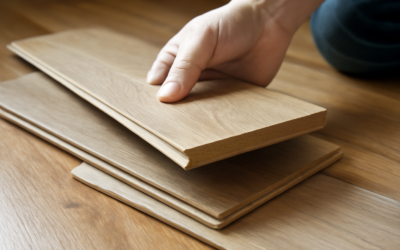
When shopping for laminate flooring, thickness is one of the first specifications you will encounter. At 8mm, you are looking at the most popular thickness category in the laminate market, sitting right in the middle between budget 6mm-7mm options and premium 10mm-12mm products. But is 8mm laminate flooring thick enough for your project?
This guide explains exactly what 8mm thickness means for performance, sound, stability, and comfort, and helps you decide whether to go with 8mm or step up to a thicker option.
- Understanding Laminate Flooring Thickness
- What Makes 8mm Laminate the Most Popular Choice?
- 8mm Laminate Flooring Performance
- Best Uses for 8mm Laminate Flooring
- 8mm vs. 10mm Laminate: Is the Upgrade Worth It?
- 8mm vs. 12mm Laminate: A Significant Step Up
- Top 8mm Laminate Flooring Products in 2026
- Installation Tips Specific to 8mm Laminate
- Maintenance and Lifespan
- Frequently Asked Questions
- Final Thoughts
Understanding Laminate Flooring Thickness
Laminate flooring thickness refers to the measurement of the plank itself, from the bottom of the backing layer to the top of the wear surface. It does not include the underlayment, which is a separate layer installed beneath the laminate. Some products come with pre-attached underlayment (typically 1mm to 2mm of cork or foam), which adds to the total stack height but is not counted in the stated thickness.
The Laminate Thickness Spectrum
- 6mm: Entry-level, budget products. Thin and flexible. Suitable only for temporary flooring or very light-use areas.
- 7mm: Low to mid-range. A step up from 6mm with slightly better stability and sound performance.
- 8mm: The industry sweet spot. Good balance of performance, stability, and cost. The most widely available thickness.
- 10mm: Upper mid-range. Noticeably more substantial underfoot with improved sound dampening.
- 12mm: Premium thickness. Maximum stability, the most realistic wood-like feel, and the best acoustic performance.
- 14mm: Rare, specialty products. Usually engineered for commercial or heavy-traffic applications.
What Makes 8mm Laminate the Most Popular Choice?
There are good reasons why 8mm is the default thickness for most laminate flooring lines.
Cost Efficiency
At $1.50 to $3.00 per square foot for quality products, 8mm laminate hits the pricing sweet spot. It costs 20 to 40 percent less than 10mm and 12mm options from the same brand while delivering most of the performance benefits. For budget-conscious homeowners and investors, 8mm offers the best value per dollar spent.
Adequate Core Density
An 8mm plank provides enough HDF core material for a dense, stable board. The core density, measured in kilograms per cubic meter, matters more than raw thickness for structural performance. A well-made 8mm laminate with an 850+ kg/m3 density core outperforms a poorly made 10mm or 12mm product with a lower-density core.
Installation Compatibility
At 8mm, laminate sits at a height that works well with standard door clearances, transition strips, and existing flooring heights. Upgrading from carpet or vinyl to 8mm laminate rarely requires trimming doors. Moving to 12mm laminate, especially with a thick underlayment, may force you to cut door bottoms and adjust transitions.
Wide Product Selection
Because 8mm is the standard thickness, the variety of styles, colors, textures, and brands available at this thickness far exceeds what you will find at 10mm or 12mm. If you have a specific look in mind, you are most likely to find it in an 8mm option.
8mm Laminate Flooring Performance
Stability and Flatness
8mm laminate provides good dimensional stability for residential use. The plank is rigid enough to bridge minor subfloor imperfections without telegraphing bumps through the surface. However, it is less forgiving than thicker options. Subfloor flatness requirements are stricter with 8mm laminate because there is less material to absorb undulations. Ensure your subfloor is flat within 3/16 inch per 10 feet for best results.
Sound Performance
Acoustic performance is where thickness matters most, and where 8mm laminate shows its compromise. An 8mm plank with no underlayment sounds hollow and loud when walked on. With a quality 2mm to 3mm underlayment, sound improves significantly but still falls short of the solid, wood-like sound that 10mm and 12mm products achieve.
For rooms where sound matters (upper floors in multi-story homes, bedrooms, or media rooms), either invest in a premium acoustic underlayment or step up to a thicker laminate. For ground-floor rooms over concrete, 8mm with standard underlayment performs perfectly well.
Comfort Underfoot
Comfort correlates directly with total floor stack height (laminate plus underlayment). An 8mm plank on 3mm underlayment creates an 11mm total stack, which feels adequately cushioned for most people. Walking barefoot, you will notice the difference between 8mm and 12mm laminate, with the thicker option feeling more solid and less like plastic. For most daily use in socks or shoes, 8mm is perfectly comfortable.
Durability and Wear Rating
Thickness alone does not determine durability. The AC rating (abrasion classification), which measures surface wear resistance, is independent of thickness. You can find AC4 and AC5 rated products at 8mm thickness. An 8mm AC5 laminate will outlast a 12mm AC3 laminate in terms of surface wear, even though the thicker product feels more substantial.
Locking System Strength
The click-lock profiles machined into thicker laminate have more material to grip, creating stronger joints. At 8mm, locking systems work well but have less tolerance for imperfect installation technique. If you are a first-time installer, the more forgiving profiles of 10mm or 12mm laminate make the learning curve a bit easier.
Best Uses for 8mm Laminate Flooring
8mm laminate is an excellent choice for these applications:
- Ground-floor rooms in single-story homes: Sound transmission to lower floors is not a concern, and the subfloor (typically concrete) provides a solid base.
- Bedrooms: Moderate traffic, dry conditions, and shoe-free use all favor 8mm laminate.
- Living rooms: With quality underlayment, 8mm laminate handles living room traffic well.
- Rental properties: The cost-performance balance of 8mm makes it ideal for investment properties where budget matters.
- Home offices: Low traffic and the ability to use a chair mat for desk chairs make 8mm sufficient.
- Guest rooms and secondary spaces: Areas with occasional use do not demand the premium performance of thicker laminate.
When to Consider Thicker Laminate Instead
Step up to 10mm or 12mm in these situations:
- Upper floors in multi-story homes: Sound transmission to rooms below is a major concern. Thicker laminate with acoustic underlayment makes a meaningful difference.
- High-traffic commercial or retail spaces: The added structural strength of thicker laminate handles heavier foot traffic better over time.
- Uneven subfloors: If you cannot achieve perfectly flat subfloor prep, thicker laminate bridges imperfections more effectively.
- Premium aesthetic goals: If you want the floor to feel and sound like real hardwood, 12mm laminate with high-density core gets closest to that experience.
- Large open-plan rooms: Wider spans without transitions benefit from the added rigidity of thicker planks.
8mm vs. 10mm Laminate: Is the Upgrade Worth It?
The jump from 8mm to 10mm adds 25 percent more material, and you can feel the difference. The 10mm plank feels more substantial in hand, produces a deeper sound when walked on, and handles subfloor imperfections slightly better. The locking profiles are also more robust.
However, for the typical homeowner installing over a well-prepared subfloor in a single-story home, the performance improvement may not justify the 20 to 30 percent price increase. The upgrade makes the most sense for upper-floor installations or homes where you want the floor to feel as close to real wood as possible.
8mm vs. 12mm Laminate: A Significant Step Up
The difference between 8mm and 12mm is dramatic. A 12mm plank is 50 percent thicker, and that extra material translates to noticeably better acoustics, a more solid and wood-like feel underfoot, stronger click-lock joints, and better performance over imperfect subfloors. Walking on quality 12mm laminate genuinely resembles the feel of solid hardwood.
The tradeoff is cost (typically 40 to 60 percent more expensive) and height. At 12mm plus underlayment, total stack height reaches 14mm to 15mm, which may require door trimming and careful transition planning.
Top 8mm Laminate Flooring Products in 2026
Pergo Outlast+ (8mm with attached underlayment)
Pergo’s Outlast+ line delivers impressive performance at the 8mm thickness. The SpillProtect surface coating and WetProtect technology provide a waterproof surface warranty. The attached 2mm underlayment brings total stack height to 10mm. AC4 rated with a 10-year light commercial warranty. Priced at $2.50 to $3.50 per square foot.
Quick-Step Impressive (8mm)
Quick-Step’s Impressive collection features wide planks with deep embossed textures that look far more expensive than their $2.00 to $3.00 per square foot price suggests. The Hydroseal surface coating adds water resistance, and the Uniclic locking system is among the most reliable in the industry. AC4 rated.
Mohawk RevWood (8mm)
Mohawk’s RevWood line focuses on realistic wood visuals with their All Pet Protection warranty and Uniclic installation. The attached cushioned backing adds comfort and sound dampening. Available in a wide range of oak, hickory, and walnut looks. Priced at $2.00 to $3.50 per square foot.
Swiss Krono Grand Selection (8mm)
Swiss-made quality with an AC5 commercial wear rating at the 8mm thickness. The Grand Selection features extra-wide planks and deep, synchronized embossing. Core density is among the highest in the 8mm category at 900+ kg/m3. Priced at $2.50 to $3.50 per square foot.
Kronotex Robusto (8mm)
German-manufactured with excellent build quality. The Robusto collection offers AC5 durability, which is uncommon at the 8mm thickness. The PerfectFold locking system provides solid joint performance. Available in contemporary wood and stone designs. Priced at $2.00 to $3.00 per square foot.
Installation Tips Specific to 8mm Laminate
Underlayment Selection
Because 8mm laminate is thinner than premium options, underlayment selection matters more. A quality underlayment compensates for the thinner plank. Use 2mm to 3mm foam, cork, or combination underlayment. Do not exceed the manufacturer’s maximum underlayment thickness, as too-thick padding makes the floor bouncy and stresses joints.
Subfloor Preparation
Invest extra time in subfloor prep when installing 8mm laminate. Fill low spots, grind high points, and verify flatness with a straightedge. The thinner plank is less forgiving, so thorough preparation prevents clicking sounds, joint separation, and uneven surfaces.
Handling and Cutting
8mm planks are more fragile during handling than thicker options. Avoid flexing planks excessively during installation, as the thinner HDF core can snap. Use a sharp, fine-tooth blade when cutting to prevent chipping along the edges.
Maintenance and Lifespan
8mm laminate with an AC3 to AC5 wear rating typically lasts 15 to 20 years in residential settings with proper maintenance. The maintenance routine is identical regardless of thickness: regular sweeping or vacuuming, occasional damp mopping with a laminate-specific or pH-neutral cleaner, prompt spill cleanup, and furniture pads under heavy items.
The most common failure mode for 8mm laminate is moisture damage, not surface wear. In dry rooms with normal foot traffic, well-maintained 8mm laminate can easily exceed 20 years of service life.
Frequently Asked Questions
Is 8mm laminate thick enough for a kitchen?
Yes, 8mm laminate works in kitchens if you choose a product with water-resistant features like wax-sealed edges and a waterproof surface coating. The thickness itself is adequate for kitchen traffic; the concern is always moisture resistance rather than structural performance.
Can I install 8mm laminate over radiant heating?
Most 8mm laminate products are compatible with radiant heating systems, as the thinner profile allows better heat transfer than 10mm or 12mm options. Always verify with the manufacturer and follow their maximum temperature guidelines, typically 80 to 85 degrees Fahrenheit at the floor surface.
Does 8mm laminate need underlayment?
Yes, unless the product has pre-attached underlayment. Never install 8mm laminate directly on a subfloor without some form of underlayment. The underlayment provides moisture protection, sound dampening, and a smooth surface that the thinner laminate especially benefits from.
Final Thoughts
8mm laminate flooring is the right choice for the majority of residential flooring projects. It offers the best balance of cost, performance, and product variety in the laminate market. Do not let thickness anxiety push you toward spending more than necessary. A well-made 8mm product with a high-density core and good wear rating outperforms a mediocre thicker product every time. Focus on core density, AC rating, and brand reputation, then use quality underlayment and thorough subfloor prep to get the most out of your 8mm laminate floor.
Prefer to explore on your own?
See how new flooring looks in your actual room in seconds — free, no signup.
Try the free Floor Studio →