When the outdoor unit of a central air system fails, the first quote usually raises a hard question: replace only the condenser, or the whole system? The AC condenser replacement cost for the outdoor unit alone commonly falls somewhere around $1,500 to $4,500 installed, while a full split system with a new indoor coil or air handler often runs $5,000 to $12,000 or more. The cheaper option is not always the smarter one.
Whether an outdoor-only swap makes sense depends on the age of your indoor equipment, the refrigerant your system uses, and whether a new condenser can be properly matched to your existing coil. Get those three wrong and you can end up paying twice.
- AC Condenser Replacement Cost Breakdown
- What Drives the Price
- Refrigerant Compatibility: R-22, R-410A and the New A2L Refrigerants
- Why Matched Coils Matter
- When Outdoor-Only Replacement Makes Sense
- When Full Replacement Is Smarter
- Repair vs Replace the Outdoor Unit
- How to Compare Quotes
- Safety: Leave This to Licensed Pros
- When to Call a Licensed Professional
- Frequently Asked Questions
Here is how the pricing breaks down, what drives it, and how to decide which path fits your house.
AC Condenser Replacement Cost Breakdown
Prices vary a lot by region, brand tier and system size. These general ranges cover typical residential systems from about 2 to 5 tons:
| Scope | Typical installed range |
|---|---|
| Outdoor condenser only, same refrigerant | Roughly $1,500 to $4,500 |
| Condenser plus new matched indoor coil | Roughly $3,500 to $7,500 |
| Full split system (condenser, coil, air handler or furnace) | Roughly $5,000 to $12,000+ |
A new AC condenser cost includes more than the box on the pad. Typical line items are the equipment itself, refrigerant recovery from the old unit, a new pad or leveling, line set flushing or replacement, a new disconnect or whip if the old one is corroded, refrigerant charge, permit fees, and labor. Higher-efficiency two-stage or variable-speed condensers cost more and nearly always require matching indoor equipment.
What Drives the Price
- Tonnage: larger units cost more. A 5 ton condenser can cost significantly more than a 2 ton one.
- Efficiency (SEER2): each step up in efficiency adds to equipment cost.
- Refrigerant type: the single biggest variable, covered in detail next.
- Line set condition: reusing copper lines saves money if they are the right size and in good shape; replacing them adds cost, especially through finished walls.
- Access: rooftop or tight side-yard installs add labor, and rooftop units may need a crane.
- Electrical: a new unit may need a different breaker size, disconnect or wiring, handled by a licensed electrician or the HVAC contractor’s licensed staff.
- Permits and region: labor rates and permit fees vary widely.
Refrigerant Compatibility: R-22, R-410A and the New A2L Refrigerants
Your system’s refrigerant often decides the question for you.
R-22 systems
Systems installed before about 2010 commonly use R-22, which is no longer produced for new equipment. You cannot put a new R-410A or newer condenser on an R-22 coil and simply charge it. The oils and pressures are different. Replacing an R-22 condenser almost always means replacing the indoor coil as well, and often the line set. At that point the full system replacement is usually the better value.
R-410A systems
Systems from roughly 2010 through 2024 typically use R-410A. Production of R-410A for new equipment is being phased down, and new systems have moved to lower-impact A2L refrigerants. Replacement R-410A condensers may still be available for a period, but supply and pricing are shifting, and refrigerant costs for future repairs may climb.
R-454B and R-32 systems
New equipment now generally uses A2L refrigerants such as R-454B or R-32. These cannot be mixed with R-410A equipment, and they require compatible indoor coils with specific safety features. Converting an R-410A system to an A2L condenser means new indoor equipment too.
Ask any contractor to put the refrigerant type for both the old and new equipment in writing.
Why Matched Coils Matter
A split system’s efficiency rating applies to a certified combination of indoor coil and outdoor condenser. Pair a new outdoor unit with an old mismatched coil and you may see lower efficiency than advertised, poor dehumidification, early compressor failure, or a voided equipment warranty. Many manufacturers require a matched system for the full parts warranty.
A coil that is less than 5 to 7 years old, uses the same refrigerant, and is on the manufacturer’s approved match list can sometimes be reused. An older coil, a coil with leaks, or a coil with a different metering device usually is not a good candidate. Your contractor should confirm the specific combination is a certified match.
When Outdoor-Only Replacement Makes Sense
- The indoor coil and air handler or furnace are only a few years old and in good shape.
- The system already uses the refrigerant the new condenser requires.
- The new condenser is an approved match for your existing coil.
- The failure is catastrophic to the outdoor unit, such as storm or impact damage, while the rest of the system is healthy.
- You plan to move within a few years and want a lower cost repair.
When Full Replacement Is Smarter
- The system uses R-22.
- The indoor equipment is 10 to 15 years old or older.
- The coil has a history of refrigerant leaks.
- You want a significant efficiency upgrade, which requires matched indoor equipment.
- The furnace or air handler also needs repair soon.
A useful rule: if replacing the condenser costs more than about half of a full system price and the indoor equipment is aging, the full replacement usually wins over the life of the equipment.
Repair vs Replace the Outdoor Unit
Many condenser problems do not require replacing the unit at all. Capacitors, contactors and fan motors are common, lower-cost repairs, usually in the low hundreds of dollars to several hundred. A failed compressor is the expensive failure. Compressor replacement on an out-of-warranty unit often costs a large share of a new condenser, which is when replacement makes more sense.
Before any quote, check your warranty status. Many equipment warranties cover the compressor for 10 years if the system was registered, which can reduce the cost to labor and refrigerant.
How to Compare Quotes
Two quotes for the same job can differ by thousands of dollars, and the lowest number is not always the better deal. Line them up side by side and check these points:
- Model numbers: each quote should list the exact condenser and, if applicable, the indoor coil model, so you can confirm they are a certified match.
- Refrigerant: the quote should name the refrigerant the new equipment uses and confirm what happens to the old charge.
- Line set: reuse, flush or replace, stated in writing.
- Pad, disconnect and electrical: whether a new pad, disconnect box or whip is included.
- Permit and inspection: included or extra.
- Warranty: parts and compressor terms, plus the contractor’s labor warranty and who registers the equipment.
- Startup testing: charge verification and airflow checks documented at commissioning.
Ask how long the job will take. A straightforward outdoor-only swap with the same refrigerant is often a single-day job, while a full system with new ducts or a new line set through walls can take two or three days. If a contractor offers to add refrigerant to an old leaking system rather than address the leak, get a second opinion before paying for repeated recharges.
Safety: Leave This to Licensed Pros
Replacing a condenser is not a DIY project. Refrigerant work requires federal EPA certification, special recovery equipment and brazing skills, and releasing refrigerant is illegal. Condensers are powered by 240 volt circuits that can cause severe injury.
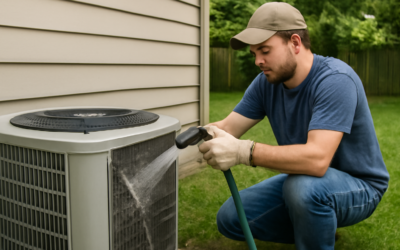
For basic homeowner maintenance, like rinsing the coil or clearing debris, turn off the thermostat, switch off the breaker and pull the outdoor disconnect, and confirm power is off with a non-contact voltage tester before touching the unit. Never test or probe live electrical components. Capacitors can hold a charge even with power off, so leave them alone.
When to Call a Licensed Professional
Any condenser replacement should be done by a licensed HVAC contractor who pulls a mechanical permit where required. Electrical changes such as a new breaker, disconnect or circuit should be handled by a licensed electrician or licensed HVAC electrical staff. Get at least three written quotes listing the model numbers of the new condenser and the indoor coil it will be matched to, the refrigerant type, line set plans, warranty terms and permit fees.
Frequently Asked Questions
Can I replace just the outdoor AC unit?
Sometimes. It works if your indoor coil is recent, in good shape, uses the same refrigerant and is an approved match for the new condenser. Otherwise a full system replacement is usually required.
What is the typical AC condenser replacement cost?
Outdoor unit only replacements commonly run roughly $1,500 to $4,500 installed, depending on size, efficiency, refrigerant and region.
Can a new condenser work with an R-22 system?
Not without replacing the indoor coil and usually the line set. New condensers use different refrigerants and oils that are not compatible with R-22 equipment.
Does a mismatched condenser void the warranty?
It can. Many manufacturers require a certified indoor and outdoor combination for the full warranty, and mismatches can also reduce efficiency.
How long does a central AC condenser last?
Typically about 12 to 20 years, depending on climate, maintenance and installation quality. Coastal salt air can shorten that.