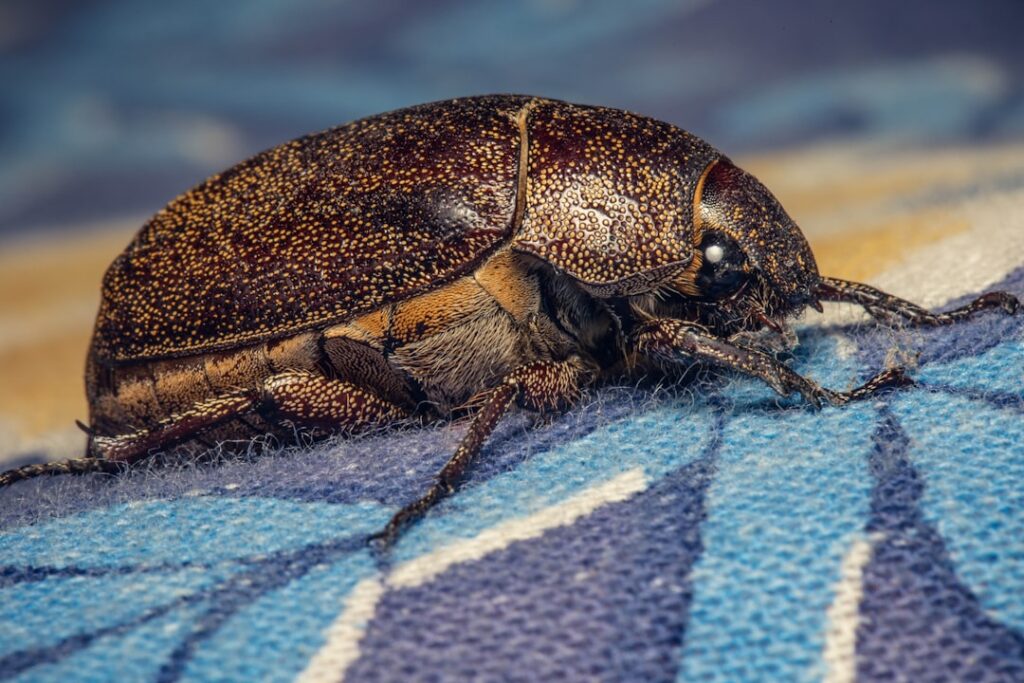
Spotting a tiny, rounded beetle crawling on a windowsill is easy to dismiss, but it can be the first warning that something is quietly eating your carpets, clothes, and upholstery. The adult carpet beetle itself does almost no damage; it is the larval stage that chews through natural fibers. The adults are simply the visible, mobile sign that a breeding population may be present, which is exactly why learning to identify them matters so much. Catching the adults early lets you act before the larvae cause widespread harm.
- What an Adult Carpet Beetle Looks Like
- How They Differ From Bed Bugs and Other Pests
- Adult Behavior and Why It Matters
- Where Adults Lay Eggs
- Controlling Adult Carpet Beetles
- Signs You Have a Problem Beyond the Adults
- Monitoring and Prevention
- The Carpet Beetle Life Cycle
- How They Get Inside
- What Larvae Actually Eat
- When to Call a Professional
What an Adult Carpet Beetle Looks Like
Adult carpet beetles are small and easy to mistake for other household insects. Most species measure about 1/16 to 1/8 inch long, roughly the size of a pinhead to a small seed. Their bodies are oval to nearly round, giving them a domed, ladybug-like silhouette without the bright color.
The common varieties differ slightly in appearance:
- Varied carpet beetle: Mottled pattern of white, brown, and yellowish scales that can fade to solid brown as scales wear off.
- Black carpet beetle: Shiny dark brown to black, slightly more elongated, and often the largest of the group.
- Furniture carpet beetle: Rounded with a checkered pattern of white, yellow, and dark scales.
How They Differ From Bed Bugs and Other Pests
Homeowners frequently confuse carpet beetles with bed bugs, but the two are quite different. Bed bugs are flat, reddish-brown, wingless, and feed on blood, so they cluster near beds. Adult carpet beetles have hard, rounded shells, can fly, and feed on pollen and nectar outdoors. If you find a hard-shelled beetle near windows or light fixtures, it is far more likely a carpet beetle than a bed bug.
Adult Behavior and Why It Matters
Adult carpet beetles are drawn to light and are often found near windows, on sills, or around door frames as they try to get outside. That is because adults feed on pollen and nectar from flowers, not on fabric. They live only a few weeks, during which females lay 30 to 100 eggs in dark, undisturbed places near a food source for the larvae.
This behavior is the key insight: seeing adults indoors, especially repeatedly, signals that eggs may be laid in your carpets, closets, or stored textiles. The adults are the messengers, and the larvae are the actual problem.
Where Adults Lay Eggs
Females seek out protein-rich, undisturbed spots for egg laying. Common sites include the edges of carpets along baseboards, the underside of upholstered furniture, inside closets among wool clothing, in air ducts where lint and hair collect, and in stored items like blankets, taxidermy, or dried flower arrangements. Anywhere natural fibers gather dust and stay still for months is a candidate.
Controlling Adult Carpet Beetles
Reducing the adult population and removing their food sources breaks the cycle. Take these steps:
- Vacuum thoroughly and frequently, paying attention to carpet edges, under furniture, and closet floors. Empty the vacuum outside.
- Wash or dry-clean wool, silk, and other natural-fiber items, then store them in sealed bins or garment bags.
- Inspect and clean stored textiles, and discard heavily infested items you cannot salvage.
- Seal cracks and install or repair window screens to keep adults from flying in.
- Remove dead insects and webs from light fixtures and corners, which can feed larvae.
Signs You Have a Problem Beyond the Adults
Adults are the visible clue, but other signs confirm an active infestation. Watch for small, irregular holes or thin worn patches in wool sweaters, blankets, and rugs. Look for shed larval skins, which appear as tiny hollow brown casings, especially along carpet edges and in closet corners. Fine, sand-like fecal pellets near damaged items are another giveaway. Some people develop an itchy rash from contact with larval hairs, which is sometimes mistaken for bed bug bites. Spotting any of these alongside adults means you should clean aggressively and inspect storage areas.
Monitoring and Prevention
Sticky pheromone traps placed near windows help you gauge whether adults keep appearing, which tells you if a breeding population persists. Keep flowers and plants away from windows, since their pollen attracts adults. Regular deep cleaning, especially in spring when adults are most active, is your strongest long-term defense.
The Carpet Beetle Life Cycle
Understanding the full life cycle clarifies why adults matter as a warning sign. Carpet beetles pass through four stages: egg, larva, pupa, and adult. Eggs hatch in roughly one to three weeks. The larval stage is the long, destructive one, lasting anywhere from a few months to over a year depending on temperature and food. Larvae then pupate and emerge as adults, which live only a few weeks with one job, to mate and lay the next generation of eggs. Because the larval stage is so long, by the time you see adults the cycle has often been running unnoticed for months.
How They Get Inside
Adult carpet beetles typically enter from outdoors. They are strong fliers attracted to light and to flowers, so they slip in through open windows and doors, gaps around screens, and even on cut flowers or potted plants carried inside. Once in, females seek out fabric and protein sources to lay eggs. They can also hitch a ride on used furniture, secondhand clothing, or rugs, which is worth keeping in mind when bringing such items home.
What Larvae Actually Eat
Knowing the larvae’s diet helps you remove their food. Carpet beetle larvae feed on materials rich in keratin and other animal proteins, which is why they target natural fibers and overlooked debris:
- Wool, silk, fur, leather, and feathers.
- Wool-blend carpets and upholstery.
- Pet hair, human hair, and lint that gathers in corners and vents.
- Dead insects in light fixtures and window sills.
- Stored dried goods and certain pantry items in some cases.
Synthetic fibers like nylon and polyester are generally safe unless soiled with food or sweat, which can attract larvae.
When to Call a Professional
If you continue to see adults despite thorough cleaning, find larvae or shed larval skins, or notice spreading fabric damage, the infestation likely runs deeper than surface cleaning can reach. A licensed pest control professional can identify hidden breeding sites and apply targeted treatments. For a stubborn or widespread infestation, professional help is the most reliable path to clearing carpet beetles for good.
Prefer to explore on your own?
See how new flooring looks in your actual room in seconds — free, no signup.
Try the free Floor Studio →