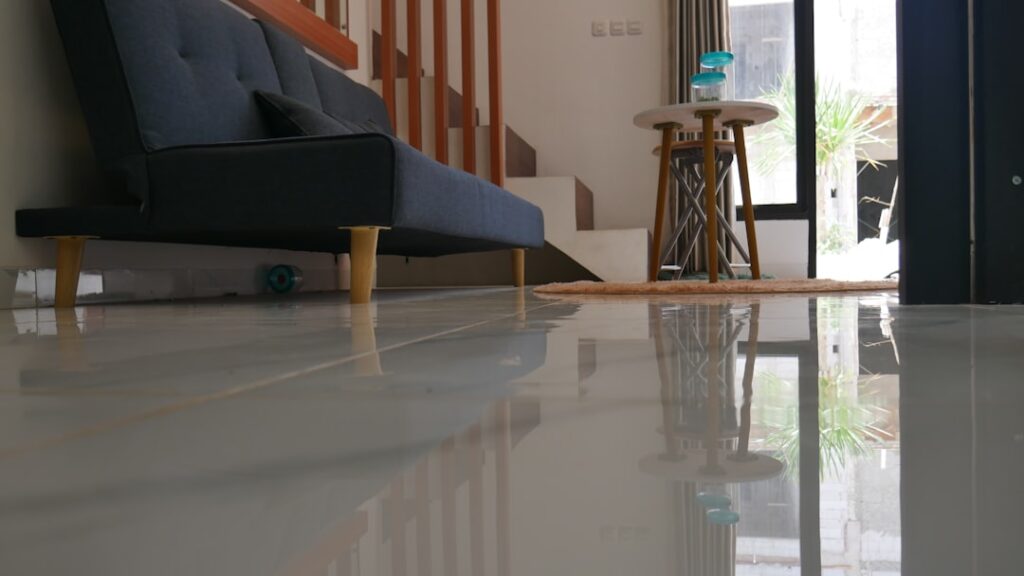
Drop a wrench, spill a quart of oil, or roll a 2,000-pound car jack across the floor, and most surfaces show the damage instantly. Epoxy does not. The biggest advantages of epoxy flooring come down to a single quality: it forms a seamless, rock-hard, chemically bonded coating that shrugs off impacts, spills, and abrasion that would destroy paint, tile, or bare concrete. Originally a commercial and industrial finish, epoxy has moved into garages, basements, and even modern living spaces because it delivers durability and easy cleaning that few floors can match.
Part of our Epoxy, Concrete & Garage Floors guide — explore the full guide →
What Epoxy Flooring Is
Epoxy is a two-part system: a resin and a hardener that chemically react and cure into a dense thermoset plastic. Applied over properly prepared concrete, it bonds into the slab rather than just sitting on top like paint. The result is a continuous, non-porous surface, typically 2 to 3 millimeters thick for a full system, that seals the concrete and creates a wear surface far tougher than the slab beneath it. Color flakes, metallic pigments, and clear topcoats let you customize the look.
Outstanding Durability
The headline advantage is toughness. A quality epoxy coating resists impact from dropped tools, abrasion from foot and vehicle traffic, and the constant rolling load of jacks, tool chests, and machinery. Properly installed, a garage epoxy floor can last 10 to 20 years, and industrial-grade systems handle forklift traffic for decades. Because it bonds to the concrete, it does not chip and peel the way ordinary garage floor paint does within a season or two.
Chemical and Stain Resistance
Epoxy’s non-porous surface is nearly impervious to the substances that stain and degrade other floors.
- Automotive fluids: Oil, gasoline, brake fluid, and antifreeze wipe up instead of soaking in.
- Household chemicals: Bleach, cleaners, and solvents do not etch the surface.
- Salt and moisture: Road salt and water bead on top rather than penetrating the slab.
This resistance is why epoxy dominates auto shops, warehouses, and commercial kitchens where harsh spills are routine.
Easy to Clean and Maintain
Because the surface is seamless and non-porous, there are no grout lines, pores, or seams to trap dirt and bacteria. A dust mop and an occasional damp mop keep an epoxy floor looking new. Spills wipe away without staining, and the floor does not absorb odors. For garages and workshops, that means no more concrete dust constantly tracking into the house, and for commercial spaces, it meets the hygiene standards that food and medical facilities require.
Safety and Appearance Benefits
Epoxy is not just tough; it can be safer and better-looking than bare concrete.
- Slip resistance: An anti-slip aggregate broadcast into the topcoat improves traction in wet areas.
- Brightness: High-gloss epoxy reflects light, brightening dim garages and basements and improving visibility.
- Design options: Color flakes, metallic finishes, and line striping create custom looks and mark work zones.
Cost and Value
A professional epoxy floor typically runs $3 to $12 per sq ft depending on the system, with basic single-coat jobs cheaper and full broadcast-flake or metallic systems higher. DIY kits exist for $2 to $4 per sq ft but demand meticulous prep to perform. Compared with replacing or tiling a floor, epoxy is a cost-effective upgrade that adds years of service to an existing slab, which is a real advantage for budget-minded renovations.
The Honest Drawbacks
To keep the picture balanced, epoxy is not flawless. It demands thorough surface prep, usually diamond grinding or acid etching, and any moisture or contamination in the slab can cause peeling. The cure takes several days during which the space is unusable, fumes during application require ventilation, and the hard surface is unforgiving if you drop something fragile. It can also yellow under direct UV unless a UV-stable topcoat is used.
Epoxy Compared to Other Garage Floors
To appreciate epoxy’s edge, weigh it against the alternatives homeowners consider for a garage or basement. Concrete sealers and garage floor paint are cheaper, often under $1 per sq ft, but they sit on the surface, wear thin quickly, and peel under hot tires within a year or two. Interlocking PVC tiles install fast and tolerate slab moisture, yet their seams collect grit and they lack epoxy’s seamless, bonded toughness. Polished concrete is durable and handsome but offers less chemical resistance than a sealed epoxy coat. Among these, epoxy strikes the strongest balance of durability, chemical resistance, appearance, and value, which is why it remains the benchmark that the others are measured against.
How Long an Epoxy Floor Lasts
Longevity is one of epoxy’s quiet advantages, but it depends almost entirely on installation quality. A residential garage floor that was properly ground, moisture-tested, and topcoated commonly lasts 10 to 20 years before it needs recoating, and high-build commercial systems endure forklift traffic for decades. The failures you hear about, peeling sheets and bubbling, almost always trace back to skipped prep: a floor that was merely cleaned instead of mechanically profiled, or one applied over a damp slab. Spend the effort on diamond grinding and a moisture test up front, choose a UV-stable polyaspartic or polyurethane topcoat, and the floor rewards you with many years of low-maintenance service.
Where Epoxy Makes the Most Sense
The clearest advantages of epoxy flooring show up in garages, workshops, basements, warehouses, and commercial kitchens, anywhere durability, chemical resistance, and easy cleaning outrank softness or warmth. For those spaces, a properly prepped and installed epoxy floor delivers a seamless, long-lasting surface that handles abuse for a decade or more and cleans up with a mop.
One last consideration is whether to hire out the work or do it yourself. DIY kits make the project tempting, and a careful homeowner can succeed, but the result lives or dies on preparation. If you go the DIY route, rent a diamond grinder rather than relying on acid etch alone, run a moisture test on the slab, and work in manageable sections because two-part epoxy has a limited pot life once mixed. If your slab is large, damp, or previously coated, hiring a professional with the right grinding equipment and a heat-tolerant polyaspartic topcoat is money well spent. Either way, the prep is the project, and a floor built on a properly profiled, dry slab is one that delivers epoxy’s full slate of advantages for many years.