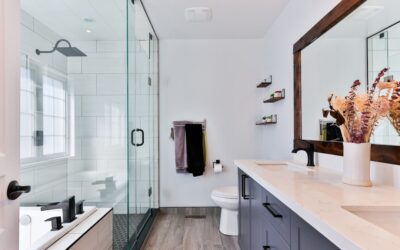
A full bathroom remodel can run $10,000 to $30,000, but most of that goes to moving plumbing and tearing out walls, not to the changes that actually make the room feel new. Affordable bathroom renovations focus on high-impact updates while leaving the expensive bones of the room in place, and done thoughtfully they can refresh a dated bathroom for $1,500 to $5,000. The secret is knowing where to spend, where to save, and which jobs you can safely do yourself. Here is how to transform a tired bathroom without draining your savings.
Part of our Bathroom Remodeling & Flooring guide — explore the full guide →
- The Golden Rule: Don’t Move the Plumbing
- Paint: The Cheapest Transformation
- Update the Fixtures and Hardware
- Refresh, Don’t Replace, the Big Items
- Smart Flooring Choices
- Where to DIY and Where to Hire
- A Sample Budget
- Lighting and Mirrors on a Budget
- Maximizing Storage Without a Remodel
- Getting Started
The Golden Rule: Don’t Move the Plumbing
The fastest way to blow a budget is relocating the toilet, sink, or shower, which means new supply lines, drain work, and often opening up floors and walls. Keeping every fixture in its current spot is the single biggest cost saver in any affordable remodel. You can swap a toilet, vanity, or faucet in place for a fraction of the cost of moving it. Design your refresh around the existing layout and you keep thousands in your pocket.
Paint: The Cheapest Transformation
Nothing changes a room for less money than paint. A gallon of quality bathroom paint runs $35 to $50 and can cover most bathroom walls in an afternoon. Choose a satin or semi-gloss finish that resists moisture and wipes clean. Beyond the walls, paint opens up cheap upgrades you might not consider: you can repaint a dated vanity cabinet rather than replacing it, and even refinish a tired medicine cabinet. A bold accent wall or a fresh, light neutral instantly modernizes the space for under $75 in materials.
Update the Fixtures and Hardware
Small metal details date a bathroom more than people realize, and swapping them is cheap and easy.
- Faucet: A new $80 to $150 faucet in brushed nickel or matte black instantly updates the sink.
- Cabinet pulls and knobs: Replacing dated hardware costs $3 to $8 a piece and takes minutes with a screwdriver.
- Towel bars and toilet paper holder: Coordinating a $50 set of accessories ties the whole room together.
- Light fixture: A modern vanity light for $60 to $120 brightens the room and updates the style.
- Showerhead: A $30 to $60 upgrade improves the daily experience and looks new.
Matching all the metal finishes in the room, picking one tone and sticking to it, makes a budget update look intentional and cohesive.
Refresh, Don’t Replace, the Big Items
Replacing a tub, tile, or vanity is expensive, but refreshing them is not. Reglazing a worn but structurally sound bathtub or tile surround costs $300 to $600 versus thousands to tear out and replace, and it makes a stained, dated tub look new. Painting and re-hardware-ing an existing vanity is far cheaper than a new cabinet. For countertops, a prefab vanity top or even a peel-and-stick or epoxy refinishing kit beats a full stone slab on a budget. The goal is to make what you have look fresh rather than starting from scratch.
Smart Flooring Choices
Bathroom floors take a beating from moisture, but you do not need pricey stone to get a great look. Luxury vinyl plank and luxury vinyl tile are waterproof, comfortable underfoot, and run $2 to $5 per square foot, far less than ceramic or natural stone once you factor in installation. Peel-and-stick LVT is genuinely DIY-friendly for a small bathroom, often finished in a weekend. If you prefer tile, large-format peel-and-stick options or budget ceramic at $1 to $3 a square foot keep costs down. A typical 40-square-foot bathroom floor can be redone in materials for $100 to $250.
Where to DIY and Where to Hire
Labor is the biggest line item in any remodel, so doing the right tasks yourself saves the most.
- Safe to DIY: Painting, swapping faucets and hardware, installing a new toilet, hanging accessories, laying peel-and-stick flooring, and replacing a light fixture (with the breaker off).
- Hire a pro: Any work that moves plumbing or drains, electrical beyond a simple fixture swap, and major tile work in wet areas where waterproofing matters.
Be honest about your skills. A botched DIY shower waterproofing job leads to hidden mold and a far costlier repair down the road.
A Sample Budget
Here is how a refresh might break down for a small bathroom keeping the existing layout: paint and supplies $75, new faucet $120, light fixture $90, hardware and accessories $120, LVP flooring $200, tub reglaze $450, new toilet $200, and a fresh shower curtain, mirror, and decor for $150. That comes to roughly $1,400, transforming the room without touching the plumbing layout. Scale up with a new prefab vanity or a tile accent and you can still land well under $5,000.
Lighting and Mirrors on a Budget
Lighting is one of the most overlooked budget upgrades, yet it dramatically changes how a bathroom feels. Swapping a dated builder-grade vanity light bar for a modern fixture costs $60 to $150 and instantly updates the room. Switch to LED bulbs in the 2700K to 3000K range for a warm, flattering light, or 3500K to 4000K if you prefer a crisp, daylight feel for grooming. A new framed mirror, or even a stick-on frame kit applied to your existing builder mirror for around $30, adds a finished, custom look. Adding a dimmer switch lets you soften the lighting for a relaxing soak, a small touch that feels luxurious for a few dollars.
Maximizing Storage Without a Remodel
Cramped bathrooms feel cheap and cluttered, so smart storage delivers outsized impact for little money. An over-the-toilet shelving unit uses dead vertical space for $40 to $100. Floating shelves, a recessed medicine cabinet, or simple baskets and drawer organizers tame the clutter that makes a small bathroom feel chaotic. Adding a second towel bar or a row of hooks costs under $30 and keeps the room tidy. None of this touches plumbing or structure, yet better organization can make a tired bathroom feel renovated on its own, especially when paired with fresh paint and updated hardware.
Getting Started
The best affordable bathroom renovations succeed by focusing money on what shows and saving everywhere the work is hidden inside walls. Keep the fixtures where they are, lean on paint and new hardware for instant impact, reglaze instead of replace, choose waterproof vinyl flooring, and do the simple installs yourself. Plan the project on paper first, shop sales and clearance for fixtures, and you will walk into a bathroom that looks remodeled for a fraction of what a full gut job would have cost.