A rug can transform a room faster than a coat of paint, yet shoppers often assume good-looking floor coverings have to cost a fortune. Finding an affordable rug that still feels plush, holds up to traffic, and pulls a space together is entirely possible once you understand what actually drives price. The difference between a $90 rug and a $900 rug is not always quality. Often it comes down to material, construction, and where you buy.
This guide breaks down how to shop smart, which materials give you the most value, what sizes work in common rooms, and how to make a budget rug last for years.
What Makes a Rug Affordable
Price is driven mostly by fiber and how the rug is made. Hand-knotted wool rugs take weeks of labor and command premium prices. Machine-made rugs in synthetic fibers cost a fraction because production is fast and the raw materials are inexpensive. Neither is automatically better. A well-made machine-woven polypropylene rug can outlast a delicate natural fiber in a busy household.
You can expect a general price range like this for a standard area size:
- Synthetic machine-made (5×7 ft): roughly $40 to $150
- Cotton flatweave (5×7 ft): roughly $60 to $200
- Wool blend (5×7 ft): roughly $150 to $400
- Hand-knotted natural fiber (5×7 ft): $500 and up
Best Budget-Friendly Rug Materials
Polypropylene is the workhorse of affordable rugs. It resists stains, dries quickly, and shrugs off spills, which makes it ideal for living rooms, kids’ spaces, and even covered patios. Polyester is another inexpensive synthetic prized for its softness and vivid colors, though it crushes more easily under heavy furniture.
If you prefer natural fibers, cotton flatweave rugs are washable, lightweight, and cheap, making them perfect for kitchens and entryways. Jute and sisal bring earthy texture at a low cost but are best kept out of damp areas. For a touch of luxury without the full price, look for wool-blend rugs that mix a small percentage of wool with synthetics.
Choosing the Right Size
Buying the wrong size is the most common and most expensive rug mistake. A rug that is too small makes a room feel disjointed. Use these general guidelines:
- Living room: 8×10 ft or larger so the front legs of all seating rest on the rug
- Under a queen or king bed: 8×10 ft, extending 18 to 24 inches past the sides
- Dining room: large enough that chairs stay on the rug when pulled out, usually 8×10 ft for a six-seat table
- Hallway runner: 2.5×8 ft, leaving a few inches of floor on each side
Larger rugs cost more, but they anchor a room properly. If budget is tight, a slightly smaller high-quality rug beats an oversized cheap one that wears out fast.
Where to Find Affordable Rugs
Big-box home stores, large online marketplaces, and warehouse clubs all carry value-priced rugs. Online retailers often have the widest selection and the best clearance pricing, though you give up the chance to feel the pile in person. Watch for seasonal sales around major holidays, when even premium brands discount heavily.
Outlet sections and open-box returns can yield real bargains. Just read the dimensions carefully and check the return policy before you click buy, since rug colors can look different on screen than in your home.
Quality Checks Before You Buy
An affordable rug should not feel disposable. Look for a dense pile that springs back when you press it, tightly bound or serged edges, and a backing that lays flat. For synthetics, a higher face weight generally means a plusher, longer-lasting rug. Read customer photos and reviews, paying special attention to comments about shedding, color accuracy, and how the rug held up after several months.
Making a Budget Rug Last
The single best investment you can make is a quality rug pad. A pad costs $20 to $60, prevents slipping, cushions the pile, and dramatically extends the life of an inexpensive rug by reducing wear from foot traffic. Beyond that, a few simple habits keep a budget rug looking sharp:
- Vacuum regularly, but use a gentle setting on flatweaves and natural fibers
- Rotate the rug every few months so it wears evenly and fades uniformly
- Blot spills immediately rather than rubbing, which pushes stains deeper
- Keep direct sunlight off colorful rugs to slow fading
Matching a Budget Rug to the Room
The smartest way to stretch a small budget is to spend strategically by room. In a high-traffic living room or entryway, prioritize durability and stain resistance over plushness, since a cheap fuzzy rug will mat down within a season. A washable polypropylene or low-pile flatweave earns its keep there. In a low-traffic guest room or a formal sitting area, you can get away with a softer, more delicate budget rug because it simply will not see the same abuse.
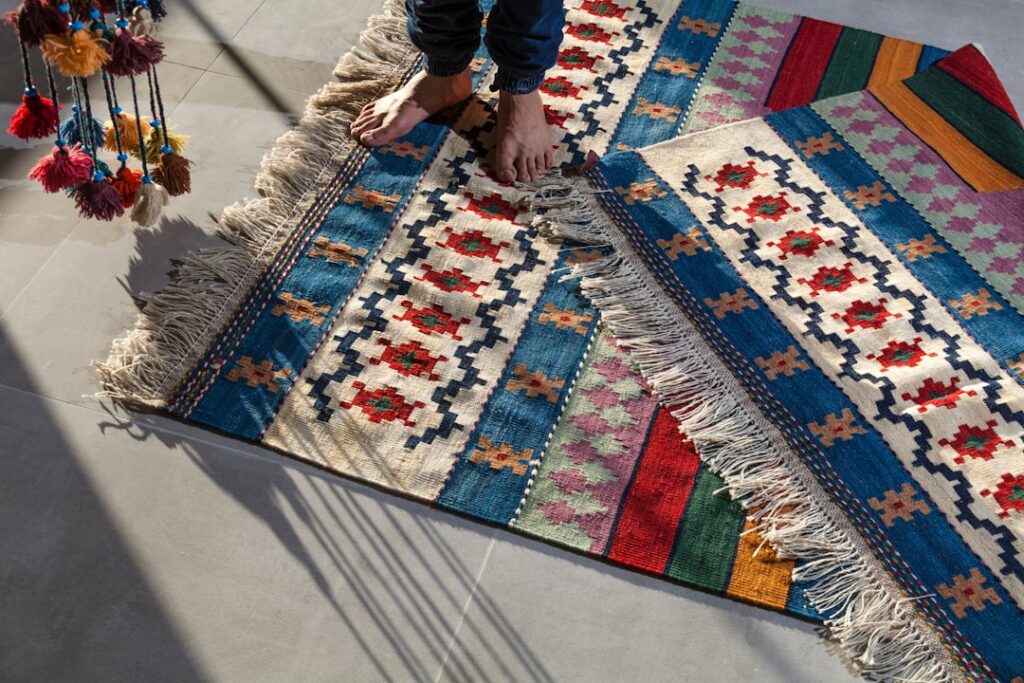
Color and pattern also do a lot of heavy lifting on a tight budget. A busy, multicolored pattern hides dirt, crumbs, and minor wear far better than a solid pale rug, which means an inexpensive patterned rug often looks clean longer than a pricier solid one. If you have pets or kids, lean into patterns and mid-tone colors that forgive the occasional accident.
Common Mistakes That Waste Money
Plenty of shoppers spend too little in ways that cost more later. Avoid these traps:
- Skipping the rug pad, which leads to slipping, bunching, and rapid wear that shortens the rug’s life.
- Buying too small, forcing you to replace it or buy a second rug to fill the space.
- Ignoring the fiber, and ending up with a delicate material in a room that demands toughness.
- Trusting on-screen color alone, only to receive a rug that clashes with your decor.
- Overlooking return policies, which can leave you stuck with an unsuitable rug.
Final Thoughts
You do not need a large budget to bring warmth, color, and comfort to your floors. By matching the right material to each room, getting the size correct, shopping sales, and protecting your purchase with a good rug pad, an affordable rug can look and perform like something far more expensive. Focus your money where it counts, choose forgiving colors and durable fibers for busy spaces, and a modest budget will stretch a long way.