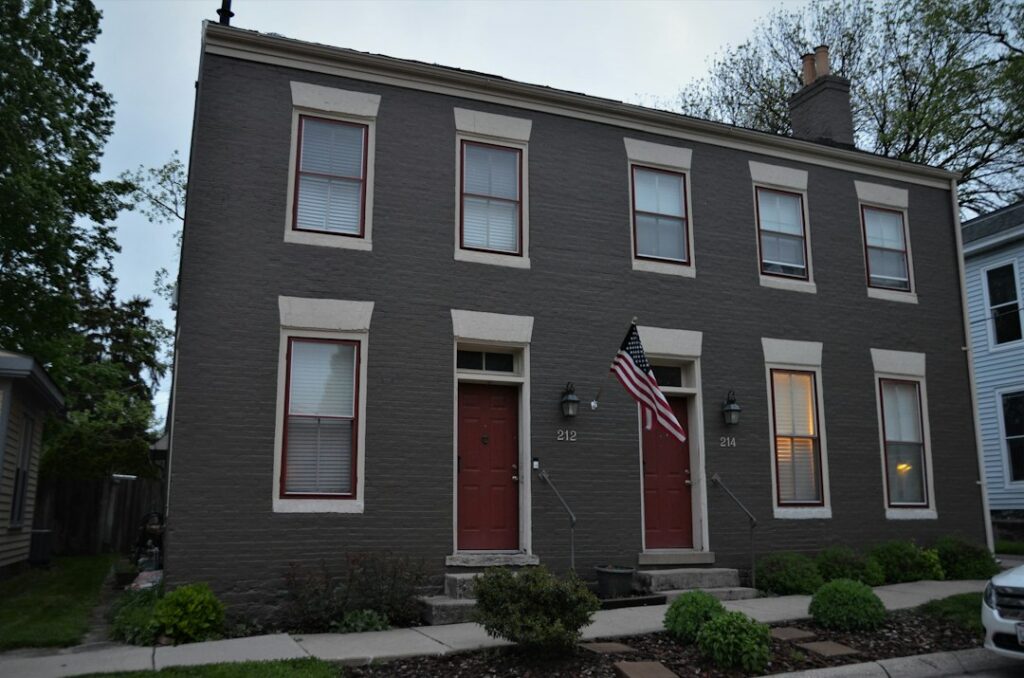
The most common surprise with outdoor paint is that a color you love on the living room wall looks two shades lighter on the siding. That is exactly what happens with Sherwin-Williams Agreeable Gray (SW 7029). An Agreeable Gray exterior can look elegant and warm, but in strong sun the soft greige that reads clearly indoors often fades toward an off-white or pale beige.
The facts behind that: Sherwin-Williams lists Agreeable Gray with an LRV (Light Reflectance Value) of about 60, places it in the neutral family and rates it for interior and exterior use. Its digital values (RGB 209, 203, 193, hex #D1CBC1) put red and green ahead of blue, which is why it reads as a warm gray with a beige base rather than a cool gray. Outdoors, direct sunlight and the sheer size of a house wall amplify the lightness and the warmth.
So can it work outside? Yes, especially on homes with some shade, deep porches or northern exposure, and on houses where you want a soft, light, warm neutral. If you want the house to look clearly gray from the street in full sun, consider going one or two steps darker or choosing a cooler gray.
Agreeable Gray Exterior Pairings at a Glance
This table gives a quick starting palette. Color codes are from Sherwin-Williams; always confirm the current listing and test samples on your own siding.
| Element | Pairing options | Effect |
|---|---|---|
| Trim (crisp) | Extra White (SW 7006), Pure White (SW 7005) | Clean outline; Extra White is a listed coordinate |
| Trim (soft) | Alabaster (SW 7008) | Warmer, lower-contrast traditional look |
| Trim (tonal) | Incredible White (SW 7028) | Subtle; a listed coordinate that keeps everything soft |
| Front door (classic) | Naval (SW 6244) | Deep navy that stands out against warm greige |
| Front door (moody) | Urbane Bronze (SW 7048), Iron Ore (SW 7069) | Dark warm or charcoal tones for a modern farmhouse feel |
| Front door (bold) | Tricorn Black (SW 6258) | Maximum contrast; works with black windows and lights |
| Shutters and accents | Iron Ore, Urbane Bronze or the door color | Repeating a dark tone ties the facade together |
| Roof | Charcoal, weathered wood, warm brown, dark bronze or black metal | Warm or deep neutrals complement the beige base |
Most of those dark accent colors share a quality: they are deep enough to give the light body color edges and definition. Without a darker element somewhere, an Agreeable Gray exterior can look washed out in photos and from the curb.
How Agreeable Gray Reads Outdoors
Sun washout
Daylight outdoors is many times brighter than indoor light. A color with an LRV around 60 already reflects a good share of light, so in full sun it can lose much of its gray and look like a pale greige or warm off-white. South- and west-facing walls show this most.
Undertones
Indoors, Agreeable Gray is known as a warm, balanced greige. Outside, the beige base comes forward in warm afternoon light, and some people see a faint green cast when the color sits next to lawn, shrubs or trees reflecting onto the siding. In cool overcast light or on the shaded side of the house, it reads grayer.
Material and texture
Rough surfaces such as stucco, cedar shingles or textured fiber cement create tiny shadows that make the color look slightly darker. Smooth lap siding and flat panels look lighter. Vinyl siding is not usually repainted with standard colors without checking the siding maker’s guidance, especially for darker accents.
Distance
From the street, colors look lighter and less saturated than they do up close. A sample that looks right at arm’s length can disappear from across the road.
Choosing Trim
Sherwin-Williams lists Extra White (SW 7006) and Incredible White (SW 7028) among Agreeable Gray’s coordinating colors, which covers the two main directions.
- Crisp contrast: Extra White or Pure White give clean lines around windows, corner boards and fascia. This is the most popular approach and helps the body color look grayer by comparison.
- Soft contrast: Alabaster, a warmer white, gives a gentler, cottage-style look. Next to it, Agreeable Gray will lean more beige.
- Tonal: Incredible White is very close to the body color. It suits minimal, modern facades but can look flat in strong sun.
- Dark trim: Iron Ore or Tricorn Black on window frames and fascia is a modern option that makes the light body color pop.
Use a gloss or semi-gloss sheen on trim for durability and a satin or low-sheen finish on the body; the sheen difference alone adds definition.
Front Door and Shutter Colors
The door is where you can add personality. Deep navy (Naval) is a classic that complements the warm undertone. Urbane Bronze, a dark brown-gray, gives a warm, earthy, modern look. Iron Ore is a soft charcoal that reads almost black from a distance, and Tricorn Black is the high-contrast option.
Beyond those, natural stained wood doors look excellent against warm greige, as do muted greens and rich reds. Avoid very cool, icy blues or stark gray doors unless the rest of the palette is also cool, since they can make the body color look dingy. Dark colors absorb heat, so check your door and shutter manufacturers’ guidance on dark colors for fiberglass, composite or vinyl products in full sun.
Roof, Stone and Brick Pairings
The roof is usually the largest fixed color on the house, so start there.
- Charcoal or black asphalt shingles: a reliable match. The dark roof grounds the light body and pairs with white trim and dark accents.
- Weathered wood or brown shingles: brings out the warmth. Use a warm white trim and a bronze or deep green door.
- Dark bronze or black standing seam metal: a clean modern farmhouse look, especially with black windows.
- Light gray or galvanized metal: can look cold next to warm greige; test carefully.
- Terracotta tile: works if the trim is warm and the overall palette leans Mediterranean.
- Stone and brick: stone with tan, cream or gray tones and brick in muted reds or browns generally harmonize. Orange-heavy brick can make the gray look pink or green, so sample right next to it.
How to Test Exterior Samples
- Go big. Use large sample boards or an exterior paint sample swatch kit, at least 2 by 2 feet if possible.
- Test on multiple sides. Place samples on a sunny wall and a shaded wall.
- Include your trim and door samples. Put them right next to the body sample so you see the combination, not a single color.
- View at different times. Morning, noon and late afternoon, on both sunny and cloudy days.
- Step back. Look from the street and from a neighbor’s driveway, and take photos.
- Consider going darker. If it looks too pale, try a deeper greige on the same family strip before switching families.
Painting Safety and When to Hire a Pro
Exterior painting means ladders, and ladder falls are a common cause of serious home-project injuries. Keep these rules:
- Set extension ladders on firm, level ground at roughly a 4-to-1 angle (one foot out for every four feet up), and extend them at least 3 feet past the roof edge if you step onto the roof.
- Keep three points of contact, keep your belt buckle between the rails and move the ladder instead of reaching.
- Stay well clear of overhead power lines, and use fiberglass ladders near any electrical service.
- Never work on a ladder in wind, rain or on wet surfaces, and have a helper foot the ladder.
- For two-story walls, steep sites or high gables, hire a pro with scaffolding or lifts.
Older homes may have lead paint. If your house was built before 1978, test the existing paint before scraping or sanding and use lead-safe practices, or hire a lead-safe certified contractor.
Cost-wise, a professional exterior repaint varies widely with house size, number of stories, siding condition and region, and often runs into several thousand dollars for an average single-family home. Prep work such as washing, scraping, caulking and priming takes up much of the labor. DIY saves money on a one-story house with sound siding, but a two-story home usually justifies a pro for safety alone.
Confirm the current color details on the manufacturer’s color page before ordering, and ask for the exterior version of the product line you choose.
Frequently Asked Questions
Does Agreeable Gray look good on a house exterior?
It can, especially on homes with shade or northern exposure. In full sun it often looks lighter and more beige than indoors, so test large samples first.
Is Agreeable Gray too light for an exterior?
With an LRV around 60, it can wash out in bright sun. If you want a clearly gray house, consider a slightly darker greige from the same strip.
What trim color goes with Agreeable Gray outside?
Extra White (SW 7006) and Pure White (SW 7005) give crisp contrast. Alabaster (SW 7008) is softer, and dark trim in Iron Ore or Tricorn Black is a modern alternative.
What front door color goes with Agreeable Gray?
Naval, Urbane Bronze, Iron Ore and Tricorn Black all work well. Stained wood, muted greens and deep reds are good alternatives.
What roof color goes with Agreeable Gray siding?
Charcoal or black shingles are the safest match. Weathered wood, brown and dark bronze metal roofs also complement its warm undertone.
Does Agreeable Gray look green outside?
It can pick up a slight green cast from reflected lawn and foliage, mainly in shade. Test samples on the walls nearest your landscaping.