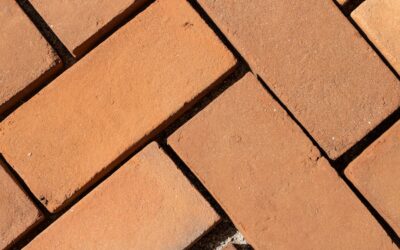
Many homeowners with orange-toned brick assume they are stuck with a dated look. In reality, terra cotta brick is one of the easiest exterior materials to style, because its warm clay color already does half the work. The trick is choosing trim, door and roof colors that respect its undertone instead of fighting it.
Terra cotta is not one color. On real houses it runs from a pale sandy clay to a saturated orange-red, and most walls blend several shades with darker flashed bricks mixed in. Lighter clay tones pair best with soft creams, sage and warm grays. Deeper orange-red brick handles stronger contrast: crisp off-whites, deep greens, charcoal and black. Roof colors in warm brown, charcoal or weathered gray almost always work; cool blue-gray roofing can make the brick look harsher.
- Terra Cotta Brick Tone Range and Best Pairings
- Reading Your Brick's Undertone
- Trim Colors: Whites, Creams and Neutrals
- Front Door, Shutter and Roof Pairings
- Paint, Limewash or Leave It: A Decision Guide
- Costs to Refresh Terra Cotta Brick
- Troubleshooting Common Brick Problems
- When to Call a Mason or Painting Pro
- Frequently Asked Questions
Before you reach for paint, consider that well-kept brick needs very little maintenance, and painting it creates a recurring job. The sections that follow cover the tone range, pairing ideas, the paint versus limewash versus seal decision, costs and when to bring in a mason.
Terra Cotta Brick Tone Range and Best Pairings
Use this table to place your brick on the spectrum and see which colors usually suit it. Always judge your brick in daylight, standing at the street, not up close.
| Brick tone | What it looks like | Trim colors that suit it | Front door ideas | Roof colors |
|---|---|---|---|---|
| Light clay | Pale sandy orange, almost peach | Warm cream, soft ivory, light greige | Sage, olive, warm wood | Weathered wood brown, warm gray |
| Classic terra cotta | Medium burnt orange | Off-white, mushroom, warm taupe | Deep green, navy, stained wood | Brown, charcoal, warm gray blend |
| Rust or copper | Orange with brown depth | Cream, khaki, warm stone | Black, oxblood, dark teal | Dark brown, charcoal |
| Deep orange-red | Saturated, strong red-orange | Crisp off-white, light warm gray | Black, forest green, charcoal | Charcoal, black, dark brown |
| Flashed or mixed blend | Orange with dark ends and tan bricks | Pick from the lightest brick color | Pull from the darkest brick color | Match the darkest tone in the blend |
A reliable shortcut: pull your trim color from the lightest bricks or mortar, and your door or shutter color from the darkest bricks. That way the whole exterior feels like it came from the same palette.
Reading Your Brick’s Undertone
Terra cotta brick almost always has a warm undertone, but the balance shifts between yellow, orange and red. Here is how to tell which one dominates:
- Yellow-orange brick looks sunny and sandy. It pairs best with creamy, slightly yellowed whites and soft greens.
- True orange brick is the classic clay pot color. It likes balanced warm whites and deep greens or navy.
- Red-orange brick leans toward brick red. It can handle cleaner whites and stronger darks like black and charcoal.
Mortar matters too. Light gray or white mortar makes brick look brighter and more patterned. Tan or buff mortar blends with the brick and makes the wall read as a single warm color. When you choose trim, compare samples against both the brick and the mortar.
How to test exterior colors
- Buy sample quarts or large peel-and-stick samples of your top two or three trim colors.
- Paint large boards, at least 2 by 2 feet, and hold them against the brick next to existing trim.
- View them from the street in morning, midday and evening light.
- Also check them on the shady side of the house; brick looks darker and redder in shade.
Trim Colors: Whites, Creams and Neutrals
Trim is the biggest lever you have. Stark, blue-tinted whites are the most common mistake on orange brick; they make the brick look more orange and the trim look icy. Better choices include:
- Warm off-whites and creams: soften the contrast and make the brick look rich rather than loud.
- Mushroom and greige: a sophisticated option that reduces contrast and modernizes a 1970s or 1980s ranch.
- Khaki and warm stone: great for rust-toned brick where white feels too bright.
- Dark trim: black, bronze or deep charcoal window frames and gutters give a modern, high-contrast look, best on deeper orange-red brick.
For the garage door, many designers either match the trim so it recedes or match a dark accent so it looks intentional. Avoid a bright white garage door on a large expanse of terra cotta brick unless all the trim is the same white.
Front Door, Shutter and Roof Pairings
Front door and shutters
Green is the classic partner for terra cotta, because green sits opposite orange-red on the color wheel. Deep forest, olive and sage all work, with sage suiting lighter brick and forest suiting deeper brick. Navy and dark teal give a coastal or traditional feel. Black is the safe, modern choice. Stained wood doors in medium to dark tones look natural against clay brick.
Roofing
The roof covers a lot of visual area, so it has to agree with the brick. Warm browns, weathered wood blends and charcoal all pair reliably. Pure black works on red-orange brick for a modern look. Be careful with cool blue-gray or green-gray shingles; they can clash with yellow-orange brick. If you are replacing a roof, ask the roofer for a full-size sample board and hold it against the brick from the street.
Landscaping and hardscape
Green foliage, ornamental grasses, white or purple flowers and natural stone pavers all flatter terra cotta. Avoid red mulch, which competes with the brick; brown or black mulch looks cleaner.
Paint, Limewash or Leave It: A Decision Guide
If you are tired of the color, there are three main paths. Each has different looks, upkeep and reversibility.
| Option | Look | Breathability | Maintenance | Reversible? |
|---|---|---|---|---|
| Leave natural, clean and seal if needed | Original warm clay | Breathable sealers keep it breathable | Low; reseal every several years if used | Yes |
| Limewash | Soft, chalky, aged; some brick shows through | High | Wears gradually; refresh every 5 to 7 years or as desired | Partly, can be washed back while fresh |
| Mineral (silicate) paint | Solid matte color with a natural look | High | Long-lasting when applied to clean masonry | Hard to remove |
| Masonry acrylic paint | Solid uniform color | Lower than lime or mineral | Repaint roughly every 5 to 10 years | Very hard to remove |
Limewash is popular on orange brick because it tones the color down without hiding the texture. A white or cream limewash over terra cotta brick creates a soft, weathered look, and the orange that shows through warms the result. It also lets moisture escape, which matters on older soft brick.
Paint gives the most dramatic change, but it is effectively permanent. Moisture trapped behind a non-breathable coating can lead to peeling and spalling (flaking brick faces), especially in freeze-thaw climates. If you paint, choose a breathable masonry product and fix any moisture problems first.
Prep steps for any finish
- Inspect for cracks, loose mortar and efflorescence (white salty deposits). Repair mortar joints before coating.
- Clean the brick with a soft brush, water and a masonry cleaner. Avoid high-pressure washing on older brick; it can erode the face and mortar.
- Let the wall dry thoroughly, typically a few days of dry weather.
- Test your finish on a small, hidden area first.
- Protect plants, windows and walkways with drop cloths and plastic.
If you are keeping the natural color, a breathable penetrating masonry sealer can reduce water absorption and staining on porous brick. Not all brick needs it; sound, well-fired brick often does fine bare. Use a water-repellent product labeled as breathable, and never a film-forming sealer that traps moisture.
Costs to Refresh Terra Cotta Brick
These are general ranges and vary widely by region, house size and condition.
- Cleaning: DIY supplies usually cost under $100; professional masonry cleaning often runs from a few hundred to a couple thousand dollars.
- Sealing: DIY sealer for an average home commonly costs a few hundred dollars; professional application costs more.
- Limewashing: professional limewash on a typical single-story home often falls in the low to mid thousands.
- Painting: professional brick painting usually costs more than limewash because of prep and primer, often running into several thousand dollars or more.
- Repointing mortar: priced by area and joint condition; small repairs are modest, whole-wall repointing is a major job.
Troubleshooting Common Brick Problems
White chalky deposits
That is efflorescence, caused by water moving salts to the surface. Brush it off dry and find the moisture source: gutters, downspouts, grading or sprinklers.
Brick looks too orange next to new trim
Your trim is probably too cool or too bright. Swap to a warmer off-white or cream and the brick will calm down.
Flaking brick faces
Spalling usually comes from trapped moisture and freeze-thaw cycles. Stop using non-breathable coatings, fix drainage, and have a mason replace damaged bricks.
Patchy limewash
Limewash dries lighter and unevenly at first. Wait several days before judging, mist the wall before applying, and work in shade.
When to Call a Mason or Painting Pro
Bring in a qualified mason for cracked or bulging walls, failing mortar, spalling brick or water getting inside. For painting or limewashing a two-story home, hire a pro with proper scaffolding or lifts; ladder work at height is a leading cause of serious falls. On homes built before 1978, have existing painted surfaces tested for lead before scraping or sanding, and use lead-safe practices. When removing old coatings or grinding mortar, wear an N95 or better respirator and use wet methods to control silica dust.
Frequently Asked Questions
What color trim goes with terra cotta brick?
Warm off-whites, creams, mushroom and greige suit most terra cotta brick. Avoid stark blue-whites, which make the brick look more orange. Dark bronze or black trim works on deeper red-orange brick.
What color roof goes with orange brick?
Warm brown, weathered wood blends and charcoal are the safest choices. Black suits red-orange brick for a modern look. Cool blue-gray shingles can clash with yellow-orange brick.
Should I paint or limewash terra cotta brick?
Limewash is usually the gentler choice because it is breathable, softens the color while keeping the texture, and can be partly washed back while fresh. Paint is more permanent and needs a breathable masonry product.
What front door color goes with terra cotta brick?
Green is a classic partner, from sage on lighter brick to forest on deeper brick. Navy, dark teal, black and stained wood also look good.
Does terra cotta brick need to be sealed?
Not always. Sound brick often performs well bare. If your brick is porous or stains easily, use a breathable penetrating masonry sealer, never a film-forming coating that traps moisture.
How can I make orange brick look more modern?
Try warm greige or mushroom trim with black window frames and gutters, a dark front door, simple landscaping and a charcoal roof. A light limewash is another option.