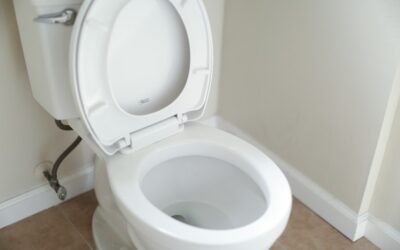
The small stamp on the back of the bowl or inside the tank tells you more than most people realize. If you see 6.0 LPF / 1.6 GPF on an American Standard toilet, it means the fixture was designed to use 1.6 US gallons per flush, which is about 6 liters. That rating has been the federal maximum for new residential toilets in the US since the mid-1990s, so the stamp alone narrows down the age of your toilet and the parts that fit it.
Part of our Bathroom Remodeling & Flooring guide — explore the full guide →
The stamp does not tell you the exact model. For that, you need the model or part number molded into the tank, plus the date mark if one is present. With those in hand, you can order the right flush valve, flapper, tank lid or fill valve instead of guessing. The sections that follow show where to look, how 1.6 gpf compares with newer 1.28 gpf models, and how to fix the most common problems on these toilets.
- What American Standard 6.0 LPF 1.6 GPF Means
- Where Model and Date Codes Sit on the Toilet
- Reading the Era of Your Toilet
- Tools and Parts for Identifying and Repairing a 1.6 GPF Toilet
- Step by Step: Identify Your Toilet and Order Parts
- Troubleshooting Common 1.6 GPF Problems
- Repair or Replace? Cost Ranges
- When to Call a Plumber
- Frequently Asked Questions
What American Standard 6.0 LPF 1.6 GPF Means
The American Standard 6.0 LPF 1.6 GPF marking is a flush volume rating, written in both metric and US units. One US gallon is about 3.785 liters, so 1.6 gallons works out to roughly 6.06 liters, rounded to 6.0. The same marking appears on toilets from many makers because it reflects the federal limit set by the Energy Policy Act of 1992, which took effect for most new residential toilets in 1994.
Before that rule, toilets commonly used 3.5 gallons, and older ones used even more. After it, every major brand redesigned its bowls and flush valves. Since the late 2000s, high-efficiency models rated at 1.28 gpf (4.8 Lpf) have become common, and several states and cities now require 1.28 gpf or less for new installations. Distributors still list 1.6 gpf American Standard models in the Champion 4 and Champion PRO families, including one-piece and two-piece versions, so a 1.6 stamp does not always mean an old toilet.
Where Model and Date Codes Sit on the Toilet
Molded marks are not always in the same spot, and older fixtures may have faint or partial stamps. Check each of these places with a flashlight before you shop for parts.
| Location | What you may find | Tip |
|---|---|---|
| Inside the tank, back wall | Tank model or part number, often a 4-digit series with a suffix | Shut off water and flush to lower the level so you can read it |
| Inside the tank, near the waterline | Date mark (year, sometimes month) on many tanks | Wipe off mineral film with a damp cloth |
| Underside of the tank lid | Lid part number or casting marks | Useful when ordering a replacement lid |
| Bowl, behind the seat hinges | Flush rating such as 6.0 LPF / 1.6 GPF, sometimes a bowl number | Lift or remove the seat for a clear view |
| Bowl, inside the rim or base | Additional casting marks on some models | A small mirror helps on the back of the base |
| Flush valve and flapper | Valve size (2 inch, 3 inch, or 4 inch on Champion models) and part markings | Photograph them before removing |
| Original paperwork | Full model number and color code | Check your home closing file or installer invoice |
The tank number is usually the most important code for repairs, because flush valves, fill valves, trip levers and lids are matched to the tank. The bowl and tank were sometimes sold under a combined model number, so the tank number may differ from the number on your receipt. That is normal.
Reading the Era of Your Toilet
Combining the flush stamp with the date mark gives you a quick timeline:
- 3.5 gpf or higher: generally made before the 1994 federal limit.
- 1.6 gpf with an early date: a first-generation low-flow design from the mid to late 1990s. Some of these had weak flushes, which is why many were later replaced.
- 1.6 gpf with a later date: often a stronger design with a larger flush valve, such as the Champion family with its 4 inch flush valve.
- 1.28 gpf: a high-efficiency model, typically late 2000s or newer, often carrying a WaterSense label.
If you cannot find a date, the tank style, lever shape and flush valve design can help a plumbing supply counter or the maker’s support team narrow it down. Bring clear photos of the inside of the tank.
Tools and Parts for Identifying and Repairing a 1.6 GPF Toilet
- Flashlight and a small inspection mirror
- Rag or sponge to clear mineral film and remove water from the tank
- Phone camera to record stamps and valve parts
- Adjustable wrench and a bucket
- Replacement toilet fill valve, flapper or seal matched to your flush valve size
- Tape measure to confirm rough-in (usually 12 inches, sometimes 10 or 14)
A universal toilet fill valve fits most tanks, but flappers and flush valve seals are size-specific. A 3 inch flapper will not seal on a 2 inch opening, and Champion toilets with a 4 inch valve need Champion-specific flappers, so confirm before buying.
Step by Step: Identify Your Toilet and Order Parts
- Shut off the water. Turn the supply valve behind the toilet clockwise until it stops.
- Flush and sponge out the tank. Lowering the water exposes the molded numbers on the back wall.
- Photograph every stamp. Capture the tank number, any date mark, and the flush rating behind the seat.
- Identify the flush valve. Note whether it uses a round flapper or a canister seal and measure the opening.
- Look up the tank number. Use the maker’s parts cross reference tool or parts guide, or bring the photos to a supply house.
- Order matched parts. Use the tank number for lids, levers and flush valve seals. Fill valves can be universal.
- Install and adjust. Set the water level to the line marked inside the tank, usually about an inch under the overflow tube top.
Troubleshooting Common 1.6 GPF Problems
- Weak or incomplete flush. Check that the water level reaches the marked line. Clean mineral deposits from the rim holes and siphon jet with a small brush or wire. A worn flapper that closes too early also shortens the flush.
- Running toilet. Usually a worn flapper or seal, or a fill valve set too high so water spills into the overflow tube. Replace the flapper or lower the float.
- Phantom refills. The tank slowly leaks into the bowl. Add a few drops of food coloring to the tank; if color shows in the bowl within 15 minutes without flushing, replace the flapper or seal.
- Slow fill. A clogged fill valve screen or partly closed supply valve. Clean the screen or replace the fill valve.
- Frequent clogs. Early 1.6 gpf bowls have narrow trapways. If clogs are constant even with good parts, replacing the toilet may make more sense than repairs.
Repair or Replace? Cost Ranges
Most 1.6 gpf repairs are cheap. A flapper or fill valve is an inexpensive part, and a plumber’s service call for the swap usually runs from about $100 to $250 depending on your area. A replacement tank lid can be harder to find for discontinued tanks, so salvage yards or universal lids are sometimes the fallback.
Replacement makes sense when the toilet clogs often, the porcelain is cracked, or parts are no longer made. A new 1.28 gpf toilet typically ranges from a couple hundred dollars for a basic two-piece model to much more for one-piece or skirted designs, plus installation. Many water utilities offer rebates for WaterSense-labeled toilets, and the water savings add up in a busy household: each flush uses about 0.32 gallon less than a 1.6 gpf model.
When to Call a Plumber
Swapping a flapper or fill valve is a reasonable DIY task. Call a licensed plumber if the toilet rocks or leaks at the base, the shutoff valve will not close or drips, the supply line is corroded, or you see water stains on the ceiling under the bathroom. Always shut off the water and relieve pressure by flushing before loosening any connection, and follow local plumbing code when replacing a toilet. Some areas require a permit or a 1.28 gpf model for replacements, so ask before you buy.
Frequently Asked Questions
What does 6.0 LPF 1.6 GPF mean on a toilet?
It is the flush volume rating: 6.0 liters per flush, or 1.6 US gallons per flush. It matches the federal maximum for new toilets set in the 1990s.
Where is the model number on an American Standard toilet?
Look on the back wall inside the tank, where the tank number is usually molded. Lower the water level and use a flashlight. The flush rating is often stamped on the bowl behind the seat hinges.
How old is a 1.6 gpf toilet?
Most were made in 1994 or later. A date mark inside the tank, when present, gives a closer answer. Some 1.6 gpf models are still sold today.
Is 1.6 gpf better than 1.28 gpf?
Not necessarily. A well-designed 1.28 gpf toilet can flush as well as a 1.6 model while using less water. Some people prefer 1.6 gpf for older drain lines with long horizontal runs.
Can I put a 1.28 gpf flush valve in a 1.6 gpf tank?
Changing parts alone does not reliably convert a toilet, because the bowl is designed around its rated volume. Use parts matched to your tank number.
Does American Standard still make 1.6 gpf toilets?
Yes, though fewer than before. Distributors list 1.6 gpf Champion 4 and Champion PRO models alongside many 1.28 gpf models, and some areas only allow 1.28 gpf or less for new installs.