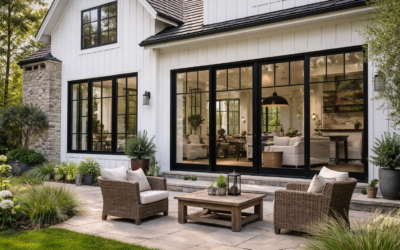
Plenty of homeowners shopping for replacement windows end up choosing between basic vinyl and pricier wood-clad units, without realizing there is a middle option built from a different material altogether. Andersen 100 Series windows fill that gap. They are made from Fibrex, a composite the manufacturer describes as a blend of wood fiber and thermoplastic polymer, and they are positioned as a sturdier, better-looking alternative to vinyl at a price below the brand’s wood-interior lines.
Part of our Windows & Doors guide — explore the full guide →
In short: the 100 Series offers double-hung, single-hung, casement, awning, gliding, picture and specialty-shape windows, five exterior colors including black and dark bronze, matching dark interiors on several colors, and a matte finish that never needs painting. Its strengths are durability, dark color options and clean, narrow sightlines. Its trade-offs are a higher price than vinyl, fewer interior finish choices than wood windows and no real-wood interior.
- Andersen 100 Series Windows: Styles and Options at a Glance
- What Fibrex Is and Why It Matters
- Style-by-Style Breakdown
- Black Windows and Color Choices
- Pros and Cons
- How to Measure for 100 Series Replacement Windows
- General Cost Ranges
- Troubleshooting and Care
- When to Call a Pro
- Frequently Asked Questions
Here is what the line includes, how Fibrex performs, the options to know about and where the 100 Series makes sense.
Andersen 100 Series Windows: Styles and Options at a Glance
The details here come from the manufacturer’s 100 Series product page and its current double-hung product information sheet. Options can change by year and region, so confirm with a local supplier or the current product guide before ordering.
| Option | What’s offered | What it means for you |
|---|---|---|
| Window styles | Double-hung, single-hung, casement, awning, gliding, picture, specialty shapes | Covers nearly every common opening in a house |
| Material | Fibrex composite (wood fiber and thermoplastic polymer) | Stiffer than vinyl, so frames can be slimmer and dark colors hold up |
| Exterior colors | White, Sandtone, Terratone, Dark Bronze, Black | Includes dark colors that standard vinyl often can’t offer |
| Interior colors | White, Sandtone, Dark Bronze, Black | Black, dark bronze and sandtone interiors require a matching exterior |
| Finish | Low-maintenance matte, never needs painting | No scraping or repainting over the window’s life |
| Frame types | Flange, no-flange and insert (double-hung) | Works for new construction and replacement into existing openings |
| Grilles | Grilles-between-the-glass in patterns such as Colonial and Prairie | Divided-light look with flat, easy-clean glass |
| Double-hung features | Tilt-wash sashes, dual-sash ventilation, factory opening control device | Easier cleaning and a sash stop that limits opening to under 4 inches |
Andersen 100 windows are also designed with consistent sightlines across styles, so a casement next to a picture window or a gliding window in the same room looks visually matched.
What Fibrex Is and Why It Matters
Fibrex is the defining feature of the line. Unlike pure vinyl, it combines reclaimed wood fiber with a thermoplastic polymer, producing a material the manufacturer says is two times stronger than vinyl. That stiffness lets frames stay narrow while still supporting large glass, and it allows dark exterior colors that would cause many vinyl frames to soften or warp in strong sun.
The maker also states that the 100 Series finish is 12 times thicker than painted vinyl, based on its testing against five competitors’ painted vinyl windows, and that the finish won’t fade, flake, blister or peel. As support for long-term durability, the manufacturer cites units installed in a Minnesota home that showed no cracking, rotting, pitting, corrosion, flaking, blistering or peeling after 30 years.
Fibrex is not wood, so it won’t rot or need paint, but it also won’t offer the warm grain of a wood interior. If you want stainable wood inside, the brand’s higher-priced lines are the better fit.
Style-by-Style Breakdown
Andersen 100 Series double-hung
The double-hung is the newest addition to the 100 Series, with both sashes operating for top and bottom ventilation and tilt-in sashes for cleaning from inside. It comes in flange, no-flange and insert frame options, which makes it a strong candidate for replacing old double-hungs without tearing out interior trim. A factory-integrated window opening control device limits the sash opening to less than 4 inches, a helpful safety feature in upper-floor rooms.
Single-hung windows
The 100 Series single-hung has a fixed upper sash and an operating lower sash. It is a common choice in builder-grade new construction and in rooms where top ventilation isn’t needed. It typically costs less than a double-hung of the same size.
Casement and awning
The Andersen 100 Series casement swings outward on a side hinge and, like most casements, opens with a crank. Casements catch side breezes, seal tightly when closed and work well over kitchen sinks where reaching to lift a sash is awkward. Awning windows hinge at the top and can be left open in light rain.
Gliding windows
The Andersen 100 Series gliding window slides horizontally. Gliders are ideal for wide, short openings such as basement walls, bedrooms where egress size matters and spaces under eaves. They have few moving parts and are simple to operate.
Picture and specialty
Picture windows are fixed and maximize glass area and views. Specialty shapes, such as arches and angles, help match unique openings while keeping the same Fibrex frame and color.
Black Windows and Color Choices
Andersen 100 Series black windows are one of the biggest reasons homeowners choose the line. Black and dark bronze exteriors give a modern farmhouse or contemporary look, and because Fibrex is stiffer than vinyl, those dark colors are offered without the heat warping concerns that limit many vinyl products.
The interior color options matter just as much. All exterior colors are available with a white interior. Black, dark bronze and sandtone interiors are only available with the matching exterior color. So if you want black inside and out, you get black inside and out; you can’t pair a black interior with a white exterior. Hardware finishes on the double-hung lock follow the same family of black, dark bronze, sandtone and white.
Color tip: view physical samples in daylight. Printed brochures and screens cannot reproduce frame colors exactly, which the manufacturer itself notes.
Pros and Cons
Pros
- Stronger and stiffer than standard vinyl, with narrower frames.
- Dark exterior and interior colors that don’t need painting.
- Thick, matte finish designed to resist fading, flaking and peeling.
- Wide range of styles with consistent sightlines.
- Insert frames on double-hungs for simpler replacement.
- Backed by a large national manufacturer with broad dealer support.
Cons
- Costs more than basic vinyl windows of the same size.
- No real-wood interior and no stainable finish.
- Interior color choices are limited and tied to exterior color.
- Matte finish can show scuffs on very dark colors if handled roughly during install.
- Option availability can vary by region and dealer.
How to Measure for 100 Series Replacement Windows
Accurate measurements decide whether an insert window fits cleanly. A good window measuring tape with a stiff blade makes it easier to measure across wide openings.
- Measure width between the side jambs at the top, middle and bottom. Record the smallest number.
- Measure height from the sill to the head jamb at the left, center and right. Record the smallest number.
- Check for square by measuring both diagonals. A difference of more than about 1/4 inch suggests an out-of-square opening that may need a full-frame replacement.
- Note depth from the interior stop to the exterior stop so the insert frame fits the pocket.
- Inspect the sill and frame for rot or soft wood. Rotted openings usually need full-frame replacement rather than an insert.
- Have the dealer verify. Most suppliers require a professional measure before ordering custom sizes.
General Cost Ranges
Pricing varies widely by size, style, color and region. As a general guide, 100 Series windows usually land above standard vinyl and below the brand’s wood-interior lines. Installed replacement costs commonly run from several hundred dollars to over $1,000 per window, with dark colors, casements, larger sizes and specialty shapes at the higher end. Full-frame replacements cost more than insert installs because they involve removing the old frame and refinishing trim. Get at least two to three quotes that list the exact series, style and color.
Troubleshooting and Care
- Sash feels stiff: Clean tracks and jambs; avoid oil-based lubricants unless the maker’s care guide recommends a specific product.
- Condensation on the inside: Usually high indoor humidity rather than a window defect. Run bath and kitchen fans and use a dehumidifier.
- Fog between the panes: Indicates a failed insulated glass seal; contact the dealer about warranty service.
- Drafts after install: Often an installation gap. Ask the installer to check insulation and sealant around the frame.
- Cleaning: Use mild soap and water on frames. Avoid abrasive pads and harsh solvents on the matte finish.
When to Call a Pro
Most 100 Series windows are sold through dealers and installed by trained crews, and professional installation is usually the smart choice. Hire a pro for upper-story installs, full-frame replacements, openings with rot or structural damage, egress windows in bedrooms or basements where local code sets minimum opening sizes, and homes built before 1978 where old paint may contain lead. Check the manufacturer’s warranty page for coverage terms, since installation method can affect coverage.
Frequently Asked Questions
What are Andersen 100 Series windows made of?
They are made of Fibrex, a composite that combines wood fiber with a thermoplastic polymer. The manufacturer describes it as two times stronger than vinyl.
Are Andersen 100 Series windows vinyl?
No. They are composite windows. Fibrex contains thermoplastic polymer, but the added wood fiber makes it stiffer and more stable than standard vinyl.
Do 100 Series windows come in black?
Yes. Black is offered on the exterior, and black interiors are available when paired with a black exterior.
Does the 100 Series offer a double-hung window?
Yes. A double-hung was added to the line, with tilt-wash sashes, dual-sash ventilation and flange, no-flange and insert frame options.
Can you paint Andersen 100 Series windows?
The finish is designed to never need painting. Painting it may affect the warranty, so check the manufacturer’s warranty terms first.
Are single-hung or double-hung 100 Series windows better?
Single-hungs cost less and suit rooms where top ventilation isn’t needed. Double-hungs ventilate from top and bottom and tilt in for easier cleaning.