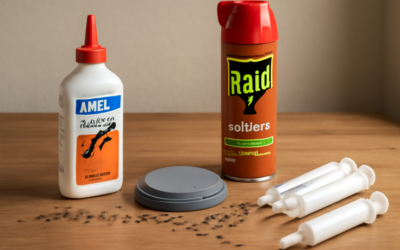
Spraying the line of ants marching across your patio feels satisfying, but it rarely solves the problem because you are only killing the foragers, not the colony. Effective ant poison outdoor control works by targeting the nest itself, using slow-acting baits that worker ants carry back to feed the queen and larvae. Understanding the difference between contact killers and bait poisons is the key to clearing ants from your yard, foundation, and patio for good rather than fighting the same trail every week.
Part of our Windows & Doors guide — explore the full guide →
Bait Versus Contact Killers
There are two fundamentally different approaches to ant poison, and choosing the right one decides whether you actually solve the problem. Contact sprays kill on touch and are useful for an instant knockdown of a swarm, but they leave the hidden queen producing thousands of new workers. Baits work slowly on purpose, letting workers share the poison through the colony before it kills.
For lasting control, bait is almost always the answer. The slow-acting toxicant, often borax or fipronil, spreads through the colony’s food-sharing behavior over several days, reaching the queen. Reserve contact sprays for visible nests you can drench directly or for sealing entry points around the home.
Outdoor Bait Stations
Pre-filled bait stations are the most homeowner-friendly outdoor poison. Weatherproof stations like Terro Outdoor Liquid Ant Baits or Advion stations protect the bait from rain and keep it palatable to ants for weeks. Place them directly on the ant trails you see, along the foundation, near patio cracks, and by garden beds.
Patience is essential. You may see more ants at first as they recruit nestmates to the food source, which is actually a sign it is working. Within a few days to two weeks the trail thins and then disappears as the colony collapses. Resist the urge to spray the feeding ants, which only interrupts the poison’s delivery.
Granular Ant Killers for the Yard
When ants nest across a large lawn or you face fire ants, granular poisons cover more ground. Broadcast granules like those containing bifenthrin treat the whole yard, while mound-specific products work on visible hills. For fire-ant mounds, a two-step method works best: broadcast a slow bait over the yard, then treat individual mounds directly.
Apply granules when rain is not expected for 24 to 48 hours, then water them in lightly per the label to activate. Most yard granules protect for two to three months. Always read the label for pet and pollinator precautions, since broad-spectrum granules can affect beneficial insects.
Liquid and Spray Treatments
Perimeter liquid sprays create a barrier that kills ants crossing into your home’s foundation zone. A concentrate like bifenthrin or a ready-to-use perimeter spray applied in a continuous band one to three feet up the foundation and out onto the soil stops invaders at the threshold. Reapply every one to three months and after heavy rain.
For a nest you can see in soil or under a paver, a direct drench of an outdoor insecticide soaks down to the queen. Mix per the label and pour slowly so the liquid penetrates the tunnels rather than running off. This is the fastest way to destroy a known mound, though it does not catch satellite nests.
Natural and Pet-Safer Options
If you have kids, pets, or a vegetable garden, you may prefer lower-toxicity poisons. Borax-based baits are far less hazardous to mammals than synthetic insecticides yet remain deadly to ants over a few days. Diatomaceous earth, a fine powder of fossilized algae, kills ants mechanically by abrading their exoskeleton and works dry along trails and entry points.
Boiling water poured into a mound can wipe out a small colony with no chemicals at all, though it needs several applications. These methods take longer than synthetic poisons but let you treat near edibles and play areas with far less worry. Always reapply diatomaceous earth after rain, since moisture deactivates it.
How to Apply Ant Poison Safely
Any outdoor poison demands a few safety basics. Keep bait stations and granules out of reach of pets and children, place liquid baits in protected stations rather than open puddles, and store concentrates locked away. Wear gloves when handling concentrates, and never spray near vegetable gardens unless the label specifically allows it.
Read every label fully, since application rates, reentry times, and pet precautions vary by product. Apply in the early morning or evening when ants are most active and pollinators are less so. Sweep granules off hard surfaces back onto soil so they activate properly and do not wash into storm drains.
Prevent Ants From Coming Back
Poison clears the current invasion, but prevention keeps the next colony from moving in. Seal cracks in the foundation, caulk gaps around windows and utility lines, and trim shrubs and tree branches that touch the house, since ants use them as bridges. Keep mulch a few inches away from the foundation, where it otherwise holds moisture ants love.
Outside, eliminate food and water sources: clean up fallen fruit, fix dripping spigots, and keep trash cans sealed. Combining smart ant poison outdoor treatment with these habits breaks the cycle, so you treat the colony once and then maintain a barrier instead of refighting the same ants every summer.
Matching the Poison to the Ant Species
Different ants want different bait, and using the wrong one wastes your effort. Sugar-loving ants like odorous house ants and Argentine ants flock to sweet liquid baits, while grease- and protein-feeding ants such as fire ants and some carpenter ants prefer protein- or oil-based baits. If a bait sits untouched for two days, switch types rather than assuming it failed.
Carpenter ants deserve special attention because they tunnel into damp wood and can cause structural damage. They do not eat the wood like termites but excavate it for nests, so treating them means finding the moisture source, often a leak or rotted trim, and using a bait formulated for protein-feeders. Fire ants, by contrast, demand the two-step broadcast-and-mound approach to wipe out their large, multi-queen colonies.
Seasonal Timing for Best Results
When you treat matters as much as how. Ants are most active and foraging hardest in spring and early summer as colonies grow, which makes those months the prime window for baiting, the workers eagerly carry poison back to a colony that is rapidly expanding. Treating early in the season knocks back populations before they peak.
Apply baits in the early morning or evening when temperatures are mild and ants are actively foraging; midday heat can drive them underground and dry out liquid bait. Avoid treating right before rain, which washes away granules and dilutes liquid baits. A dry stretch of a few days after application gives the poison time to do its work and reach the queen.