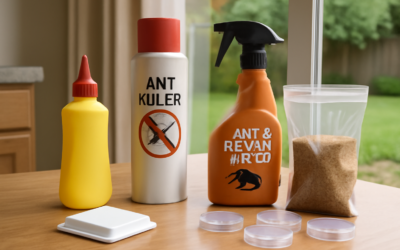
When ants march across your kitchen counter in a tidy line, the instinct is to spray and stomp, but that rarely solves the problem, which is why choosing the best ant poison for indoors means understanding how ants behave first. The key insight: visible ants are only foragers, and the colony hidden in your wall or yard is the real target. The most effective indoor products work slowly and exploit the ants’ own habits to wipe out the nest. This guide explains the product types, what to look for, and how to use them safely.
Part of our Windows & Doors guide — explore the full guide →
Why Baits Beat Sprays Indoors
Contact sprays kill the ants you see and feel satisfying, but they leave the colony intact, so new foragers appear within days. Bait products take the opposite approach. Worker ants carry the poisoned bait back to the nest and feed it to the queen and the rest of the colony, eliminating the source over a few days to two weeks. For a lasting indoor solution, baits and gels are almost always the smarter choice. Patience is part of the strategy; resist the urge to spray and kill the foragers that are doing the work of delivering the bait.
Types of Indoor Ant Poison
Indoor products generally fall into a few categories, each suited to different situations:
- Bait stations: Pre-filled, enclosed containers you place along ant trails; the enclosure helps keep the bait away from curious hands and paws.
- Liquid baits: A sweet, slow-acting liquid that sugar-loving ants carry back to the colony.
- Gel baits: Applied in small dabs near trails and entry points, useful in cracks and crevices.
- Granular baits: More common for outdoor perimeter use but some are labeled for indoor cracks.
Active Ingredients to Look For
The slow-acting nature of the poison is what makes bait work, because fast-acting toxins kill foragers before they reach the colony. Common active ingredients in effective indoor baits include borax and boric acid derivatives, as well as low concentrations of compounds like fipronil or hydramethylnon found in commercial bait stations. You do not need to memorize the chemistry; the important point is to choose a product clearly labeled for indoor ant control and to read the active ingredient and directions on the label before buying.
Matching the Bait to Your Ants
Ants have shifting preferences, which is why one bait may fail while another succeeds. Some species crave sugars, others want protein or grease, and the same colony can switch preferences seasonally. If a sweet liquid bait is being ignored, try a protein or grease-based bait, or set out both and watch which one the ants swarm. Place baits directly on active trails and near entry points rather than scattering them randomly, since ants follow established scent paths.
Using Ant Poison Safely Indoors
Any pesticide demands respect, especially in a home with children or pets. Always follow these safety practices:
- Read the entire label first and follow the directions exactly; the label is the law and your safety guide.
- Choose EPA-registered products and use only those approved for indoor use.
- Place bait stations out of reach of children and pets, behind appliances, under sinks, and along baseboards.
- Wash your hands after handling any pesticide product.
- Keep food covered and store the product in its original container, away from food.
If anyone ingests a product or has a reaction, contact poison control or a doctor immediately and have the product label on hand.
Combine Bait With Prevention
Poison alone is a treatment, not a cure. The most reliable results come from pairing baits with good housekeeping. Wipe up crumbs and spills promptly, store food in sealed containers, fix leaky faucets that provide ants water, and take out the trash regularly. Seal cracks around windows, doors, and pipes where ants enter. Cleaning ant trails with soapy water erases the scent path foragers follow, though do this away from where you have placed bait so you do not disrupt the colony’s collection.
How Long Bait Takes to Work
Patience separates success from frustration. After placing bait, you may actually see more ants for the first day or two as foragers swarm the new food source and recruit nestmates, which is a good sign that the bait is being carried home. Visible activity usually drops within several days to two weeks as the colony consumes the poison and the queen is affected. Resist replacing or moving baits too soon, and do not spray the trail leading to the bait, because killing those workers stops the delivery to the nest. If activity has not clearly declined after about two weeks, try a different bait formulation or a fresh placement closer to the entry point.
Natural and Lower-Toxicity Options
If you prefer to minimize chemicals, several lower-toxicity approaches can help, especially for minor infestations. Diatomaceous earth, a fine powder, can be dusted in cracks where ants travel, though it works slowly and must stay dry. Borax mixed with a sweet attractant is the basis of many homemade baits, but it still must be kept away from children and pets. Wiping trails with soapy water or a vinegar solution erases the scent path. Keep in mind these methods are generally less powerful than commercial baits for established colonies, and any product, natural or not, should be used according to its directions.
When to Call a Professional
Most indoor ant problems respond to bait and prevention, but some situations call for an expert. Carpenter ants that tunnel into wood can cause structural damage and often need professional treatment. Recurring infestations despite consistent baiting, or very large colonies, are also signs to bring in a licensed pest control company. Professionals can identify the species, locate the nest, and apply targeted treatments not available to consumers.
Final Thoughts
The best ant poison for indoors is almost always a slow-acting bait that the ants carry back to wipe out the colony at its source. Choose an EPA-registered product labeled for indoor use, place it on active trails, and pair it with diligent cleaning and sealed entry points. Above all, read and follow the label, keep products away from kids and pets, and call a professional for carpenter ants or stubborn infestations.