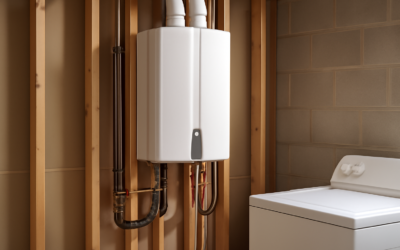
Understanding your AO Smith water heater parts helps you troubleshoot problems, order the right replacement, and often avoid the cost of a whole new unit. AO Smith is one of the largest water heater manufacturers, and most of the components that wear out, from heating elements and thermostats to anode rods and valves, are readily available and straightforward to replace with basic tools.
This guide breaks down the essential parts of both electric and gas AO Smith water heaters, explains what each one does, and walks through the most common repairs so you can keep hot water flowing.
- Key Parts of a Water Heater
- Heating Elements and Thermostats
- The Anode Rod
- Valves and Safety Components
- Gas Model Components
- Finding the Right Replacement Part
- Routine Maintenance to Extend Life
- Electric vs. Gas Parts at a Glance
- Understanding the Dip Tube
- Troubleshooting by Symptom
- Tools and Safety Precautions
- Where to Buy the Right Parts
- Repair or Replace?
Key Parts of a Water Heater
Whether tank-style or tankless, an AO Smith heater shares a core set of components. The most important AO Smith water heater parts include:
- Heating elements (electric): Immersed rods that heat the water; usually an upper and lower element.
- Thermostats: Control the temperature and switch the elements or burner on and off.
- Gas valve and burner (gas): Regulate and ignite the gas that heats the tank.
- Anode rod: A sacrificial metal rod that protects the tank from rust.
- Dip tube: Directs incoming cold water to the bottom of the tank.
- Temperature and pressure relief valve: A critical safety valve that vents excess pressure.
- Drain valve: Lets you flush sediment from the tank.
Heating Elements and Thermostats
On electric models, no hot water or lukewarm water usually points to a failed element or thermostat.
Heating Elements
Elements burn out over time, especially in hard water where scale coats them. If only the lower element fails you get a little hot water that runs out fast; if the upper fails you may get none. Test with a multimeter for continuity and replace as needed after shutting off power and draining the tank.
Thermostats
Thermostats can stick or fail, leaving water too hot, too cold, or inconsistent. They are inexpensive and mount against the tank behind the access panel. Always cut power at the breaker before servicing either component.
The Anode Rod
The anode rod is one of the most important yet overlooked parts. It corrodes in place of the steel tank, sacrificing itself to prevent rust. A rod that is fully consumed leaves the tank unprotected, which shortens its life dramatically. Inspect the rod every few years and replace it when it is heavily corroded or reduced to a thin wire. Swapping a $30 anode rod on schedule can add years to the life of the tank, making it one of the best-value maintenance items.
Valves and Safety Components
Several valves keep the heater safe and serviceable:
- Temperature and pressure relief (T&P) valve: Opens to release pressure if the tank overheats. Test it yearly and replace it if it leaks or fails to reset.
- Drain valve: Used to flush sediment. Replace it if it seizes or leaks.
- Gas control valve: On gas units, this regulates the burner and can fail, causing pilot or heating problems.
Never cap or plug a T&P valve. It is a critical safety device, and blocking it is dangerous.
Gas Model Components
Gas AO Smith heaters have their own set of parts that can need attention:
- Thermocouple or thermopile: Senses the pilot flame and shuts off gas if it goes out; a common cause of pilot problems.
- Pilot assembly and igniter: Lights the burner.
- Burner assembly: Can clog with dust and debris, causing weak or uneven flames.
- Flue and vent: Carries exhaust safely away; must stay clear.
Finding the Right Replacement Part
Ordering the correct part depends on your exact model. To identify it:
- Locate the rating plate on the side of the tank, which lists the model and serial number.
- Note the tank capacity, fuel type, and voltage or wattage for electric units.
- Match element wattage and thermostat type precisely, since they are not universal.
- Use the model number with the manufacturer’s parts lookup or a plumbing supplier.
Routine Maintenance to Extend Life
A little upkeep prevents most failures and keeps the unit efficient:
- Flush the tank once or twice a year to remove sediment that reduces efficiency and can damage elements.
- Test the T&P valve annually.
- Inspect the anode rod every three to five years.
- Check for leaks, rust, and corrosion at fittings.
- Set the thermostat around 120 degrees for efficiency and scald protection.
Electric vs. Gas Parts at a Glance
Because electric and gas heaters work differently, they share some parts but differ in others. Knowing which system you have focuses your troubleshooting:
- Shared parts: Anode rod, dip tube, temperature and pressure relief valve, and drain valve appear on both.
- Electric-only parts: Upper and lower heating elements and their thermostats do the heating.
- Gas-only parts: Burner assembly, gas control valve, thermocouple or thermopile, pilot, and flue handle combustion and venting.
When a heater stops making hot water, identifying whether it is electric or gas immediately narrows the likely culprit, since the heating mechanisms are entirely different.
Understanding the Dip Tube
The dip tube is an often-overlooked part that causes puzzling problems when it fails. This long plastic tube carries incoming cold water down to the bottom of the tank, so the heating happens from the bottom up and hot water is drawn from the top. If the dip tube cracks or breaks, cold water enters near the top and mixes with the hot water leaving the tank, so you suddenly get lukewarm water even though the heating elements or burner work fine. A broken dip tube can also shed plastic fragments that clog aerators and fixtures throughout the house. Replacing it is inexpensive and straightforward once the tank is drained, and it restores full hot-water capacity. If your heater seems to run out of hot water quickly for no clear reason, a failed dip tube is worth checking.
Troubleshooting by Symptom
Matching a symptom to the likely part makes repairs faster. Here are common complaints and their usual causes:
- No hot water (electric): Tripped breaker, failed upper element, or bad thermostat.
- No hot water (gas): Pilot out, failed thermocouple, or gas control valve issue.
- Not enough hot water: Failed lower element, broken dip tube, or heavy sediment.
- Water too hot: Thermostat set too high or stuck closed.
- Rusty water: Corroding tank or a spent anode rod.
- Popping or rumbling: Sediment buildup that needs flushing.
- Water around the base: A leaking tank, valve, or fitting.
Starting from the symptom points you to the right component and prevents unnecessary part swaps.
Tools and Safety Precautions
Working on a water heater is manageable for many homeowners, but safety comes first. For electric units, always switch off the breaker and confirm the power is off with a tester before touching any wiring or elements. For gas units, shut off the gas supply before servicing the burner, thermocouple, or valve. Drain the tank before replacing an element or the drain valve. Keep a multimeter, an element wrench, screwdrivers, and channel-lock pliers on hand. Never remove or block the temperature and pressure relief valve, and if you smell gas or are unsure about any gas component, stop and call a licensed professional.
Where to Buy the Right Parts
Because AO Smith is a major manufacturer, replacement parts are widely available. Home improvement centers stock common elements, thermostats, anode rods, and valves, while plumbing supply houses carry a broader range and can help match specialty items. The rating plate on the side of the tank lists the model and serial number you need to order the correct part. Elements in particular must match voltage and wattage exactly, and thermostats and gas valves are model-specific, so always confirm compatibility before buying. When possible, bring the old part along to compare directly.
Repair or Replace?
Many problems are cheap fixes. Elements, thermostats, thermocouples, and valves cost a fraction of a new heater and are DIY-friendly with the power or gas safely off. Consider replacing the whole unit only if the tank itself is leaking, since that means the steel has rusted through and cannot be repaired. For nearly everything else, sourcing the correct AO Smith water heater parts and swapping the failed component restores reliable hot water at a fraction of the replacement cost. When in doubt about gas components or wiring, call a licensed professional.