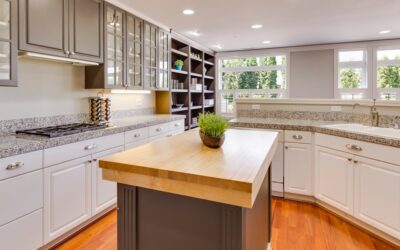
Yes — butcher block countertops are durable, in the specific sense that matters: a decent wood top will still be structurally sound and serviceable 30, 40, even 50 years from now, longer than most laminate and about as long as anything in your kitchen. But if you’re asking are butcher block countertops durable in the sense of “will they still look pristine after a decade of normal family use,” the honest answer is no — they will scratch, dent, water-mark, and patina, and whether that’s a dealbreaker or a feature depends entirely on you. Here is the wear report nobody gives you in the showroom.
Part of our Countertops guide — explore the full guide →
Two Different Kinds of Durable
Countertop durability has two axes that marketing loves to blur. Structural durability — will the top crack, delaminate, fail, need replacement? Butcher block scores excellently here. A properly built edge-grain maple or walnut top with sound glue joints essentially doesn’t wear out; commercial maple prep counters survive decades of professional abuse. Cosmetic durability — resistance to visible scratches, dents, stains, and marks? Butcher block scores near the bottom of the countertop field, below laminate and far below quartz and granite.
The twist that redeems wood: it’s the only common countertop that’s fully repairable. Quartz durability is about preventing damage because damage is permanent. Wood durability is about accepting damage because damage is reversible. A weekend with a sander returns a 15-year-old butcher block to nearly new — an option no stone or laminate owner has. Framed properly, butcher block isn’t fragile; it’s a surface with a maintenance loop instead of a damage ratchet.
The Scratch Report
Wood scratches. The Janka hardness numbers tell you the relative story — hard maple 1,450, red oak 1,290, walnut 1,010, cherry 995, birch 1,260 — but even the hardest species scratches under a knife blade, a dragged appliance, or grit under a mixing bowl. Here’s what real kitchens produce:
- Fine surface scratches appear within weeks on any working top — visible in raking light, invisible from standing height. Universal and cosmetically irrelevant.
- Knife cuts from direct cutting leave permanent-until-sanded scores. On oil-finished tops, cuts blend into a working patina; on film-finished (polyurethane) tops, every cut breaches the finish and shows as a bright line — which is why you never cut on a film-finished top.
- Drag gouges — the stand mixer slid across the counter, the ceramic crock pushed rather than lifted — are the ugliest common damage. Preventable with habits, fixable with sanding.
Species choice matters less than finish choice here. Oil finishes hide and absorb scratch character; glossy film finishes highlight every mark, then look worse than oil once breached. Matte or satin hardwax oils split the difference and have become the default recommendation.
The Dent Report
Dents come from impact — the dropped cast iron skillet, the can of tomatoes off the top shelf. Expect a handful of noticeable dents per year in an active kitchen: maple and hickory shrug off most of what walnut and cherry record. Two mitigating facts. Small dents in raw or oiled wood often steam out: wet cloth over the dent, hot iron on top, and compressed fibers swell back — a repair that works surprisingly often and costs nothing. And dents, unlike stone chips, don’t propagate; a dent is finished damage, while a granite edge chip can grow.
The Water Report — the Real Weak Point
Scratches and dents are cosmetic. Water is the thing that actually kills wood counters, and it deserves the most honest treatment. The failure pattern is always the same: not the dramatic spill (wipe it up, no harm), but standing repeated moisture — the drip zone around a sink faucet, a dish rack that never fully dries, a wet sponge living against the backsplash seam. Over months, oiled wood there goes gray, then black (that’s iron and tannin reaction plus fungal staining in the fibers), and grain can raise or check. Around undermount sinks, chronic moisture attacks the exposed end grain of the cutout — the single most common place for genuine failure.
The realistic defenses, in order of effectiveness: keep sink runs film-finished with a quality waterborne polyurethane or marine-grade finish; wipe standing water as a reflex; re-oil or re-coat before the finish looks thirsty, not after; and if you’re designing from scratch, consider putting stone at the sink and wood everywhere else. Black water stains, for the record, are semi-fixable — oxalic acid wood bleach removes most iron staining before you sand and refinish — but deep staining can require removing more material than you’d like.
Heat, Stains, and Chemistry
Quick honest scores on the remaining threats. Heat: wood handles warm pots fine and scorches under genuinely hot ones — a 450°F skillet leaves a brown ghost. Trivets, same as quartz. Scorch marks sand out, which is more than engineered stone can say. Food stains: wine, beet, turmeric, and berry juices mark oiled wood if left overnight; wiped within the hour, they mostly don’t. Film finishes are effectively stain-proof until breached. Chemicals: the damage here is self-inflicted — harsh cleaners (bleach, ammonia) strip oil finishes and dull film finishes. Mild dish soap and water is the entire cleaning regimen wood wants.
What Ten Years Actually Looks Like
| Care Level | Condition at 10 Years |
|---|---|
| Attentive (oiled on schedule, boards used, spills wiped) | Rich patina, scattered fine marks, fully sound — most visitors assume it’s newer |
| Average (oiled when it looks dry, occasional direct cutting) | Visible wear zones, some water shadowing at sink, a few dents — “loved and lived-in”; one weekend refinish returns it to near-new |
| Neglected (never refinished, standing water, no boards) | Gray-black sink zone, raised grain, deep scoring — needs aggressive sanding or partial replacement |
That bottom row is where butcher block’s reputation problems come from, and it’s fair to say wood punishes neglect harder than any stone. If you know yourself to be a set-it-and-forget-it household, that’s not a character flaw — it’s a spec requirement, and it points you toward quartz.
Making Butcher Block More Durable: The Levers That Matter
- Species: hard maple or hickory for maximum dent resistance; walnut trades some hardness for looks that hide wear-marks well in its busy grain.
- Construction: end grain absorbs knife work best; edge grain is the durability/value sweet spot; face grain marks fastest.
- Thickness: 1.5 inches gives you four-plus full refinishes over the top’s life. Thin 3/4-inch tops have one, maybe two sandings in them.
- Finish strategy: hardwax oil or oil for surfaces you’ll cut on; waterborne film finish for sink runs; never gloss.
- Habits: lift instead of slide, boards under real knife work, no chronic wet objects. These three habits do more than any product.
One more durability lever people forget: placement. The same wood top that struggles as a full kitchen perimeter — sink zone included — is nearly indestructible as an island, a baking counter, or a coffee station, because those zones dodge the standing-water exposure that causes the only failures that matter. Plenty of the “butcher block doesn’t last” testimony online is really “butcher block around an undermount sink with no film finish doesn’t last,” which is true and avoidable. Zone the material to its strengths and the durability question mostly answers itself.
So, the verdict in one paragraph: butcher block is durable the way good boots are durable — it will outlast flashier alternatives if you give it twenty minutes of care a few times a year, and it will show you every mile in between. If visible history on a surface reads as character to you, wood is arguably the most durable counter you can buy, because it’s the only one you can fully renew. If visible history reads as damage, no amount of maintenance will make you happy with it, and you should spend your money on quartz with a clear conscience. Both are right answers; they’re just answers to different questions about how you want to live with a kitchen.